Siemens brings Industrial AI to autonomous production at SPS 2026
At SPS 2026, Siemens is presenting how Industrial AI is being integrated into all phases of automation, from AI agents in planning and engineering to Physical AI on the shop floor, supported by standardised device data and cybersecurity.
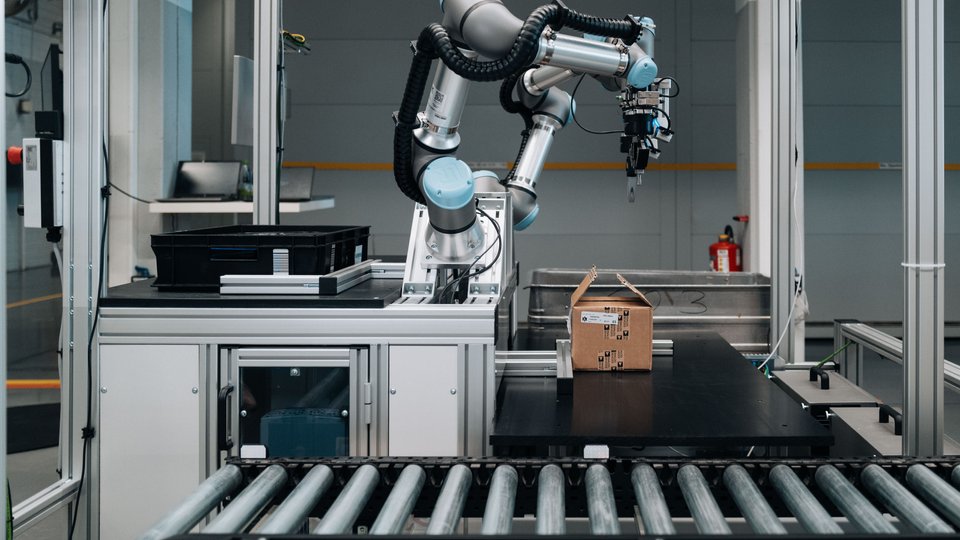
Siemens is bringing Industrial AI into every phase of automation, from AI agents in planning and engineering to Physical AI on the shop floor. At SPS 2026, the company shows how this enables goal-based automation: manufacturers define what they want to achieve, and Industrial AI determines how to get there or carries out the task through AI agents. One example is Siemens' own Electronics Factory Erlangen, where an AI-based robot application for autonomously unpacking incoming goods is under development. Standardised device data and cybersecurity underpin all of it.
"The next productivity leap will come from automating tasks that were impossible to automate before," said Rainer Brehm, President of Automation at Siemens. "That's why we're taking decisive steps toward AI-powered, autonomous production, with agentic and Physical AI enhancing our leading automation portfolio. With more Industrial AI in production, also cybersecurity becomes even more important. Our customers can rely on our continued commitment to cybersecurity and regulatory compliance, backed by almost 40 years of experience in industrial cybersecurity."
Physical AI in practice: autonomous unpacking of incoming goods
In electronics manufacturing, incoming deliveries vary so much in packaging type and size that fixed robot programs cannot handle them, and unpacking is still largely done by hand. At the Electronics Factory in Erlangen, Siemens is developing an AI-based solution in which cameras capture the environment in real time, allowing AI-based robot foundation models to interpret the situation and autonomously determine the required steps. The robot opens cartons and removes component reels for further processing. Siemens provides automation, control systems, industrial PCs, software orchestration and the domain expertise gained from its own manufacturing facilities.
Planning: AI agents create the production schedule
In production planning, Siemens is introducing the Autonomous Production Planner as part of Intelligence Center X, its industrial AI orchestration software. Several AI agents work together to create production schedules and optimise them automatically against defined key performance indicators. Each schedule is validated in a physics-based digital twin before it is released to production. Siemens expects this to reduce manual planning effort by 70% and lower costs by up to 20%.
Engineering: Eigen Engineering Agent with new capabilities
The AI-powered Eigen Engineering Agent is connected to the TIA Portal engineering software and now supports engineers by adapting automation code. Among other new functions, the agent can verify code through simulation and will be able to create safety configurations. The Eigen Engineering Agent is now also available for the process industries. The agent connects to Simatic PCS 7, Siemens' distributed control system. It analyses existing control logic, checks or creates Continuous Function Charts (CFCs) and creates control modules automatically from engineering data. This helps companies speed up engineering and scale their engineering know-how across projects.
For automation engineering, Siemens continues to enhance its existing automation software. With the new TIA Portal V21.1, customers can buy features instead of versions, which means that time-consuming project updates are no longer necessary within the V21 version line. Functional enhancements include multicore support in the PLC program for Simatic S7-1500 and extended Simatic Source Documents, which now also cover hardware configuration and can be processed by AI systems. According to the company, this means higher performance and simplified engineering for customers.
With Simatic AX Motion Control Engineering, engineers can now manage automation projects that include motion control in one text-based environment, supported by PLCopen and direct Git integration. This reduces complexity and shortens development times, which Siemens describes as an important step towards software-defined automation.
Operations: bringing AI into the control loop
During production, the Industrial AI Suite brings AI directly into automation. AI models running on Industrial Edge can be connected to Simatic S7 controllers via Profinet, enabling real-time AI inference as part of machine automation. This opens up new use cases such as AI-based motion control. Production data can also be used to retrain, validate and redeploy AI models on-premises, creating a closed AI loop from deployment and operation to continuous improvement.
Controllers, drive systems and switching technology
The Simatic S7-1200 G2 basic controller strengthens motion and performance with motion control for up to 32 axes, while the advanced Simatic S7-1500 controller offers higher system performance and extended connectivity. In drive technology, Siemens is extending the next generation of Sinamics G frequency converters with four new drives based on a common, scalable platform with standardised device data and Security by Design. The new Sinamics E210 converter and Simotics E-1EE1 servo motors form an integrated 24 V and 48 V drive system for battery-powered applications such as autonomous mobile robots (AMRs), reducing integration effort through coordinated hardware and software. With Sirius 3QC1, Siemens is presenting what it describes as the world's first semiconductor-based heavy-duty direct current contactor, designed for up to 1,500 V and 600 A.
Standardised data and cybersecurity
Standardised, machine-readable device data provides an important foundation for AI-enabled and increasingly agentic workflows. Siemens is now making standardised Asset Administration Shell (AAS) data available for more than 120,000 hardware products. This enables software tools to access and process product information directly and supports digital engineering and digital twin workflows.
AI in production depends on plants that remain secure. Siemens builds on almost 40 years of experience in industrial cybersecurity, with an approach that covers the entire production lifecycle, from design and engineering through operation and service. The company also uses AI to enhance cybersecurity. Siemens is progressively preparing relevant products in its industrial portfolio for the applicable requirements of the EU Cyber Resilience Act and is supporting machine builders in preparing their machines for the CRA requirements that will apply from 11 December 2027.
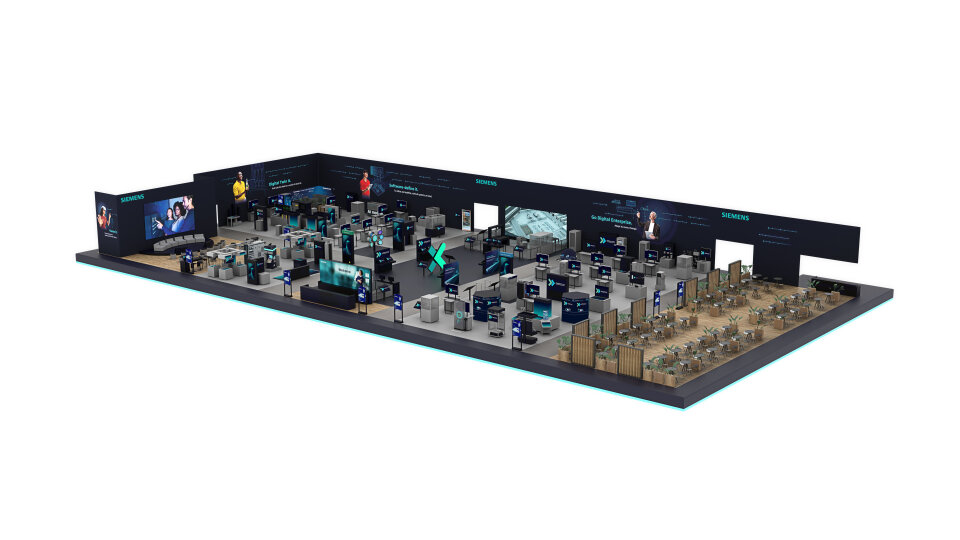
At SPS 2026, Siemens displays its automation portfolio for AI-powered, autonomous production on 2,600 m² in hall 11