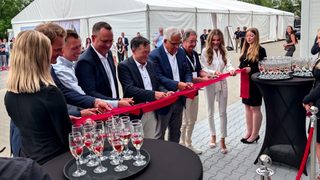
SINGLE has opened a new production facility in Wodzisław Śląski, Poland, significantly expanding its manufacturing capacity in Europe. In this video, representatives of SINGLE Group discuss the development of production in Poland, the strategic importance of the new plant, the benefits for customers, and the company’s plans for further growth.
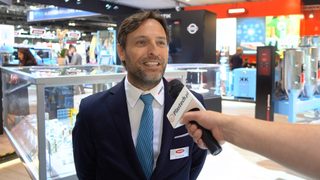
At Plast 2026 in Milan, Mirco Panizzon from Moretto presents Loadmatic, a patented self-learning system for the automatic optimisation of material conveying. The technology continuously adjusts operating parameters to changing production conditions, helping reduce energy consumption while maintaining maximum feeding efficiency. He also introduces Moretto’s other new solutions and the European Moretto in Motion mobile showroom tour.
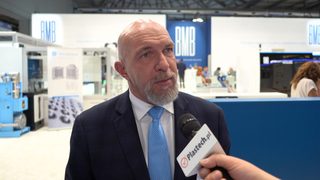
At Plast 2026 in Milan, Lucio Strappazzon from BMB S.p.A. presents the company’s latest injection moulding solutions. The Italian manufacturer focuses on high-speed injection moulding machines for thin-wall packaging, caps and closures, and other demanding applications requiring high reliability, low maintenance and long service life.
At its booth, BMB showcased three applications: two dedicated to thin-wall packaging and one for flip-top closures. Particular attention was given to a 450-ton hybrid injection moulding machine, developed for demanding applications such as caps and closures, medical components and thin-wall packaging. In this application, BMB highlighted the machine’s ability to run a 48-cavity medical cap mould with a cycle time of less than 3 seconds, while maintaining consistent part weight and process stability in continuous production. The company also presented full-electric solutions, highlighting their role in combining performance, precision and energy efficiency.
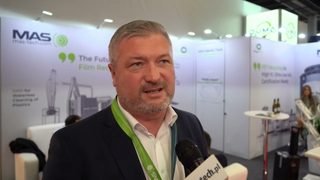
Ivica Radic of MAS Austria talks at Plastpol 2026 about the company’s solutions for the plastics recycling industry. MAS specializes in machinery and complete lines for recycling, regranulation and material upgrading, including solutions for LDPE films and PET.
In the interview, he points to a clear shift in market expectations: recycling is no longer only about processing material again, but increasingly about improving the quality of recyclates and preparing them for more demanding applications, including packaging. He also emphasizes the high level of the Polish market, both in terms of technology and the know-how of processors and recyclers.
Mario Maggioni of Promaplast summarizes PLAST 2026 as an event that confirmed the international importance of the Milan exhibition for the plastics and rubber industry. In the interview, he points not only to the presence of exhibitors and visitors from many countries, but also to the growing role of the accompanying programme. PLAST 2026 was more than a traditional trade fair. Dedicated areas for the rubber industry, 3D printing and startups, together with conferences and seminars on packaging, the environment and plastics processing, showed that the event increasingly combines business with knowledge exchange and a broader discussion about the future of the sector. The next edition of PLAST will take place in 2029.
Antonino Furfari from Plastics Recyclers Europe discusses what the European plastics recycling market needs most today: clear rules, stable market conditions and real demand for recyclates.
The conversation covers the importance of recycled content targets, the priority of European waste and local circularity, as well as the need to unlock the investments required to meet the 2030 targets.
Furfari emphasises that plastics recycling is not only an environmental issue. It is also part of an industrial strategy that affects the entire value chain – from collection and sorting, through recycling and converting, to brand owners placing products on the market. A stable market for recyclates can support European industry, jobs and greater raw material independence.
Technical barriers to plastics recycling often begin at the packaging design stage. Fabrizio Di Gregorio from Plastics Recyclers Europe explains why design for recycling is essential for improving sorting, washing and the quality of recyclates.
The conversation covers the most common design-related problems: multilayer and multimaterial flexible packaging, incompatible functional barriers, labels, decorations and other elements that may prevent proper sorting. Di Gregorio also points to progress in mechanical recycling, the growing importance of regulations on recycled content and food-contact applications, and the need for harmonised testing methods for recyclability across Europe.
He also presents the RecyClass toolbox, including design for recycling guidelines, testing protocols, a free online recyclability assessment tool, certification schemes and the RecyClass Academy, which supports the industry in preparing for circularity requirements.
At Plastics Recycling Show Europe 2026 in Amsterdam, we spoke with Paolo Glerean, Chairman of RecyClass, about design for recycling, testing methodologies and certification schemes that support the circularity of plastic packaging.
The conversation focused on one of the key challenges facing the industry today: the need for clearer, harmonised rules for assessing recyclability in Europe. Paolo Glerean emphasised that 2030 should be treated as one step in a longer journey towards true circularity and recyclability at scale by 2035.
We also discussed how RecyClass helps companies evaluate packaging innovations before they enter the market, using science-based testing protocols that reflect real sorting and recycling conditions. Another important topic was the growing role of traceability, certification and digital tools in demonstrating recycled content and regulatory compliance.
At PRSE 2026 in Amsterdam, Ton Emans, President of Plastics Recyclers Europe, discusses the condition of the European plastics recycling market, the impact of virgin material prices, energy costs and the role of recycled content targets. He also reflects on the 10th edition of Plastics Recycling Show Europe and the growing importance of cooperation across the entire value chain.
SINGLE Group is opening a new production plant in Poland. During Plastpol 2026, we spoke with Michael Marschall, CSO, Global Head of Sales, Marketing & Service at SINGLE Group and President of the Management Board of SINGLE Eastern Europe. He discusses the opening of SINGLE’s new production plant in Poland, the development of the company’s local sales and service structure, and the strategic importance of the Polish market for the group.
During Plastpol 2026, we spoke with Benjamin Lettner, the new Managing Director of ENGEL Polska about the strategic importance of the Polish market, which he describes as one of the largest injection moulding machine markets in Europe. He highlights ENGEL’s recent investments in Poland, including the renovated headquarters in Warsaw, the new TMA Automation facility in Gdańsk and the service centre in Kraków. The conversation also covers ENGEL’s support for customers in energy efficiency, automation and digitalisation, including the company’s inject AI vision, IQ assistance systems and advanced automation solutions developed close to local customers.
During Plastpol 2026, we spoke with Artur Metzler, the new Managing Director of Arburg Poland. In the interview, he discusses his career path within Arburg, the current situation in the Polish plastics market, and the customer groups and technologies that are currently most important. The conversation also covers the growing role of digitalization, operator support, and Arburg’s approach as a solution provider - from injection moulding machines and automation to cooperation with technology partners.