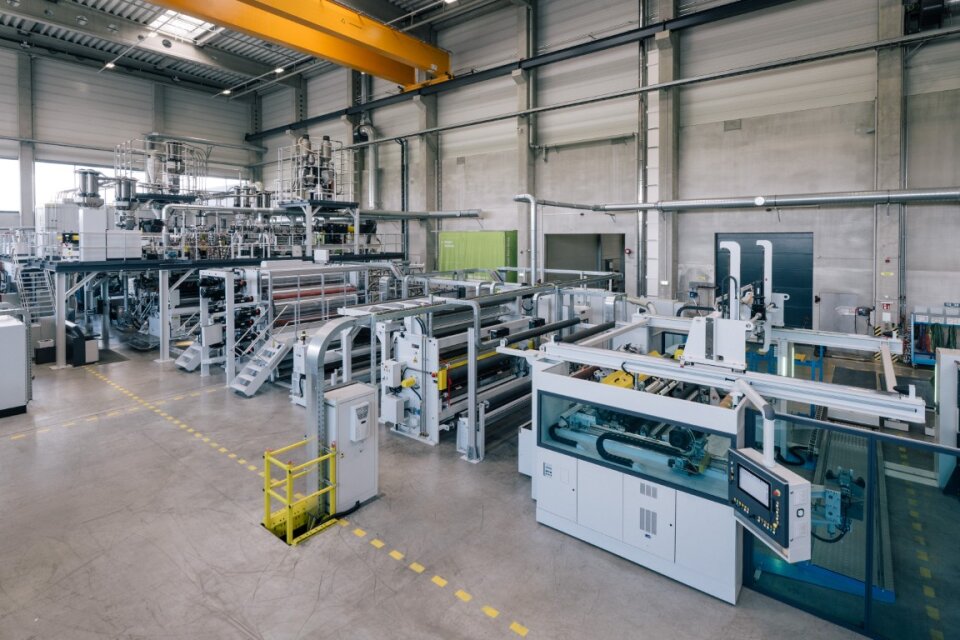
SML installs Cast MDO demonstration line at Technology Centre
SML has commissioned a new Cast MDO demonstration line at its Technology Centre in Redlham. The line produces unstretched CPP, CPE and barrier films as well as mono-oriented PE and PP films and is available for trials, product development and sample production.
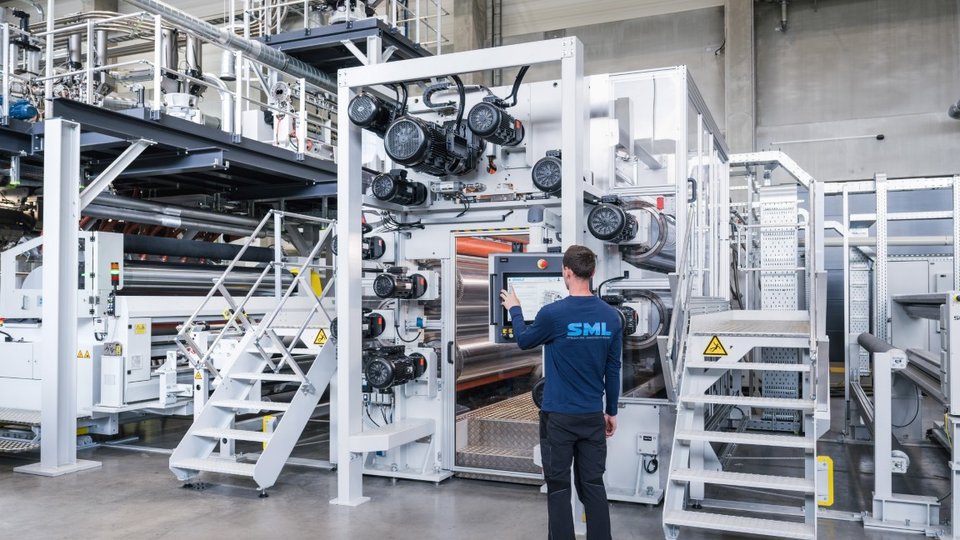
SML's Technology Centre is home to a new Cast MDO demonstration line designed as a versatile all-round system. Whether unstretched film or mono-oriented film is required, this one line covers a broader segment of the cast film market than almost any other. "Conventional CPP structure, seven-layer barrier film or ultra-thin mono-oriented film – SML's Cast-MDO technology delivers them in the best quality and with maximum efficiency. And we have the right line parameters for every single product," says Elias Mayrhofer, Product Manager at SML. New recipes and new polymer combinations are equally welcome, with SML's process engineers on hand to support development. The line is intended for trials, product development and sample production on an industrial scale.
CPP and CPE films
The line produces CPP film in thicknesses from 15 to 250 µm and CPE film from 18 to 150 µm, both offering high transparency and low haze. Typical applications include metallised and laminated packaging for food and non-food products, retort structures, as well as technical and medical films.
Barrier films
Unstretched barrier films from 30 to 250 µm are built around EVOH or PA6. They protect against oxygen, water vapour, odour and UV light, making them suitable for highly perishable fresh food such as meat, cheese or fish, with medical packaging as a second major field of application. Since the layer arrangement is freely configurable, the barrier can be tailored precisely to the product.
Mono-oriented films for recyclable packaging
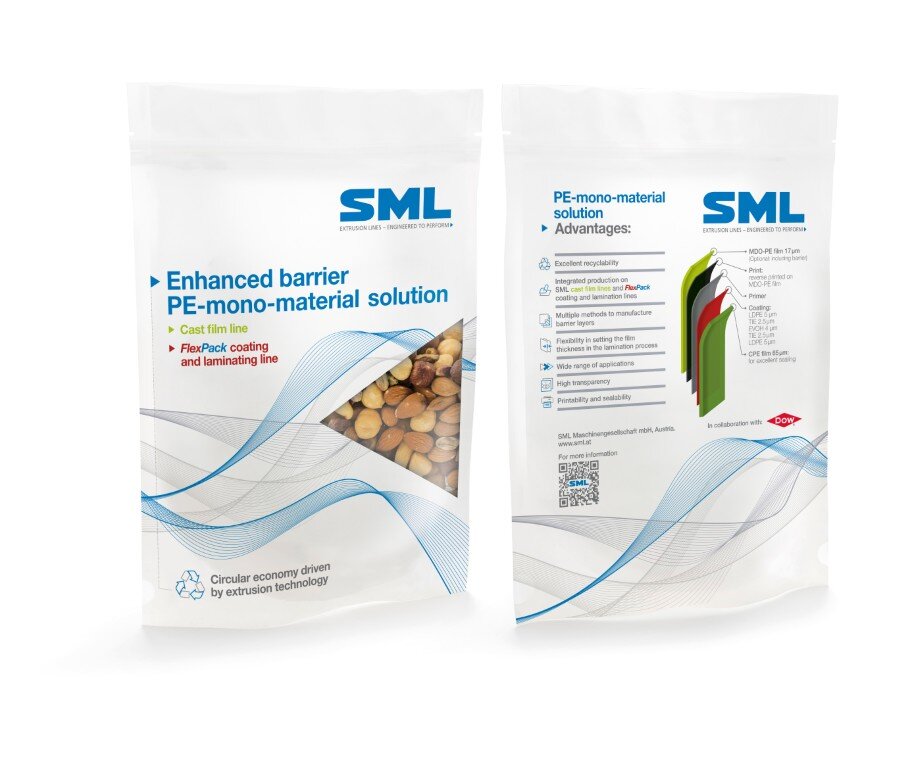
MDO-PE films from 15 to 80 µm can replace BOPET films, turning a PET/PO structure into a recyclable mono-material product. With stiffness above 1,400 MPa in the machine direction, haze below 5% and high flatness, they are suitable for both surface and reverse printing, as well as for metallising.
MDO barrier films from 17 to 40 µm add a thin EVOH layer and achieve oxygen transmission rates of 1 to 5 cm³/m² per day. This makes them suitable for resealable stand-up pouches, flow packs and unlaminated deep-freeze bags. Depending on the structure, the EVOH layer can be positioned either in the middle or on the outside.
MDO-PP films from 15 to 80 µm offer straight tear behaviour and good thermal resistance. Applications include easy-tear pouch film, label film, carrier handles, tear tapes, adhesive tapes and cable insulation.
Adjustable stretching gap
With the newly installed Cast MDO line, SML has developed its MDO technology further, enabling stretching ratios of up to 1:10 and a stretching gap that can be adjusted to suit the product. This is based on an extended temperature profile that can be controlled in fine steps: five preheating rollers, two stretching rollers, five annealing rollers and one cooling roller, each individually driven and temperature-controlled up to 160 °C.
Shorter changeover times
The line is equipped with SML's Synergy solution. Automapping aligns the die bolts and measuring positions automatically, without any operator input and without manual mapping at product change. Film Width Adjustment sets the film width via the motorised internal deckling system, while edge pinning, trim knives and suction pipes follow the adjustment steplessly. According to SML, this results in shorter changeovers, less start-up waste and greater safety. Every setting is documented in bitWise, so a proven set-up is available for the next production run.
Line available for trials
The industrial-scale Cast-MDO line is available for trials, product development and sample production. It is aimed both at companies entering cast film production for the first time and at those redesigning existing structures for recyclability. According to SML, the main features of Cast-MDO technology are:
- flexibility in film production for a wide range of applications,
- tailored film properties with precise control over mechanical and optical characteristics,
- high film flatness for surface and reverse printing quality,
- downgauging potential, i.e. material savings without compromising film quality.