Xenia materials used in DAEDALUS 3D-printed student drone
Xenia Materials supplied carbon fibre-reinforced filaments to the FRoST student team from Frankfurt University of Applied Sciences for DAEDALUS, a 1.7 kg autonomous drone built for the European Rover Challenge.
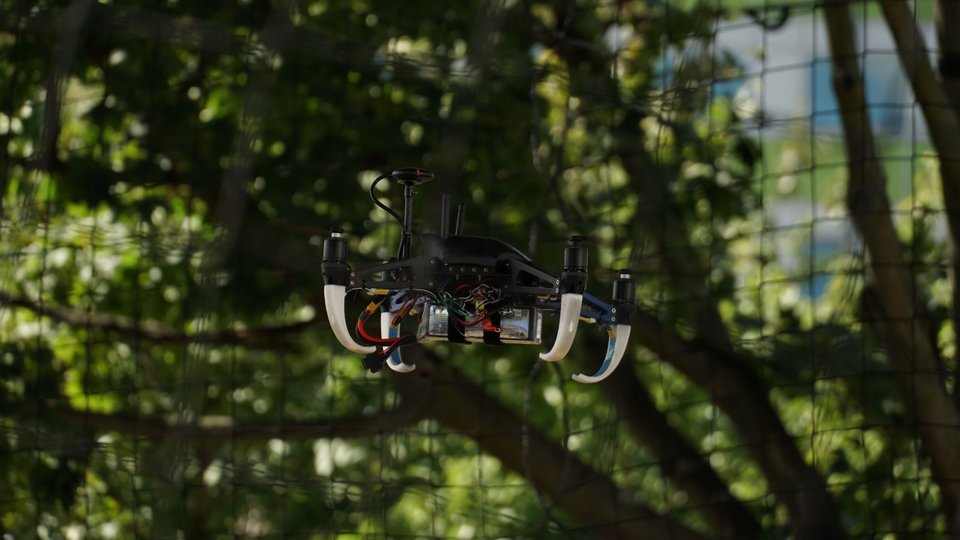
Xenia Materials has supported FRoST (Frankfurt Robotics Science Team), a student engineering team from Frankfurt University of Applied Sciences, in the development of DAEDALUS (Deployable Aerial Exploration Drone for Autonomous Low-altitude Utility Scouting), an autonomous drone designed to compete in the European Rover Challenge (ERC).
The ERC is an international competition that brings together universities and research teams to develop robotic technologies designed to simulate planetary exploration missions. Within this context, DAEDALUS was developed to complement the EROS rover by providing an aerial perspective of the surrounding terrain and supporting reconnaissance activities through advanced vision systems and autonomous navigation capabilities.
With a total weight of 1.7 kg, DAEDALUS features a lightweight structure manufactured using 3D printing, engineered to meet the mobility, strength and reliability requirements of this application. For selected structural components, the FRoST team chose two materials from Xenia's portfolio: XECARB PA11-CF-SL and XEGREEN PETG-CF, both developed for FFF/FDM 3D printing applications.
Bio-based PA11 for motor arms
XECARB PA11-CF-SL is a 100% bio-based Nylon 11 filament reinforced with 15% carbon fibre. Featuring Xenia's proprietary SuperLight technology, it achieves a density of 0.99 g/cm³, enabling the production of lightweight printed components while maintaining high mechanical properties.
In the DAEDALUS project, XECARB PA11-CF-SL was selected as a replacement for ASA in the production of the motor arms and thermal protection spacers. The material provided increased lightness and stiffness while maintaining the structural strength required for these components.
This material substitution enabled the team to achieve a weight reduction of more than 30%, while maintaining comparable perceived stiffness. The result was also made possible by optimising the printing parameters: compared with the ASA configuration, which required four perimeters and 40% infill, XECARB PA11-CF-SL achieved the desired performance with two perimeters and 20% infill.
Recycled PETG for the cover
For the drone's cover, the team selected XEGREEN PETG-CF, a filament made from 100% recycled PETG and reinforced with 20% carbon fibre.
In addition to contributing to the component's mechanical performance, the carbon fibre reinforcement helps deliver a more uniform surface finish, reducing the visibility of the layer lines typically associated with FFF/FDM 3D printing. This makes the material suitable for components where both functional performance and surface aesthetics are important.
"Using Xenia's materials enabled us to improve the stiffness and structural stability of several components while reducing the overall weight of the structure. In particular, XECARB PA11-CF-SL allowed us to achieve performance comparable to ASA while using significantly less material. This was especially important for a drone designed to operate efficiently and autonomously," commented the FRoST team.
The collaboration is part of Xenia's Academic & Research Support Program, through which the company provides universities and research teams with access to its expertise in advanced composite materials, encouraging experimentation and knowledge exchange between industry and academia.