How to sort cemetery waste after 1 November
Polish cemeteries generate around 500,000 tonnes of waste each year. According to the Polish Recycling Association, around 100,000 tonnes of glass, plastics and metal could be recycled if properly sorted.
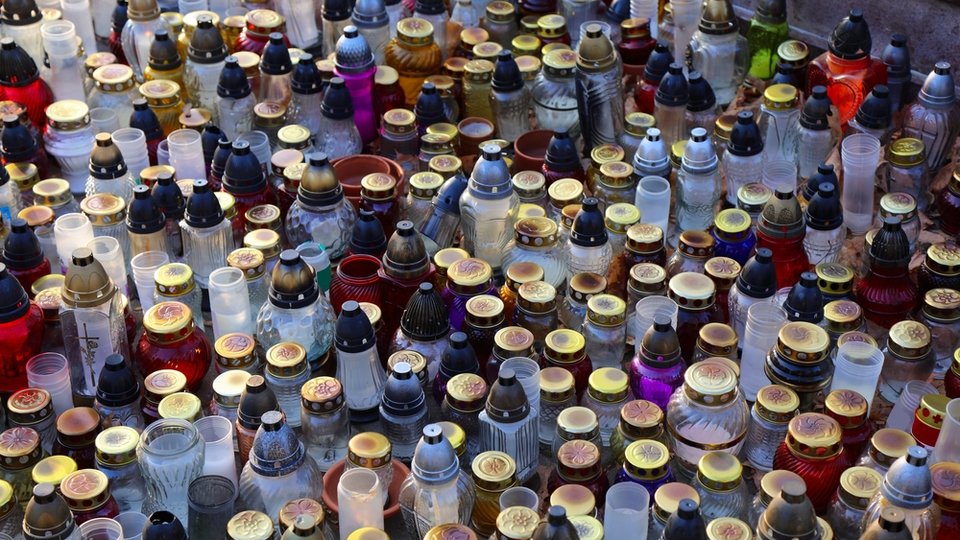
Polish cemeteries generate around 500,000 tonnes of waste each year, with the largest share arising around 1 November. At many cemeteries, all fractions still go into one container together with soil, wax and flower residues, making them unsuitable for recycling. Around 130,000 tonnes consist of glass, plastics and metal, of which around 100,000 tonnes could return to circulation as raw material. The Polish Recycling Association indicates how cemetery managers can make sorting easier for visitors and how waste should be handled after All Saints' Day.
Every year, millions of Poles visit the graves of their relatives. Calculations by the Polish Recycling Association, based on data from municipalities, local authorities and municipal waste treatment facilities, show that approximately three quarters of waste from around 15,000 Polish cemeteries consists of flowers, plant waste and soil. The remaining approximately 130,000 tonnes are material waste, namely glass, plastics and metal. After 1 November, an average grave generates between 3 and 9 kg of waste.
Potential raw material enters mixed waste
Of the approximately 130,000 tonnes of material waste, around 100,000 tonnes are potential raw material that could be recycled if properly sorted. The remainder cannot be recovered because of its construction or contamination. The problem is that at many cemeteries all waste is placed in a single container.
Fresh and artificial flowers, plastic plant pots, glass and plastic grave lights, film and cardboard trays for refills are collected together. All these items are additionally contaminated with soil from plant pots. Soil and wax contaminate the other waste to such an extent that recycling is no longer economically viable. This waste goes to municipal treatment facilities and, at best, is used to produce refuse-derived fuel. At worst, it is sent to landfill.
“All Saints' Day is a time to remember our relatives, and none of us wants it to be associated with overflowing containers. It only takes a moment to remove the lid from a grave light, take the battery out of an electric grave light or put wilted flowers into the bio-waste container. These are small actions, but at national level they determine whether thousands of tonnes of glass, plastics and metal return to circulation or go to landfill, or worse, pollute the environment,” says Sławomir Pacek, President of the Polish Recycling Association.
LED grave lights as a source of electrical waste
Cemeteries are generating increasing amounts of waste that was almost absent only a few years ago. According to the Polish National Association of Grave Light and Candle Manufacturers, LED grave lights of Asian origin now account for around 14% of the market. According to estimates by the Polish Recycling Association, this represents 2,000–3,000 tonnes of waste electrical and electronic equipment per year.
An LED grave light containing a battery, if discarded in an ordinary container, can cause a fire at a sorting facility or landfill, while a damaged battery can contaminate soil and water. The grave light should be placed in a container for waste electrical and electronic equipment, while the battery, if removable, should be collected separately.
The same rules as for household waste
Cemetery waste is subject to the same rules as household waste. In its response to a parliamentary question, the Ministry of Climate and Environment stated that grave-light packaging, glass, plastics and plant waste are comparable to waste generated in homes and can be managed within the municipal system.
This means that they should also be collected separately at cemeteries. Providing appropriate collection arrangements is the responsibility of cemetery managers, irrespective of whether the cemetery is managed by a municipality or a parish.
Organisation of collection within cemeteries
The Polish Recycling Association identifies several measures that make sorting easier. A separate container for bio-waste, namely flowers and branches without plant pots, is essential. This material can be composted and used to maintain green areas within the cemetery.
Containers for recyclable materials should be marked not only by colour, but also with photographs or drawings showing the correct fractions. Containers for used batteries and electrical waste are also needed, together with grave-light sharing points where reusable grave lights can be left, and more frequent waste collection during the All Saints' Day period.
“We recognise that sorting waste at a grave, especially on a day devoted to remembering relatives, can be inconvenient. The objective is therefore not to require more from visitors, but to make the process easier for them. A separate bio-waste container, clearly labelled containers for recyclable materials and clear instructions at the entrance mean that sorting takes only a moment,” adds Sławomir Pacek.
Wrocław provides one example. Since September, its Municipal Cemeteries Authority has placed only bio-waste and mixed-waste containers along cemetery paths, as these are the fractions generated when graves are being cleaned. Containers for glass, plastics and metal have been moved to areas near entrance gates and car parks.
Rules for sorting individual waste items
Where separate collection containers are available at a cemetery, individual waste items should be separated according to material type and degree of contamination. Popular waste-sorting applications do not include a cemetery waste category, so the Polish Recycling Association has prepared a set of guidelines:
- Plastic grave light with a plastic refill: the casing and metal lid should be placed in the yellow container for metals and plastics, while the refill containing wax residues should go into mixed waste.
- Glass grave light containing wax residues: the metal or plastic lid and base should be placed in the yellow container, while the glass containing wax residues should go into mixed waste. Glass used for grave lights differs from packaging glass and cannot be processed together with it.
- LED grave light: it should be placed in a container for waste electrical and electronic equipment or taken to a municipal separate waste collection point. If the battery can be removed, it should be placed in a used-battery container.
- Dried flowers in a plastic plant pot: the flowers should go into the brown bio-waste container and the plant pot into the yellow container. A broken ceramic plant pot should go into mixed waste.
- Soil: it should be placed in the brown bio-waste container.
- Wreath or flower arrangement: artificial flowers, ribbons and wire should be placed in the yellow container, while branches and fresh flowers should go into the brown container.
- Cardboard boxes and grave-light trays: clean and dry items should be placed in the blue paper container, while wet items or those contaminated with wax should go into mixed waste.
If no sorting containers are available at the cemetery, waste should be placed in the general waste container. LED grave lights and batteries are an exception. These should be taken away and delivered to an electrical waste collection point.