Huhtamaki support the Clean Baltic Sea-project
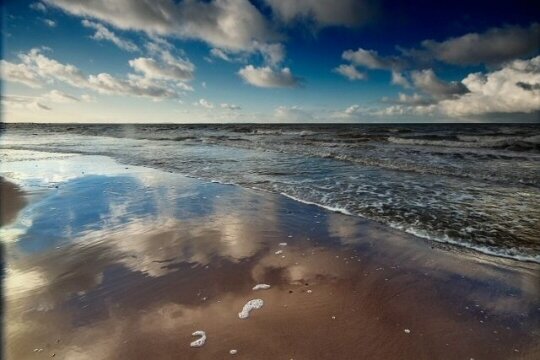
This Christmas Huhtamaki supports The Clean Baltic Sea project by donating the 2008 Season`s Greetings card funds to boost the efficiency of urban wastewater treatment in Baltic countries.
The Clean Baltic Sea project focuses on reducing the phosphorus content of wastewater generated by cities in the Baltic basin. This requires concrete action and international cooperation between public and private players - the Baltic Sea does not recognize national borders. Almost half of the population of the Baltic basin live in Poland, and a third of the external phosphorus load to the Baltic Sea comes from Poland.
The Clean Baltic Sea project aims to boost the efficiency of phosphorus removal processes at wastewater treatment plants in many Polish cities. Cooperation with the City of Warsaw began in summer 2008 and the project administrator is now inviting companies and associations to join in. Huhtamäki Oyj supports the project by donating yearly Season`s Greetings card funds.
John Nurminen Foundation of Finland has been working to protect the Baltic Sea since 2004 and is the driver behind the Clean Baltic Sea project. The project began with work in St Petersburg, where more efficient chemical phosphorus removal processes were introduced in autumn 2007. The foundation has joined forces with Baltic Sea 2020 (a Swedish foundation established in 2005 by Björn Carlson) to fund the ongoing project in Poland. Both foundations focus on concrete action to reduce eutrophying nutrient emissions in the Baltic Sea. Their aim is to always work where every euro spent will result in the greatest possible positive impact on the environment.
Huhtamaki`s value to treat our world with respect means also to care about each other, the environment and the community.
The water in the Baltic Sea is brackish with a low salinity - a unique mixture of salty and fresh waters. The salinity of the Baltic Sea water is only approximately 20% of the salinity of the oceans (35 per mille). Furthermore, the salinity of the Baltic Sea`s surface water decreases towards the North, and the water in the Bay of Bothnia and the bottom of the Gulf of Finland is almost fresh.
In comparison with the oceans, the Baltic Sea is a small and shallow body of water. The average depth of the Baltic Sea is only 55 metres, whereas the average depth of the oceans totals several kilometres, and even the Mediterranean's average depth is one kilometre. The deepest basin of the Baltic Sea is 450 metres deep at its most. The Baltic Sea is linked to the North Sea via the narrow Danish straits, and the turnover of the water is very slow. Theoretically, it has been estimated that the turnover of the entire water quantity of the Baltic Sea takes approximately 30 years. According to the slow water turnover, environmental toxins and eutrophying nutrients remain in the Baltic Sea and cause long-term effects.
The water of the Baltic Sea is permanently stratified according to the level of salinity. Salty seawater flowing from the North Sea is heavier and sinks to the bottom and deep basins of the Baltic Sea. The surface layer consists of water diluted by rainwater and numerous rivers flowing into the Baltic Sea.
The stratification hinders water turnover between the bottom and the surface layer. Oxygenic surface water cannot reach the deeper water layers and, and there are recurrent oxygenless periods in the deep basins of the Baltic Sea. The oxygen situation improves from time to time, about once per decade, with the help of pulses of saline water (infrequent currents of ocean water), when salty and oxygenic ocean water flows from the North Sea into the basins of the Baltic Sea, mixing with the Baltic Sea`s water layer near the bottom.
The population of the Baltic Sea is an exceptional combination of freshwater and ocean flora and fauna. The number of flora and fauna adapted to the brackish water life is small, but there may be large quantities of individual species. In comparison with the oceans, the food chains in the Baltic Sea are simple. The number of species decreases from the southern Baltic Sea to the North. The low salinity of the northern Baltic Sea, the cold winters and the sea freezing over set challenges for the adaptation of organisms. Many species in the Baltic Sea live on the extreme limits of their adaptability. The flora and fauna of the Baltic Sea is very sensitive to changes in the environment.
A total of 85 million people live in the catchment of the Baltic Sea. Over the years, the sea has been used as a dump for uncleaned community water, wastewaters from industries, agriculture and ship traffic, and different kinds of solid refuse. The bottom sediments of the Baltic Sea still contain large volumes of heavy metals and other environmental toxins. Since the 1990s, the amount of toxins and heavy metals in the fish population of the Baltic Sea decreased, but the concentrations still remain very high.
The ship traffic on the Baltic Sea is becoming more frequent all the time. This means that the risks related to oil damage increase as well. Minor cases of oil damage occur on the Baltic Sea each year, but major oil catastrophes have so far been avoided. The size of tankers operating on the Baltic Sea increases on a continuous basis. In order to prevent large-scale oil disasters, it is essential to invest in maritime safety and to improve the oil destruction readiness in case of damage.
As stowaways in ships, increased sea traffic has brought several foreign species into the Baltic Sea. Many of these invasive alien species are random visitors, but others naturalise in the Baltic Sea, and they may have substantial effects on the ecosystem and the existence of local species. Alien species are forced to compete for living space, and they might replace local species, which may change the balance between the organisms in the Baltic Sea. The spread of alien species is monitored, since they may also lead to unexpected financial effects.
Eutrophication is the biggest problem of the Baltic Sea, and the Gulf of Finland is its most eutrophicated basin. Though eutrophying nutrient discharges have lately decreased, there has been an increase in the visible symptoms of eutrophication, such as blue-green algae, water opacity, beach mucilage and the number of anoxic seafloor areas. According to current estimates, climate change will further precipitate the eutrophication of the Baltic Sea.
Eutrophication is caused by nitrogen and phosphorus emissions which nourish the growth of algae in the water. With respect to blue-green algae occurrence, phosphorus plays a key part. Nitrogen and phosphorus drift into the sea from cities' wastewater, and along with rainwater from fields, for example. In addition, part of the nitrogen emissions caused by traffic ends up in the Baltic Sea as fallout through the air. Regarding Finland`s nutrient load, the proportion of agriculture is large: its share of the nitrogen load is approximately one third, and almost half of the phosphorus load.
Ample growth of small algae, i.e., phytoplankton, in the surface waters cause the oxygen to run out in the water areas near the bottom. Dead algae sink to the bottom, and their decomposition consumes oxygen from the seafloor. Under anoxic circumstances, the decomposing process changes and begins to produce poisonous hydrogen sulphide which kills the area`s bottom animal populations. In anoxic conditions, phosphorus is released from the seafloor. This is called internal loading of the sea. If the water mixes very powerfully, the phosphorus released from the seafloor reaches the water surface layers and promotes the extensive growth of blue-green algae.
In addition to microscopic small algae, the large amount of nutrients in the water also precipitates the growth of annual filament algae on the stony beaches and cliffs. The more frequent filament algae suffocate perennial algae of the Baltic Sea, such as bladder wrack, which has a significant role in the ecosystem of the northern Baltic Sea. Bladder wrack forms rich growth in shore waters, which acts as an important spawning area and a "nursery" for many fish species, including financially important ones.
Eutrophication changes the life in the Baltic Sea. The effects reach also financially important fish populations, not to speak of the disadvantages the eutrophication symptoms cause to the tourism, for example. In order to curtail the emissions, all countries around the Baltic Sea should start cooperating on concrete actions.
Huhtamaki is a global consumer and specialty packaging company with a good position in smooth and rough molded fiber products, release films, flexible packaging, foodservice paper cups and other products based on paper forming technology.