KHS presents process technology portfolio at BrauBeviale
At BrauBeviale, KHS is presenting its process technology portfolio for beverage production, including a compact flavour-dosing system and the Innopro Contimix C and Paramix C blending systems. The company is also expanding engineering and production capacities at its international locations.
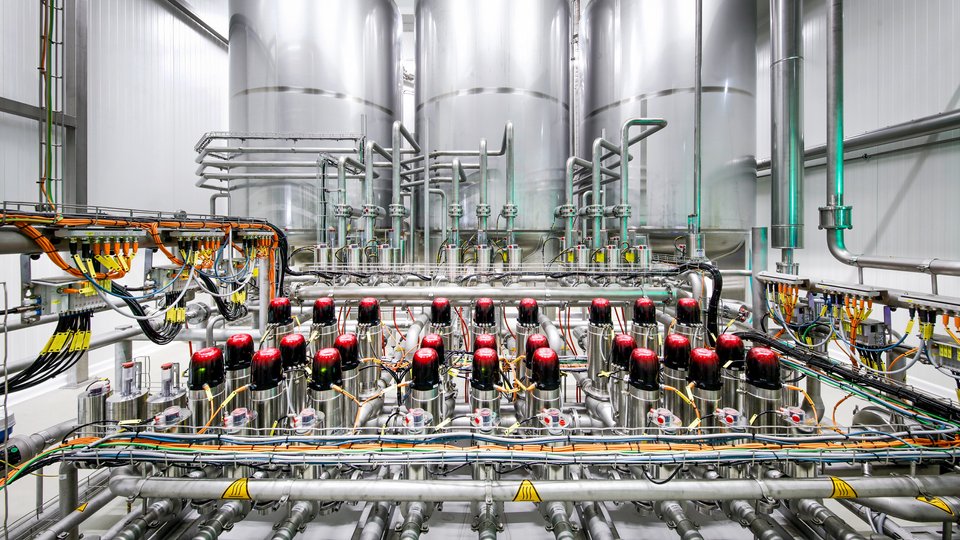
The worldwide demand for process technology systems has greatly increased. Ever more complex recipes and high raw material prices are intensifying the requirements for precise dosing and blending procedures. In this context, from 10 to 12 November KHS is presenting its broad process technology portfolio at BrauBeviale, including a compact system for precise flavour handling. KHS is also expanding its international capacities to meet the growing market demand.
In beverage production, process technology lays the foundations for taste and product quality, emphasises Tobias Cherdron, product manager for process technology at KHS. "It's essential that all components are perfectly coordinated with one another, that they satisfy specific customer requirements and function totally reliably." KHS pursues this strategy with its holistic process technology portfolio, which ranges from raw material acceptance to the ready-to-bottle product. Modular in design and freely combinable, the range includes filtration, sugar dissolving, dosing, blending, deaeration, carbonation, heating and cleaning, among other functions.
Process technology tailored to the entire line
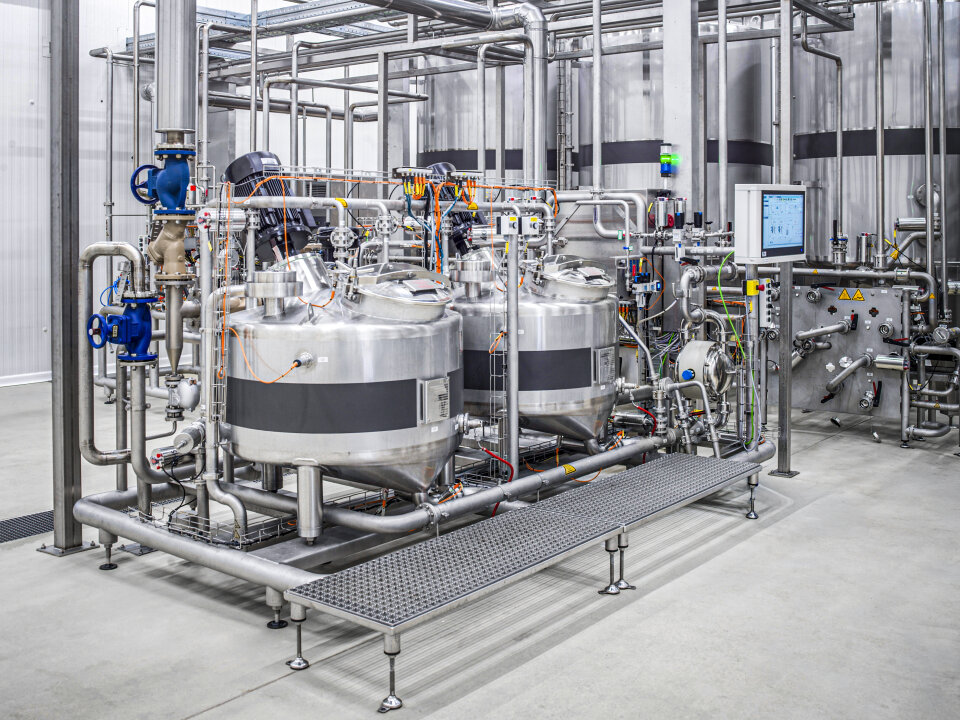
The manufacture of soft drinks illustrates how the interaction of the various components works in practice. Syrup forms the basis here; customers either buy it ready-made or produce it themselves from sugar. When it is made on site, sugar is dissolved at the first stage using the Innopro Delta Jet B machine or, for larger batches, the Innopro Delta Jet C. Following this, various blending and dosing modules such as the Innopro Batchmix add further ingredients to the syrup, for instance flavouring, acid or caffeine.
At BrauBeviale, KHS will demonstrate how these batch-wise processes are technically implemented on an exhibit flavour-handling unit. The unit manually empties 25-litre containers and doses flavouring using a pump into a continuous blending system such as the Innopro Contimix C.
With the Innopro Paramix C and Contimix C, KHS provides two machines for beverage deaeration, blending and carbonation. Which variant is used depends primarily on the method of syrup manufacture and the respective product range. The Innopro Paramix C is a compact unit designed for customers who make large quantities of their own syrup and have a broad product range. The Innopro Contimix C, on the other hand, is aimed at users who have only one or two main products or have no syrup room or only a small one. It combines simultaneous dosing of up to ten syrups and other ingredients stored in connected dosing tanks with the subsequent blending of all components in the main machine to produce the finished beverage.
Systemised automation: precise, reliable, reproducible
The hygienic design of the machines, their high degree of automation and precise control systems help to ensure consistent product quality and very good process reliability. "Automated, recipe-controlled process reproducibility, dependable material traceability and data evaluation and archiving are features that are in particular demand by customers," states Cherdron.
For materials management, KHS relies on Plant iT, the established process control system from ProLeiT. It is used on the Innopro Contimix C and in syrup rooms, among other equipment. Each beverage component has a bar code. When the operator moves a component to a specific place on the machine, they scan both the slot and the component using a handheld scanner. The system then automatically recognises, for example, whether the container is in the right place or whether the right ingredient is being added to the tank. This actively prevents incorrect components from entering the product. ProLeiT also enables data to be archived.
KHS also uses consistent sensor and actuator technology with digital communication in its process technology. Automated fault diagnosis via Ethernet or IO-Link helps to detect disruptions in good time and locate them precisely so that they can be remedied in a targeted way.
One particular challenge in process technology is the complex interaction of the various components. To address this, KHS uses digital 3D machine and piping planning. "Machines, tanks and piping conduits must be precisely coordinated with one another. Thanks to extensive 3D engineering and many years of consultancy expertise, we can implement the respective customer specification transparently and according to demand," says Cherdron.
Expansion of international production capacities
The demand for soft drinks and mixed beer beverages worldwide has increased significantly over the last few years. According to Cherdron, this trend is also noticeable at KHS. "Our order volume for process technology has undergone a very positive development in the past few years. A clear rise in this segment is emerging for 2026."
In view of market growth, KHS is preparing in advance and expanding its worldwide engineering and production capacities. The aim is to harmonise the product portfolio across all locations in order to offer national and international customers a consistently high level of quality. In future, the Innopro Paramix C blending system will also be manufactured at the KHS plants in São Paulo, Brazil, and in Waukesha, USA. Cooperation between sites will allow specific market and customer requirements to be better integrated into global products. At the same time, systems developed regionally, such as sugar decolourisation modules, can be used worldwide in future.
For Cherdron, the advantages are clear. "When we produce locally, we can respond even more efficiently to specific market demands. Our production sites employ qualified personnel with a high level of specialist expertise, also regarding service. They give us proximity to our customers, allowing us to be a close and reliable partner to them. This makes coordination easier, especially of the process technology systems used in day-to-day business operations."
Read more:
