Lanxess launches Purventis for PU/PIR insulation
Lanxess has introduced Purventis, a flame-retardant platform for insulation materials. Its first product, Purventis Core, is a reactive halogen-free phosphorus flame retardant for rigid PU and PIR foams.
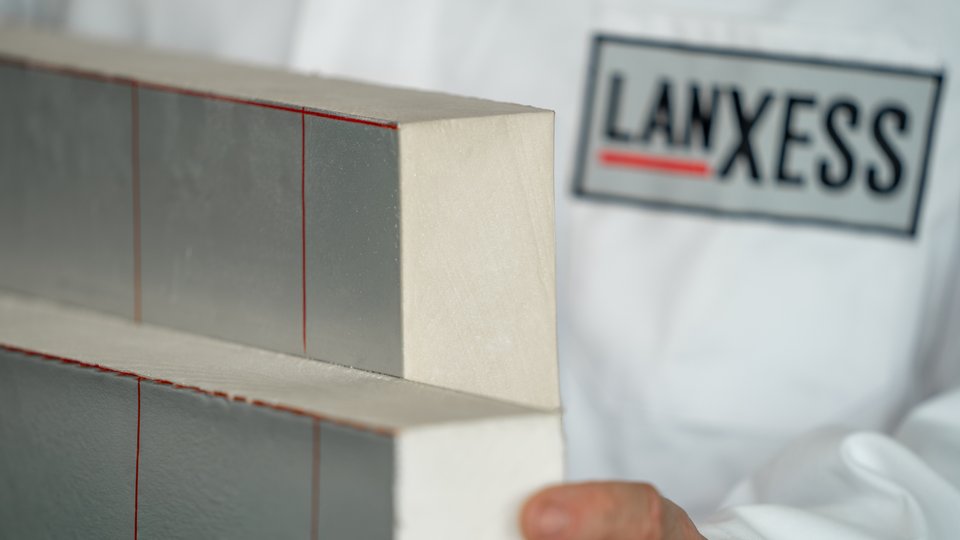
Specialty chemicals company Lanxess has launched Purventis, a new flame-retardant platform for insulation material solutions. The first commercial product offered under the platform is Purventis Core, a reactive halogen-free phosphorus flame retardant for rigid polyurethane (PU) and polyisocyanurate (PIR) insulation foams. According to the company, the product is intended to address the requirements of polyol formulators, PU systems houses and producers of insulation boards or spray foams seeking to combine fire performance, lower emissions, processing practicality and long-term regulatory resilience in PU/PIR insulation systems.
Rigid PU and PIR foams are widely used in energy-efficient building insulation, including construction panels, roof and wall insulation, and closed-cell spray foam. As regulatory frameworks continue to evolve globally, insulation producers are seeking flame-retardant technologies that can support future compliance requirements and product specifications. In this context, alternatives to conventional additive flame retardants such as tris(1-chloro-2-propyl) phosphate (TCPP) and triethyl phosphate (TEP) are of interest to the PU/PIR industry.
Reactive chemistry for changing insulation requirements
Purventis Core is based on the technology previously marketed by Lanxess as Levagard 2100. It is designed as a low-viscosity, non-halogenated, non-aromatic reactive phosphorus flame retardant that is free from triphenyl phosphate (TPP) and phenol. Unlike additive flame retardants, it chemically bonds into the polyurethane matrix.
According to Lanxess, this approach is intended to help producers prepare for reformulation, requalification and specification changes while maintaining the performance profile required in rigid PU/PIR insulation.
"With Purventis, we are creating a clearer platform for the insulation market," says Heiko Tebbe, Head of Application Development Polymer Additives at Lanxess. "Purventis builds on a technology our customers know and addresses the questions that are becoming more important in PU and PIR insulation: regulatory resilience, low emissions, documentation and reliable foam performance."
Test data indicate lower emissions and reduced dosage
In tests conducted by Lanxess, Purventis Core showed no contribution to total volatile organic compound (VOC) emissions. The company states that this result demonstrates that the product is incorporated into the polymer. The technology also showed high flame-retardant efficiency compared with TCPP and TEP.
Flame-retardant dosage is relevant to producers because it affects formulation design, cost calculations, processing and the final foam profile. Lanxess test data also indicate that Purventis Core supports mechanical foam performance, maintaining greater foam stiffness than formulations containing conventional flame retardants.
By using established technology as the basis for the Purventis platform, Lanxess is adapting its offering for insulation producers preparing their PU/PIR portfolios for changing regulatory and market requirements.