Masterpress starts pouch packaging production
Masterpress has commissioned a pouch packaging line at its Białystok plant. The company will manufacture pouches and bags from mono-layer PE structures and high-barrier materials containing more than 90% paper.
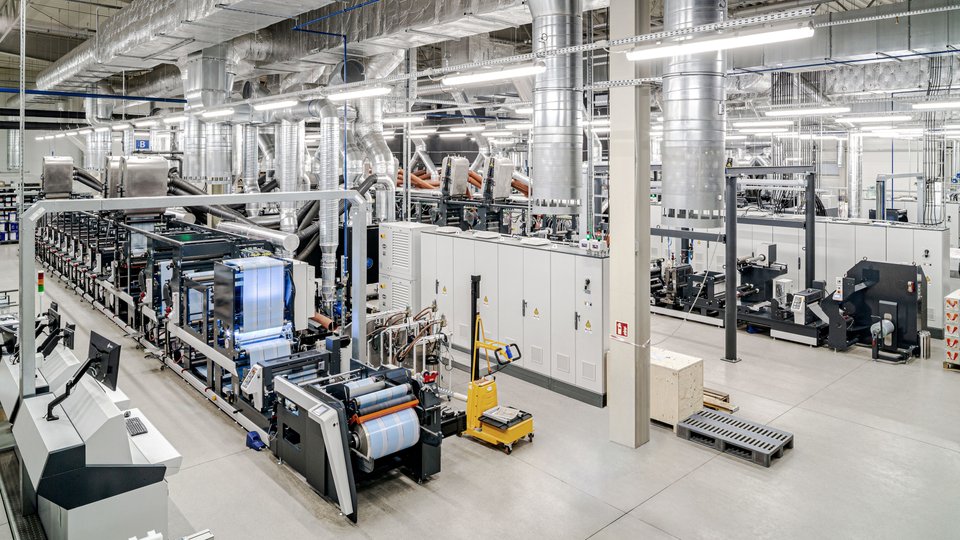
Masterpress has commissioned a new pouch packaging line at its Białystok plant, based on a Karlville Swiss machine. The investment expands the company's portfolio to include flexible pouches and bags made from mono-material polyethylene structures and high-barrier materials containing more than 90% paper. These solutions are intended to support brand owners in adapting their portfolios to the requirements of the EU Packaging and Packaging Waste Regulation, PPWR, and circular economy principles. By launching its own pouch-forming line, Masterpress has integrated it with its existing digital and flexographic printing processes. Surface-printed paper- and plastic-based materials can be fed directly into the package-forming process, eliminating separate lamination and laminate curing stages. This is intended to shorten lead times and increase the plant's operational flexibility.
The machine was installed in August 2026. Following operator training and a series of trials covering different materials, formats and package sizes, the line became fully operational in September.
"In many FMCG segments, flexible pouches and bags offer a more sustainable alternative to glass, metal and rigid plastic packaging, primarily due to their lower weight and smaller carbon footprint," says Jakub Pędziński, responsible for the development of the pouch packaging segment at Masterpress. "This investment allows us to respond more effectively to the expectations of brand owners, retailers and consumers looking for packaging that protects the product effectively, helps maintain its shelf life and meets recyclability and regulatory compliance requirements."
High-barrier material containing more than 90% paper
The new line enables the production of pouch packaging from a material containing more than 90% paper and more than 95% bio-based components. The material is suitable for food contact and can be used to package dry food and non-food products, including pet food, spices and dietary supplements. It contains neither per- and polyfluoroalkyl substances, PFAS, nor polyvinylidene chloride, PVDC.
For applications requiring a high level of protection, the material provides an oxygen and water vapour barrier, helping to maintain the quality and shelf life of packaged products. In testing, its oxygen transmission rate, OTR, was below 1 cm³/m² per day, while its water vapour transmission rate, WVTR, was below 1 g/m² per day.
Tests conducted in accordance with the Confederation of European Paper Industries, CEPI, method confirmed that the material can be recycled in standard paper mills. It also achieved level A in the paper recyclability assessment under the Aticelca 501 method. The results apply to the material itself. Finished, printed pouch packaging is to undergo separate recyclability testing.
Packaging formats and production flexibility
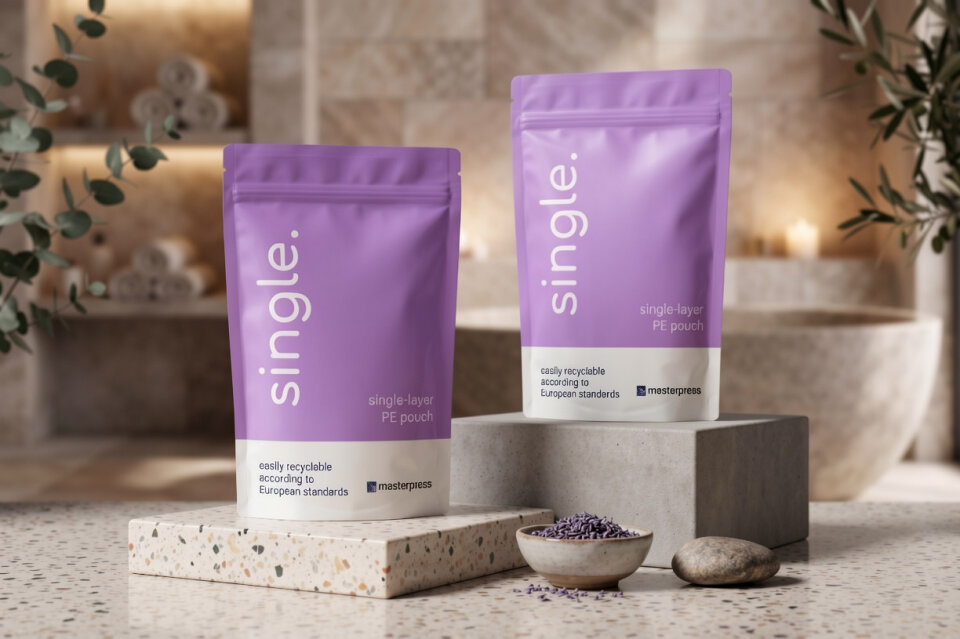
In addition to paper-based structures and mono-layer PE structures, the line can process standard laminates and mono-layer structures based on polyethylene or polypropylene, printed digitally or using conventional technologies. Available formats include two- or three-side-sealed packs and stand-up pouches, with or without zipper closures. The portfolio also includes easy-open closure solutions designed with PPWR compliance in mind.
The line is suitable for short, medium and long production runs. It enables new materials and formats to be tested and pilot runs to be carried out without requiring brand owners to incur high capital expenditure. The system guides the operator through machine configuration based on stored recipes. Quick-changeover solutions have also been implemented to limit waste generated during start-up and material roll changes.
"We are focusing on developing mono-layer structures intended for recycling in paper or plastic waste streams," adds Pędziński. "At the same time, this technology allows us to evaluate new, innovative materials and efficiently fulfil orders in short, medium and high volumes."
Process control and energy consumption
The Karlville Swiss machine uses eight independently controlled servo motors for material feeding, sealing, cooling and cutting. This enables web tension to be controlled at individual stages of the process and production parameters to be precisely adjusted for mono-layer structures and paper-based materials.
In line with Masterpress's sustainability objectives, the line was designed for low energy consumption and limited maintenance requirements. The declared energy consumption is 5–7 kWh.