Meat packaging shifts toward efficiency and circularity
A Südpack stakeholder survey indicates that Germany’s meat industry is prioritizing efficiency, automation, shelf life and recyclable packaging as cost, regulatory and retail requirements intensify.
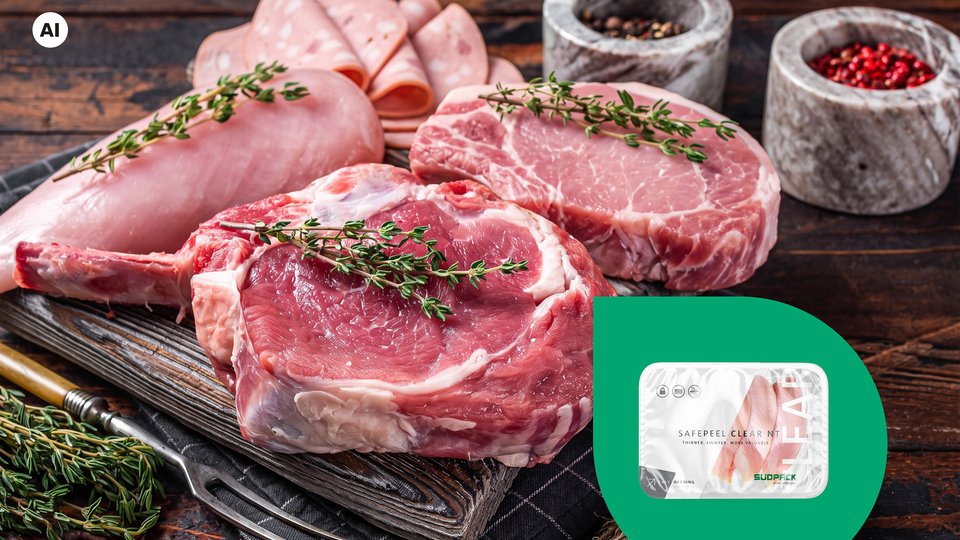
Germany’s meat and processed meat industry is facing changing consumer habits, cost and competitive pressure, strict requirements for product protection and shelf life, and the transition toward a circular economy. A stakeholder survey conducted by film manufacturer Südpack indicates that these factors are reshaping investment priorities and expectations across the sector. Despite difficult market conditions, surveyed companies remain broadly optimistic and are directing investment toward efficiency, automation and packaging solutions intended to meet future requirements. The findings also identify speed, digitalization and service as important competitive factors, alongside closer cooperation among manufacturers, retailers and suppliers. Companies able to address these issues together, rather than as separate challenges, are expected to be better positioned in an increasingly demanding market.
Sustainability is a significant concern for processed meat companies. Respondents generally rate their own sustainability targets, often aligned with initiatives such as the Science Based Targets initiative, as highly important. Relevant certifications, including EcoVadis, are also rated highly, while sustainability criteria in supplier selection receive somewhat less emphasis. According to studies cited in the survey summary, up to 70% of the meat industry’s environmental footprint can arise upstream in the supply chain, including livestock, packaging, ingredients and logistics, and therefore falls within Scope 3.
PPWR influences packaging material choices
The Packaging and Packaging Waste Regulation, PPWR, is expected to affect material selection, recycled content requirements and reusability. According to the survey findings, the greatest potential lies in PP- or PET-based mono-materials and in reducing material thickness without compromising stability, shelf life or appearance.
The results suggest that the industry is prepared to make further progress on sustainability. However, the task extends beyond optimizing existing packs. New packaging concepts must be technically viable, economically sound, practical in operation and supported by retailers. This requires packaging materials and formats to be assessed as part of an integrated system rather than in isolation.
Investment focuses on digitalization and automation
Food retailers strongly influence product ranges, packaging formats, transparency requirements and sustainability documentation. Manufacturers therefore increasingly require suppliers that can provide not only materials, but also data, technical advice and a reliable basis for decision-making.
The industry is increasing investment in production digitalization and automation, as well as digital connectivity through systems such as electronic data interchange, EDI. These tools are intended to support integrated processes, required documentation and more efficient service to food retailers. Priority is being given to modernization projects that can quickly improve efficiency and process stability while reducing costs.
The survey indicates that supplying a product alone is no longer sufficient. Companies increasingly expect information, transparency, technical support and fact-based guidance as part of the supplier relationship.
Convenience, availability and shelf life shape demand
Survey respondents expect consolidation in the meat and processed meat industry to continue over the next 24 months. Convenience, dependable availability and rapid response capabilities are becoming more important. Demand is also rising for portioned, easy-to-prepare products and snack formats. At the same time, retailers are increasingly seeking German meat produced to higher animal welfare standards. Costs, staffing shortages, bureaucracy, regulation and animal welfare requirements continue to add pressure.
Poultry is recording stronger demand due to its availability and versatility. The decline in pork appears to have stabilized, while both poultry and pork show a clear shift toward convenience products. Beef has a comparatively small convenience segment because it is traditionally viewed as a more premium product. For beef packaging, shelf life remains the main priority.
In the sausage segment, manufacturers are differentiating through organic and regional products, budget ranges or highly automated production. Retailers’ own meat processing operations, meanwhile, focus on consistent high volumes and efficient processes. According to Südpack’s survey, these businesses have recognized the importance of PPWR-compliant packaging and are increasingly adopting packaging designed for recycling. Overall, market development is expected to depend less on a particular type of meat than on price, availability, convenience and shelf life.
MAP and vacuum packaging remain dominant
Modified atmosphere packaging, MAP, and vacuum packaging continue to dominate meat packaging concepts, while trays remain the established industry standard. Attempts to replace trays with flow packs have achieved only limited acceptance, despite the stated economic and environmental benefits. Stand-up pouches, by contrast, are gaining popularity for snacks and convenience products because of their practicality, flexibility and range of applications. For printing technology, the main selection criteria are cost, quality and brand impact.
Most surveyed companies consider it important for their film supplier to be located in Germany. The principal reasons identified are rapid consultation, reliable application technology and access to a dependable partner capable of supporting future developments.
Film structures for meat and sausage applications
Südpack’s meat and sausage packaging portfolio includes lightweight PP-based flow packs for ground meat, designed to facilitate recycling, and top webs for PP trays with high sealing performance for fresh meat. It also includes peelable top webs for APET thermoformed trays used, for example, for cold cuts. Other solutions include flexible PP film concepts for stack packs and PP- or PE-based stand-up pouches for salami sticks and other protein snacks.
The company identifies PE- and PP-based mono-materials as important to circularity because established recycling streams for both polymers already exist in many EU countries. Optimization of current packaging systems also remains relevant. Depending on the application, reducing film thickness, adjusting pack formats or adding a reclose system may improve sustainability performance compared with laminate structures or packs without reclosing functionality.
Material selection and film structure must be considered together with sealing performance, mechanical strength and machinability. The survey indicates that future packaging solutions will need to combine packaging and process reliability with efficiency, substantiated sustainability information and application-specific technical advice.
Read more: