Plastics and Rubber machines make important contribution to circular economy
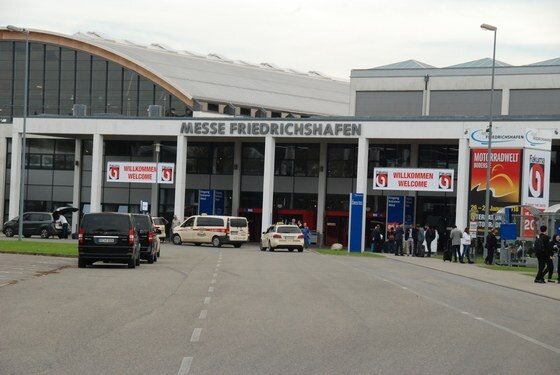
At 19 October 2017 the VDMA visits the companies EREMA, KraussMaffei Berstorff, Wittmann Battenfeld and Sumitomo (SHI) Demag at the International Trade Fair for Plastics Processing, Fakuma, together with representatives of the press.
Thorsten Kühmann, Managing Director of the VDMA Plastics and Rubber Machinery Association is asking the company representatives about their approaches to circular economy and why the concept has gained significance for them.
The VDMA Plastics and Rubber Machinery Association and its member companies put the concept on their agenda in summer 2017. There are several reasons for it: Plastic is a valuable resource that can be recycled well in many cases. However, the potential of plastics recycling is by no means exhausted yet. Plastic is also in the focus of the end consumer. The material is seen as the problem rather than the problem solver, however.
Case in point: Marine Litter. The beneficial use of plastic products and its recyclability are hardly discussed in the public. Plastic products from recyclate repeatedly meet acceptance issues by the end consumer. To do something about the image of plastic products is also deemed important by the machine manufacturers.
The manufacturers of plastics and rubber machinery want to show that they take care of preserving resources – entirely in the spirit of the sustainability initiative Blue Competence. They not only aim at handling the material carefully, but also at offering their customers, the processors, economically attractive technology solutions. Kühmann explains: “The Fakuma offers a very good opportunity to present concrete applications which contribute to the success of circular economy. For us, circular economy already starts at the efficient production process. It is not only about saving material but also about energy efficiency. We also want to demonstrate what plastic recycling is already able to do and that high-quality products can be made from recyclate today.”
The machine manufacturers see the future of a working circular economy in the interaction of all partners of the plastics industry, together with raw material producers and processors.
EREMA capitalises on dialogue and holistic consultation for process optimisation besides new technologies
Manfred Hackl, CEO of the EREMA Group, emphasises: “I like to compare a functioning circular economy in the plastic industry with the symbol of interconnected gear wheels. The integration of recycling in the existing process chain is only possible via communication – starting from the product design and ending with the production. We are also not exempt from the necessary active communication: the extrusion process, the core competency of EREMA, can neither be seen separately from the sortation or washing, nor from the desired final application made from recyclates.”
According to Hackl, the circular economy concept has gained economical importance in the plastics industry and especially commitment of those involved along the plastic chain. As the main driving force, he sees political measures like, for instance, the circular economy package of the EU; renown brands as role models; and initiatives, as, for example, that of Ellen MacArthur.
At the Fakuma, EREMA will mostly present technologies that aim at increasing the quality of recyclates further to expand the spectrum for the sales markets. The latest developments concern improvements of filtration, smell and will be complemented by smart applications. With an eye on the future, EREMA capitalises on holistic consultation to maximise the added value of plastics by process optimisation. EREMA will advise customers that need tailored recycling solutions from the initial idea to bringing the plant into service. Automisation, process optimisation and traceability will play an increasingly bigger role in this.
From recyclate to high-quality compound for high-end applications
At the Fakuma, KraussMaffei Berstorff will demonstrate the recycling of plastic waste to high-end re-compounds. The model plant on display processes recyclates made, amongst other things, from polyethylene and polypropylene flakes to re-compounds. The flakes come from, for example, agrofoil, or can also be homogenous DSD waste.
Carl-Philip Pöpel, Head of Product Management Twin-screw Extruders at KraussMaffei Berstorff, describes the advantage of the new technology: “Up to now, two extrusion plants were needed to make a compound from a recyclate. Now, it is possible in one step. We forgo the intermediate step of the granulation of the regranulate. This not only reduces energy costs, but also thermal impact, since we only melt the recyclate once. This way, we can produce high-quality re-compounds for high-end applications.”
Keep the input into the cycle as low as possible in plastics processing
As important as recycling is for a successful circular economy in the plastics industry, it is vital and worthwhile to look at the manufacturing process of plastic products, in general. Georg Tinschert, CEO of injection moulding machinery manufacturer WITTMANN BATTENFELD, puts it this way: “We think of ourselves as machinery manufacturers that are part of a comprehensive cycle. We regard our main contribution as making as little input into the cycle as possible, to ensure a production that saves as much raw material as possible.” Asked how WITTMANN BATTENFELD solves this requirement technologically, he elaborates: “We use the most modern drive technology in our machines – electric or servo-hydraulic – as a standard to keep the use of primary energy as low as possible. This effect gets increased by the additional use of our intelligent control engineering because it enables the use of released braking energy in the machine. We also offer technologies that help to reduce material use by manufacturing thin-walled parts, or, by replacing plastic with gas.
Stable processes, little waste and high plant availability
Injection moulding machinery manufacturer Sumitomo (SHI) Demag also clearly bets on efficient drive technologies and low material usage. “With our new generation of electrical injection moulding machines, we reach an excellent energy balance,” Gerd Liebig, CEO of the Executive Board, explains. “But that’s not all,” he continues, “the highly precise production process allows the production of complex technological parts with low waste ratio.”
At Sumitomo (SHI) Demag, sustainability has been capitalised for a long time already, the company has been an active partner of the VDMA initiative Blue Competence for years. “We consider the concept of circular economy as a good source of impulses on a way to more sustainability. For the entire value chain, our customers and, respectively, also their customers, it becomes increasingly important to already include the production process in the sustainability discussion,” tells Liebig. “We as machinery manufacturers can contribute to improving the image of plastic. Also, by looking into customer requirements on processing recyclates, and by adapting our machines optimally to different materials.”
Sumitomo (SHI) Demag not least counts on high plant availability. Little susceptible to breakdowns, low-maintenance machines and plants need less local servicing, which also saves resources.
Source: VDMA