Sustainability in packaging and beyond
The increasingly ethical and health-conscious demands of consumers is driving new quality standards and has inspired Gabriel-Chemie to introduce a new range of products to answer the demand for Halal and Vegan-compliant products.
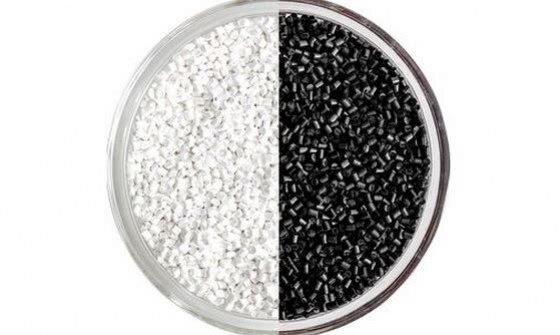
Gabriel-Chemie has a long tradition of offering high levels of quality that meet not only the highest national and international standards, but also the most demanding customer-specific product requirements. Especially in the areas of medicine, food, beverages and cosmetics, the demand for a more sensitive handling of raw materials and ingredients is growing. The increasingly ethical and health-conscious demands of consumers is driving new quality standards and has inspired Gabriel-Chemie to introduce a new range of products to answer the demand for Halal and Vegan-compliant products.
As a leading masterbatch producer Gabriel-Chemie can now produce according to special requirements to ensure that products can be certified as 100% free of raw materials that are of animal origin and/or include alcohol. In order to maintain the quality and transparency of the content, Gabriel-Chemie uses the globally recognized Halal certificate of the organization HQC, Halal Quality Control and in addition the so-called V-label, which is internationally recognized as a seal of quality for the labelling of vegan and vegetarian products, thus rounding off the promise of quality.
"We are committed to fulfilling the demands of both consumers and our customers in terms of social and environmental responsibility. That‘s why Gabriel-Chemie must act responsibly and strive for sustainable solutions that are also in line with our economic development as a company," affirms Sabine Nicolaus, projectleader in projectmanagement.
Whether in medicine, the food and beverage sector, or in cosmetics - haptic and functional properties/ characteristics such as individual surface design, resistance to breakage, low weight or even organoleptic safety/innocuousness are the hallmarks of Gabriel-Chemie's raw materials. This new innovation will be presented for the first time at the Fakuma 2018.
Award for the development of sustainable solar panels
In 2009, the in part publicly-funded project SolPol from was launched by the Johannes Kepler University. Together with numerous partners from the industry, the project management focused the research project around the use of polymer materials in solar energy technology. Specifically, it is about solar thermal energy, the technology with which hot water is produced using solar radiation. Current solar thermal systems are made of a variety of materials such as metals, glass, plastic and wood.
The aim of the SolPol project is to develop a solar thermal system or solar collectors made entirely of plastic, which are significantly lighter than conventional solar thermal systems, reach a service life of approx. 20 years and more, and can be recycled again after the end of the service life. Within the scope of this project, Gabriel-Chemie and its industrial partners developed new stabilizer packages that withstand high temperatures and contact with hot water, thus ensuring a long service life.
Due to these properties, the newly developed Masterbatch products can be used in many different applications.
"We are pleased to be part of such a far-reaching project and to contribute our knowledge and technical expertise. Especially the smooth cooperation with big companies like Lenzing and AGRU is confirmation of the competence that we bring to the project.", says Andreas Höllebauer, Head of Corporate Technical Development at Gabriel-Chemie.
On September 28, 2018, the charitable association Eurosolar presented the Austrian and European Solar Prize. As part of this, the SolPol consortium received the Austrian Solar Prize for the Education and Training category. Already in spring, the project received the „Sustainability Award 2018“ (1st place regional cooperation) of the Federal Ministry of Education, Science and Research and the Federal Ministry for Sustainability and Tourism.
Source: Gabriel-Chemie