Sustainable materials with tradition
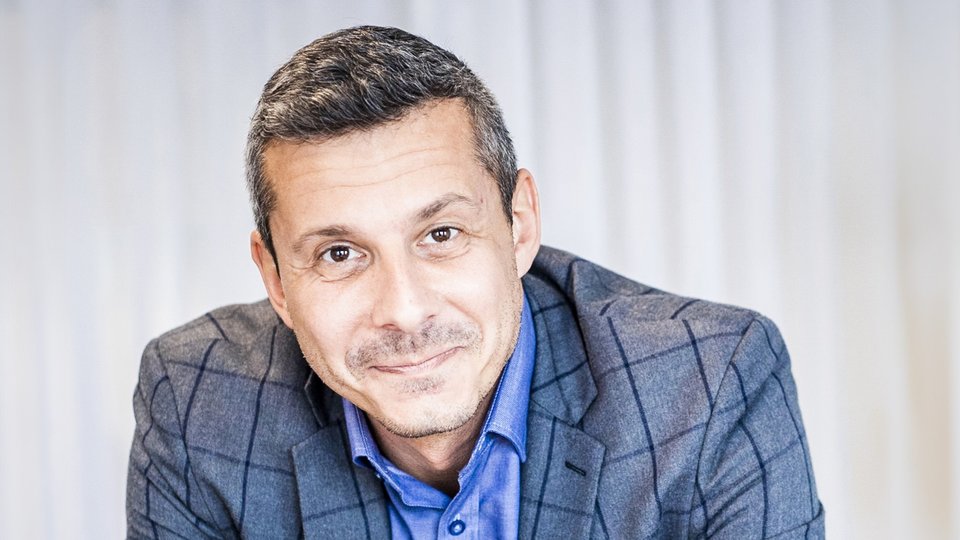
Interview with Aleksander Kurszewski, Area Manager in Polykemi AB.
The last year has certainly been a time for Polykemi to finalize a number of important investments. You have opened a production facility in North Carolina, as well as a second one in Chongqing, China. On top of this, your subsidiary in Mexico was established this year. Please tell us a little more about these investments.
Yes, the Gastonia plant together with establishing a new Polykemi subsidiary in Mexico is our step toward achieving our global goals by providing the North and South American markets with our materials. These investments have brought us closer to our customers, and gives both us and our customers greater confidence in increased collaboration. We have seen a major increase in material requests and greater interest in our products, especially those containing high-quality recycled raw materials, so this step was obvious, both in terms of timing and location.
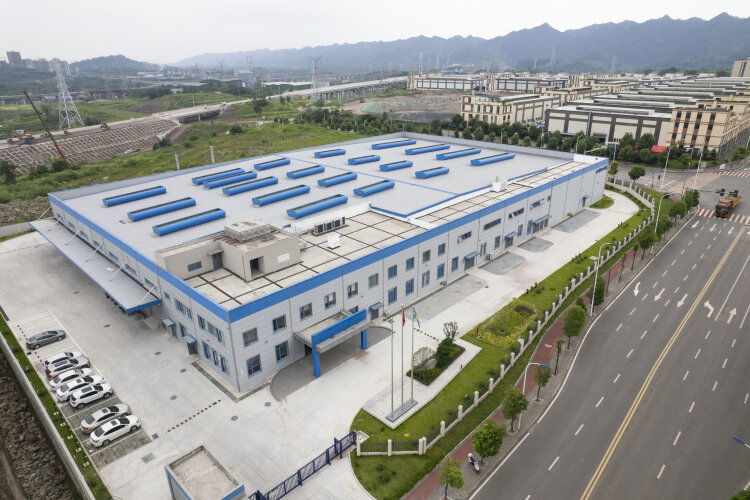
As for our Chinese market, the construction of our second production unit in China, in Chongqing, is also a part of the company's development plan. Since entering the Chinese market in 2005, since we launched our first factory in the country, in Kunshan, Polykemi has maintained continuous and stable growth and profitability, and the sales business in Chongqing area itself has been very successful for us from the very beginning. So, the localization of this new investment was chosen by our customers, we can say. Now, we can provide customers the same material on three continents, but locally produced, in order to save time and cost.
Our facilities in China are responsible for the production and sales of customer adapted thermoplastic compounds also to other countries in SEA, as well as to Australia and India. Our facility in North Carolina is providing our solutions to the NAFTA area and our main office and production site in Ystad (Sweden) serves customers on the European market. We proudly call ourselves "A local producer and a global supplier".
This automatically raises another question: will 2024 also be such an intensive year for the development of your business in terms of foreign expansion?
We have a motto in the Group that has guided us since the beginning of our existence: "When you stop being better, you stop being good". So yes, we are constantly investing in the company and human resources. We will not expand with e.g. new factories or the like in 2024, but of course we are investing in human resources and in further developing of our factories, etc.
It is no secret that sustainability is an extremely important topic for Polykemi, as a manufacturer of polymer materials. What activities related to this topic have you undertaken recently and have you achieved any major successes in this field? What are your plans for the future in terms of putting sustainability into practice?
Honestly, we have been "putting sustainability into practice" since the very beginning of Polykemi in 1968. In the early 1980s, our sister company Rondo was founded in Sweden and since then they have been offering our clients solutions with environmental benefits based on high quality recycled compounds. The difference is that before, we had to persuade, now everyone wants it! This really makes my job as Area Manager Poland much easier (laughs).
What we have done recently are two things… First, the implementation of our Materialsmart.info program. So, we not only offer materials that reduce the climate impact of the client's product, but we can calculate this impact in the form of CO2- e/kg. We can not only certify these numbers, but also help our customers to choose the right material and compare the impact of different solutions, because the choice of material is responsible for 80% of the climatic impact of the finished product.
Second, was to get the ISCC Plus certification. The certification guarantees total traceability in the production and delivery of bio-circular mass balance certified plastic raw materials. Technically, we have been able to offer this type of both bio-based and bio-circular materials before, but now with certificates specifying how much biomaterial our supplier used in their process, and how much we then used in our materials, we can provide the customer with a traceable, accurate receipt of the content.
Following on from the previous question, what has the recent cooperation between Polykemi and Hexpol TPE looked like and what has it consisted of, focusing on topics such as reducing a product's carbon footprint or increasing recyclability? What lessons have you learnt so far from this venture?
We have been cooperating with Hexpol TPE for many years. We complement each other, one could say, because we produce hard thermoplastic materials and they produce thermoplastic elastomers. We often draw from each other's experiences and help each other. This time was no different. Polykemi’s Materialsmart met Hexpol TPE’s Sustainable Materials Lab to create tested solutions.
Both companies have done substantial work in the field of sustainability, allowing us to provide cradle-to-gate Product Carbon Footprints (PCF) and calculate the Global Warming Potential (GWP) per kg of material. Now we have selected one specific project, similar to those that both our companies encounter very often, i.e. the 2K process. We did this to demonstrate the possibilities in reducing the product carbon footprint, increasing recyclability and optimizing adhesion.
To bring real change and deliver the needed transition to the plastics industry, we must collaborate. This project is about taking our collective know-how to enable combinations with the lowest carbon footprint and highest recyclability possible without worrying the customer about adhesion properties. In this very case the PCF data shows that switching from a combination using fossil-based ABS from Polykemi, overmoulded with a fossil-based TPE from Hexpol TPE, to a recycled PP and TPE with bio-circular attributed content, can give a 77% reduction in CO2-e.
As a company with many years of experience, you have surely already set your most important objectives for the coming months. Do you plan to expand your product portfolio in the near future? If so, by what type of materials (with what characteristics)?
Our specialty is to offer our clients the best material solutions tailored to the requirements of each individual project. Of course, we try to replicate our successes wherever possible, but the basis of our success is the production of tailor-made materials. So, when it comes to material innovations, they are being created all the time, we already have over 15,000 recipes, ready to be adapted to new projects. Our R&D department, our laboratory, technologists and chemists are constantly working to improve our products and find new solutions.
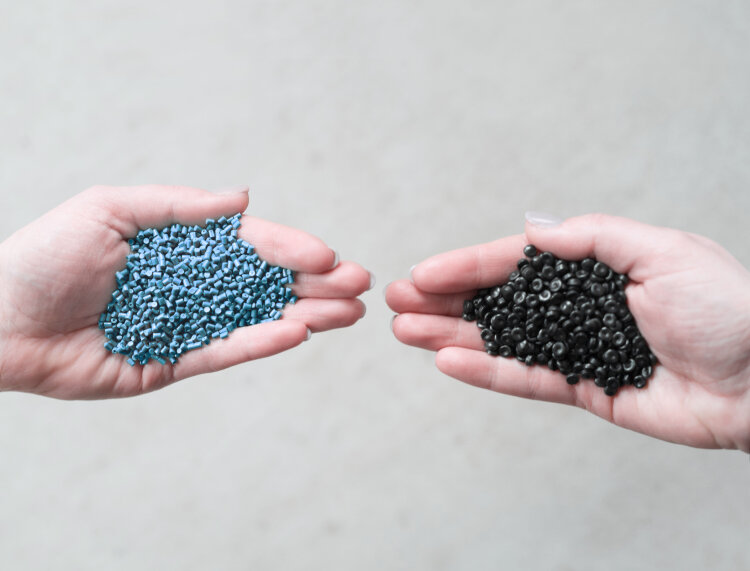
What we do, from time to time, is to develop our material family, introducing new additives, fillers or even completely new polymers into production. This will be the case now when we present our bio-circular PP solutions to the market. This is how a new product family of Polykemi - NATUCOMP - will be born. This move, together with our recently completed ISCC Plus certification will give our customers traceability of our bio-circular materials.
Interviewed by Agata Mojcner
Read more: