Upcycling - a higher level of recycling
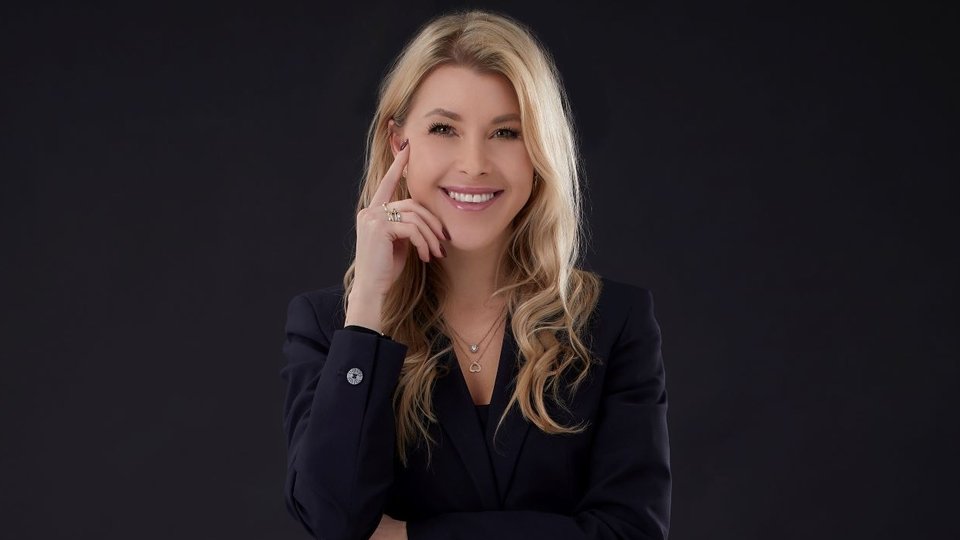
Interview with Estera Jamrozek, MAS Austria Area Sales Manager.
What do you mean by upcycling? How is it different from normal recycling?
Upcycling turns waste into a higher-quality product while recycling slightly decreases the quality of certain materials. MAS Austria stands for upcycling to the next level and is the trendsetter for plastics upcycling with efficient extrusion machinery and lines. Whether it's an individual machine or a full upcycling line, post-consumer upcycling or production waste upcycling, from regular plastics to high-grade extrusion of PET and other engineering plastics, from regrind to sheet or fiber - MAS realizes your extrusion technology requirements with tailor-made solution concepts.
MAS twin screw technology is specifically designed to meet the requirements of high-quality recycling and re-compounding processes.
You describe yourself as a trend-setting company in upcycling. Please tell us more about MAS Maschinen- und Anlagenbau Schulz GmbH.
MAS was founded in 2006 by the internationally renowned recycling pioneer Helmuth Schulz. Helmuth Schulz, with over 40 years’ worth of experience in plastics machine manufacturing, realized that the then market-wide established recycling machinery couldn’t sufficiently cover the quality standards of the future of recycling.
He developed the idea for the (patented) technology of conic twin-screw extrusion, one of the most important innovations in the mechanics of recycling in recent decades.
In 2017, Katharina Schulz took over as owner of MAS. The company displays continuity in owner structure; MAS is a family-owned business in its second generation.
The production site in Austria is being continuously expanded, with a growing number of employees. At the head office of MAS, we combine know-how for solution-oriented technical sales and distribution, electrical and mechanical construction and development, software development, and process technology with the production of machines and equipment. We are proud to have established a core workforce of employees with long-term job tenure. Over the years, we have expanded internationally with local partners for distribution and technical equipment support.
The spirit of innovation, purposefulness, sustainable growth and trustworthiness to our partners have all left their mark on the history of MAS and are the foundation on which we continue to shape the company's further development. We strive to improve continuously in all areas to make our partnership with MAS even more attractive to our customers.
Helmuth Schulz, whom you mentioned, is the author of the unique technology of conical twin-screw extrusion. What are its characteristics?
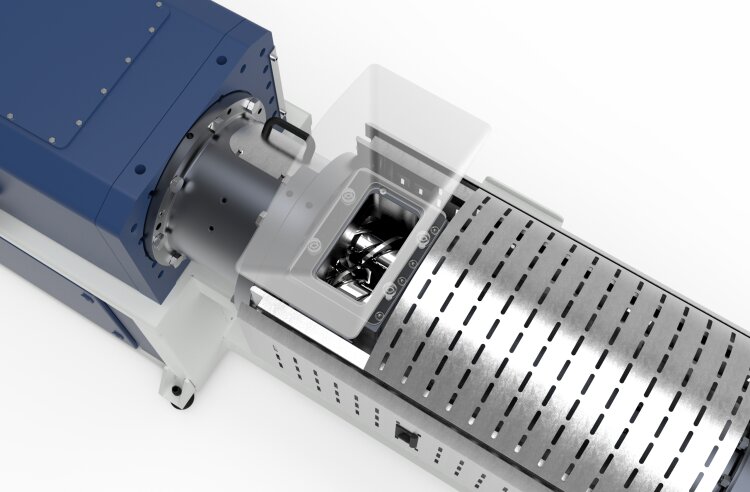
The patented conical, co-rotating design of the processing unit features a large feed opening for processing a wide variety of plastics fractions, such as materials of the lowest bulk density, mill materials, flakes, new products, or fibers. Additives, filling materials, and fibers can be added directly via the feed opening without complicated and high-maintenance side dosing. These materials are processed into the polymer across the entire process length using the lowest screw rotation speeds while simultaneously purposefully applying energy. Thus, melting occurs with extremely gentle polymer treatment at maximum energy efficiency. Thanks to the purposeful application of power, one cooler blower at low performance in the metering section are sufficient to cool the processing unit.
Let's move on to the company's current activities. What type of equipment does MAS offer?
As well as classic extrusion, melt filtration, and gas venting processes of various plastics, MAS extrusion technology also enables the finishing of these commodity plastics with multiple additives.
The re-compound line is one of our solutions for recycling and compounding in one step, even for materials that are difficult to degas. In addition, MAS twin-screw extruder offers the option to mix all recycling fractions - such as materials with the lowest bulk density, mill materials, or fibers with additives and filler materials – or to homogenize fluctuating input qualities excellently.
For more complex requests, we recommend the twin-compound lines, which create recycling compounds for exceptionally high-grade applications. The first conic, concurrent twin-screw extruder mixes all recycling fractions, such as materials with the lowest bulk density, mill materials, or fibers with additives and filling materials. Having run through the first twin-screw extruder, contaminants such as wooden parts, paper, non-melting unusable plastics, or rubber are removed with the CDF continual melt filter.
Afterward, the material is transported into another MAS twin-screw extruder, where more additives, filling, and reinforcing materials can be added. The large pour hole also allows the insertion of long and irregular fibers, such as natural, wood, or carbon fibers. In addition, the material is efficiently degassed inside the twin-screw extruder thanks to the large melt surface. The conical construction facilitates the pressurization of the consequent granulation process without requiring an additional melt pump. Material granulation is executed via strand granulation, water-cooled die-face granulation, or underwater granulation.
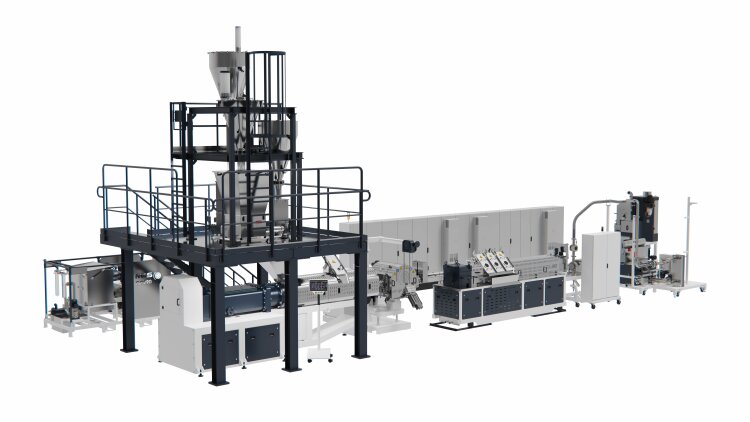
MAS PET- lines are also the ideal solution for processing PET in re-granulate and inline applications. The patented technology facilitates processing all PET recycling and new material fractions (such as bottle mill materials, mill materials from sheets, granulates, and additives) at low rotation speed and high screw filling degree for the shortest process length at low mass temperatures.
MAS technology also guarantees an excellent homogenization of fluctuating input material qualities and a large gas venting surface. As a result, the MAS solution leads to outstanding intrinsic viscosity, color, and AA levels at low energy consumption.
Depending on the application, this can enable optimization of subsequent condensation polymerization steps, reduction of pre-drying new materials and industrial waste, and achieving FDA / ESFA certifications in combination with pre-drying and a high-performance vacuum gas venting system without subsequent condensation polymerization step.
So a customer can build a complete process line with your help?
The significant benefit of MAS is that we offer not just machines but complete service as well. The service starts as early as the decision to acquire MAS equipment. Our experienced, competent experts accompany the customer from the place of the order.
The experienced and qualified project management team directs the successful realization of the project idea while always considering quality specifications and deadlines. Customers' wishes and potentially changing requirements throughout the project are flexibly checked for feasibility, incorporated, and implemented across the span of the project.
Our project managers are the central communication intermediary between our customers and specialist departments, taking care of the project from order placement to final acceptance.
MAS service experts support from the final acceptance and with the start of productive manufacturing through the entire lifespan of MAS equipment and beyond. Our experienced service department is the perfect point of contact for complex questions regarding equipment optimization or adjustment of your system to new production requirements.
Maintenance concepts and spare part strategies tailored to equipment are developed with customers and our key account managers. As a result, your system's lifecycle costs, performance capacity, and productivity are constantly optimized.
On a technical level, our service experts and multi-level tech support provide top-level assistance documented by the professional MAS ticket system.
Well-trained service and initiation technicians with many years of plastics technology and extrusion experience are at hand globally for our assembly and service support.
What is your decision support during the pre-project phase?
We demonstrate MAS recycling and compounding technology's performance and added value in our showroom and innovation center. The MAS laboratory center is an essential component of the goal-oriented support of the customer decision-making process in the pre- project phase. With a comprehensive array of machinery, we present and evaluate your planned facility configuration and operation under realistic production conditions using custom material as early as the distribution phase.
Our laboratory equipment can analyze the input material and the produced granulate. Our experienced plastics technicians will support customers in evaluating the results. The test run results provide the basis for choosing the correct facility configuration and the successful realization of your facility at the actual scale.
What types of polymers can be extruded with your equipment?
MAS extrusion technology facilitates the gentle processing of thermoplastic engineering plastics such as PA, PA 6.6, PMMA, and PC-ABS, up to engineering polymers such as PEEK. In addition, various filling materials and reinforcing materials can be compounded into the polymer matrix.
Post-consumer or post-industrial materials can be compounded extremely flexibly with reinforcing fibers (glass fiber, carbon fiber, or natural fiber), impact modifiers, stabilizers, or inorganic materials to improve form stability and fracture strength (using various filling materials such as chalk, talcum, or marbles).
Besides commodities plastics, MAS extrusion lines are the ideal solution for engineering plastics like PET processing, both in re-granulate and inline applications.
Read more: