A new pickup-bed design wins the 2026 SPE Grand Award
The thermoplastic pickup bed of the 2026 Toyota Tacoma won the Body Exterior category of the SPE Automotive Innovation Awards and was named the overall winner. The project was developed by Toyota, Vuteq, BASF, Cascade Engineering, Haidlmair and Engel.
The 2026 Toyota Tacoma pickup bed impressed the judges of the SPE Automotive Innovation Awards in the Body Exterior category and was also named the overall winner. The project partners are Toyota, Vuteq Corporation, BASF, Cascade Engineering, Haidlmair and Engel.
The SPE Automotive Innovation Awards recognise innovation in eight categories: Body Exterior, Body Interior, Chassis/Hardware, Electric and Autonomous Vehicle Systems, Materials, Powertrain, Process/Assembly/Enabling Technologies and Sustainability. The Toyota Tacoma pickup bed won in the Body Exterior category and was then selected by the judges as the overall winner from among the category winners. The awards ceremony took place on 4 November 2026 at the 55th SPE Automotive Innovation Awards Gala in Livonia, Michigan.
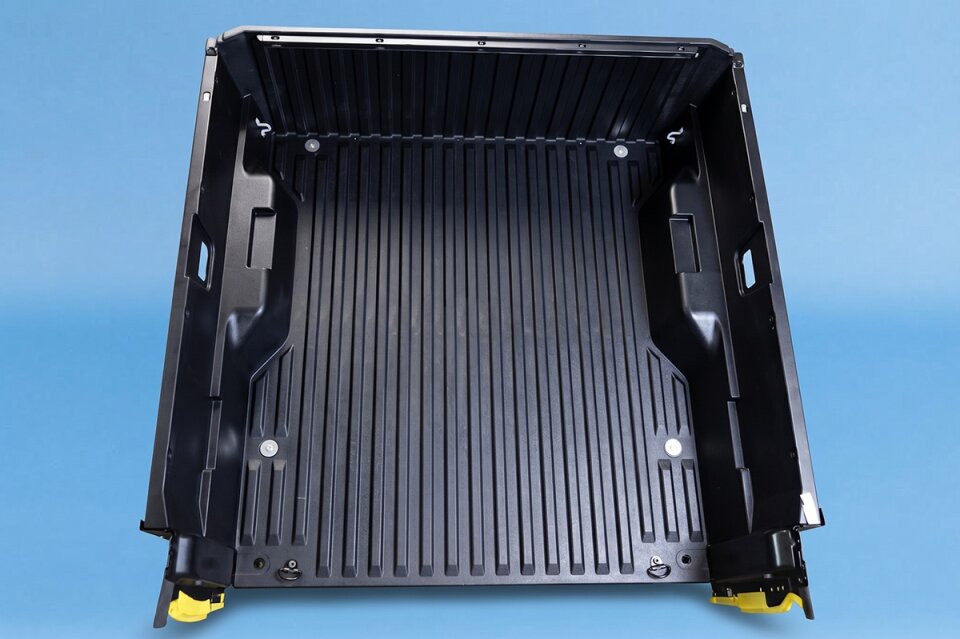
The award-winning component is the thermoplastic pickup bed for the 2026 Toyota Tacoma. It offers an alternative to the painted version made from thermoset sheet moulding compound (SMC). Three pre-formed structural reinforcements are placed in the mould and overmoulded with the material of the pickup bed during injection moulding. This creates an integrated assembly without mechanical fasteners.
Large machine and heavyweight moulds
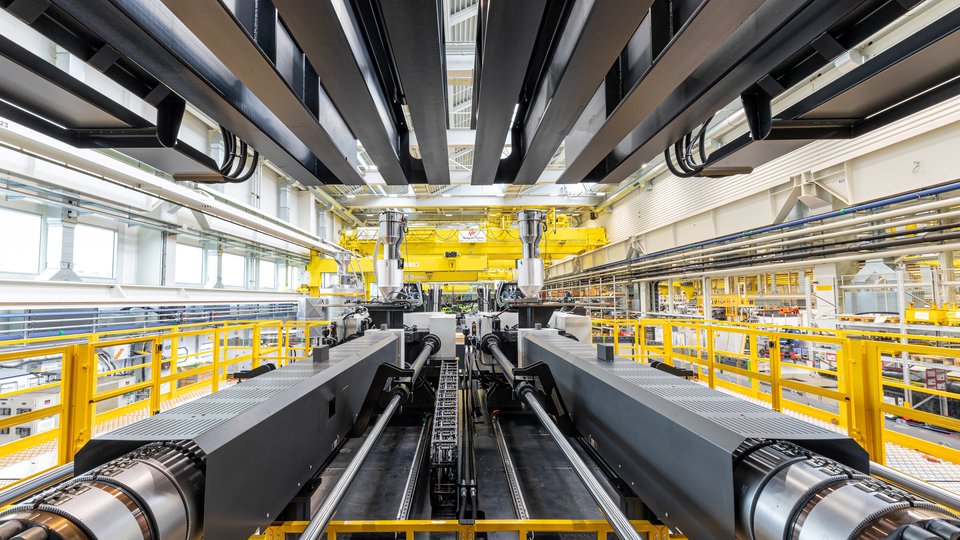
To produce the large-format pickup bed, Engel developed the duo 12000 US, the largest injection moulding machine ever built. The machine is around 24 metres long and 8.4 metres high. With a clamping force of 110,000 kN and two injection units, it was purpose-designed for this application.
Haidlmair's mould-making expertise played a key role in the project. The company designed and built three highly complex injection moulds for the pickup bed. Weighing around 120 tonnes each, they are the largest moulds in Haidlmair's history and among the largest in the world. With a shot weight of around 30 kg, precisely matching the moulds to the machine and process demanded exceptional engineering expertise. Only the combination of high mould quality, a high-performance injection moulding machine and the customer's manufacturing expertise makes a component of this size and complexity possible.
The material used is BASF Ultramid B3ZG10 HSP UV Ccycled 5, an impact-modified polyamide 6 reinforced with 50 per cent glass fibre. According to the project data available, the cycle takes just over two minutes. The stated energy consumption is 0.28 kWh per kilogram of plastic.
Synchronised automation
Automation plays a central role in the production process, coordinating the handling of components between the injection moulding machine, cooling stations and conveyor. An Engel viper 120 linear robot moves the pickup bed between the machine, the cooling stations and the conveyor. Two further robots handle demoulding and the inserts: while the first removes the finished pickup bed from the mould, the second loads three reinforcement elements and four bushes for the next cycle.
The viper then takes the pickup bed and places it in an available cooling station, where it is secured and cooled by fans. The linear robot then collects a component that has already cooled from another station and hands it back to the first robot, which places it on the conveyor. The individual steps work together to keep the automated production process moving.
Partners' comments
"When we began our search for the right partner to build the world's largest injection molding machine, we knew we needed a team that was all-in from the beginning. ENGEL was that partner. Our core teams combined prototype learning with extensive research and validation to overcome the challenges of this complex project to deliver a successful production solution", said Jeff Totten, Chief Engineer, Cascade.
"Winning the Grand Innovation Award is a special recognition of our team's innovative spirit and commitment. It shows that, through outstanding development work, close collaboration and confidence in our strengths, we can create solutions that set new performance benchmarks with exceptionally short implementation times", said Herbert Zeidlhofer, Vice President Product Line Large Machines.
"Projects of this scale can only succeed when every partner contributes its expertise from the outset. Toyota, Vuteq, BASF, Cascade Engineering, HAIDLMAIR and ENGEL approached the mould, material, machine and automation as one integrated system. This close collaboration was the key to success", said Julian Rameder, Project Manager at the time and now Global Key Account Manager for Automotive & Mobility at Engel.
"In addition to improved sustainability, injection moulding with structural resin enables us to simplify the manufacturing process by minimising post-processing steps. Vuteq is pleased to be a partner in developing this product and system, implementing the precise control of moulding and part handling required to bring this ambitious vision to reality and deliver the quality and efficiency that are our hallmarks", said Steve Parkhill, President – Vuteq Technical Center Americas.
Rather than producing several individual parts one after another and assembling them afterwards, the pickup bed is created as an integrated assembly in a coordinated process. According to the partners, the project shows how the scale of production can be turned into concrete manufacturing benefits.
Moulded in one cycle: three pre-formed structural reinforcements are placed in the mould and overmoulded with the pickup-bed material in the same injection moulding shot. This creates an integrated assembly without mechanical fasteners. © Image courtesy of SPE Automotive Division
Read more:
