Are hybrid trade shows the future of the industry?
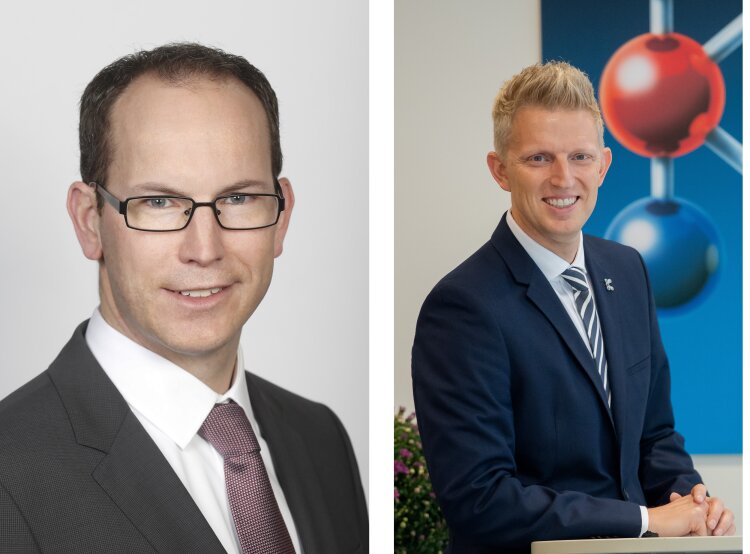
Interview with Thomas Dohse, project director of interpack and Thomas Franken, project manager of the K Show
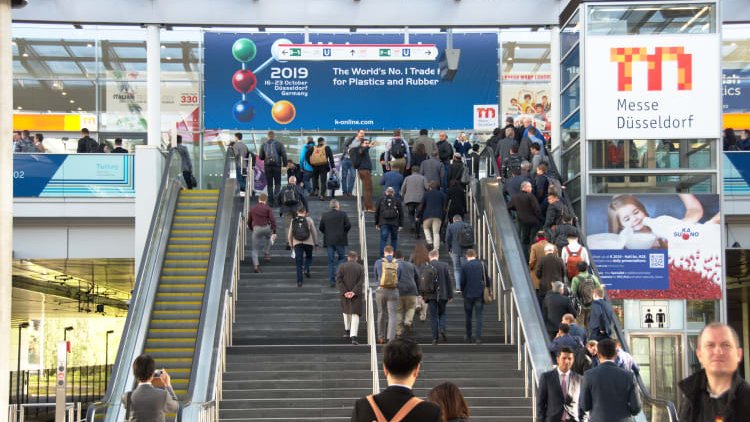
Interview with Thomas Dohse, project director of interpack and Thomas Franken, project manager of the K Trade Fair.
Things like K and interpack trade fairs are really unique. Both of these events are considered the biggest in their industries. And one company is responsible for both events. So it is natural to ask, where is the secret of success?
T. Franken: Yes, the K show is big, but it´s all about quality, not only quantity. With K, we offer the worldwide plastics and rubber industry its leading trade fair and its most important information and business platform. Exhibitors and visitors from all continents come together and use the opportunities offered by their flagship fair to demonstrate the industry’s capabilities, discuss current trends and set the course for the future. Only at K, can visitors experience and compare such a varied and international range of innovations, solutions and high density of product launches. K underscores its special position not only through its popularity with the global industries but also by addressing the current challenges of our era and especially of its sector.
T. Dohse: The same applies to interpack for the packaging branch and the related processing industries. Being established in the 1950’s both, interpack and K have a long history and always put a lot of effort into being as close to the industry as possible. We work very closely with worldwide associations, organizations and specialists in the industry. Anticipation has always been one of the decisive prerequisites for the continuous success of a leading international trade fair. Just as the plastics and rubber industry as well as the packaging and processing industries continue to develop dynamically, K and interpack do too – for instance with special exhibitions on important topics today and the future.
T. Franken: In addition to the flagship fairs in Düsseldorf, we are present in other parts of the world with our global portfolios for K and interpack, offering business and communication platforms in important growth markets and regions. Messe Düsseldorf is thus a door- and gate-opener for successful business for companies around the globe.
The second question is also very obvious. What are your feelings when you recall last year?
T. Dohse: It is logical that as trade fair organizers our hearts bleed when the exhibition halls have to remain empty where otherwise face-to-face business is conducted, hundreds of thousands of people from all over the world meet and present their innovations live.
Due to the Covid-19 pandemic, Messe Düsseldorf closed the business year 2020 with a loss, but thanks to sound and sustainable management over the past years, the company has created financial leeway which is having a positive effect for managing the current situation. Furthermore, the company counters the current pandemic with a powerful package of measures.
T. Franken: , We have expanded our business model by developing digital formats for example. Last November, around 45,000 trade visitors from 169 nations participated in virtual.MEDICA and virtual.COMPAMED; in addition, there were 1,500 exhibitors from 63 countries. Industry players from all over the world were able to network even in times of COVID-19. But of course, the realisation of live events in our exhibition halls is always our focus. The economy urgently needs trade fairs. It needs platforms for presenting, gathering information, exchange and networking and – most important - face to face communication. And we are very optimistic that our trade fair business will ramp up again in the second half of 2021.
And what is the situation in Germany nowadays? In Poland, fairgrounds have been turned into temporary hospitals
T. Dohse: Fortunately, no additional temporary hospitals have had to be set up in Germany so far, medical care in Germany is very good, there are also enough beds in intensive care units in German hospitals, but even here the medical staff has had to work at peak performance for over a year, so one can only pay tribute and thank them again and again.
T. Franken: In some cases, vaccination centres have been set up in German trade fair halls. In Düsseldorf, however, the vaccination centre is not located on our exhibition grounds, but in the sports Arena, located right next to Messe Düsseldorf.
What is the nearest future of the exhibition industry? And what long-term consequences can we expect?
T. Dohse: At the moment, the pandemic does not yet allow us to return to live events in the exhibition halls, many trade fair companies are working on digital formats. As far as Messe Düsseldorf is concerned, our virtual events attract a broad-based international audience. The recent example is our virtual.drupa, which ended successfully after four days on 23 April 2021. Digital events like this allow industry players from around the world to network, find out about industry trends and forge partnerships, even in times of Covid-19.
T. Franken: Also, virtual commitments will pay off after the pandemic. There is a trend towards combining physical and digital formats. For our trade fairs this means that they will be increasingly complemented by virtual content. We focus on developing hybrid trade fairs – i.e. a mix of the physical event on site and digital ranges. This will consolidate the pole position of Düsseldorf’s global No. 1 trade fairs as central communication and business platforms for their respective industries – during the physical trade fairs and throughout the whole year.
T. Dohse: Trade fairs have always had to keep up with the times, adapt to changes in the world and the industries involved. This also includes modifying, supplementing and permanently optimising formats for exhibitors and visitors. The pandemic caused very sudden changes and challenges that the trade fair industry is ready to face. And one thing became very clear in times of social distancing: We as people are social beings and want to meet each other in order to establish and foster relationships as well as to build trust. This is the basis for business and can not easily be replaced by digital alternatives.
K fair will take place next year and interpack in 2023. How are the preparations going?
T. Franken: We are currently in the registration phase for K 2022, which will end with the official registration deadline on 31 May and the hall planning will then begin in summer. We are already working on the content and key topics for the next fair as well. In the last few months, however, we have been working intensively on a major new project for the K trade show and are pleased to announce that we have just launched our new online magazine, the K-MAG. The K-Mag is aimed at all sectors associated with K and provides reports, trends, interviews and videos in German and English all year round. The mix of topics is particularly important to us, ranging from the major industry topics, such as digitalization and circular economy, to scientific studies and vide variety of themes and stories from everyday life, of course always directly related to plastics and rubber.
T. Dohse: We have just opened the registration for interpack 2023 and will begin to evaluate and set up the key topics for the upcoming show. This will include defining what parts of the show can be enhanced by digital opportunities. interpack also has an online magazine which can be found on www.interpack.com. The Tightly Packed magazine has been covering industry trends for a couple of years now.
Question to Mr. Franken, what do you see as the role of the K show within the plastic industry? K is usually seen as a clear indicator of changes in the global market.
T. Franken: K in Düsseldorf has been the most important meeting place of the international plastics and rubber industry for nearly 70 years now – and counting. It is the benchmark for the entire industry and its global marketplace for innovations. This is where experts from the world of plastics and rubber come to meet, to demonstrate the industry’s capabilities and to inform visiting experts about new and visionary areas of application for plastics and rubber materials.
In addition, K in Düsseldorf has an important leading function, because it always addresses future topics and current challenges of our day and age and specifically of the industry. This is why topics such as sustainability, resource efficiency, circular economy and digitalization, which gathered momentum at K 2019, will also be among the “hot topics” of the trade fair in 2022.
Of course, this also raises the question of the future of plastics. In what direction will the industry develop?
T. Franken: The plastics industry is primarily faced with the challenge of offering solutions for plastic waste or not generating any in the first place. The plastics industry has recognized that it must take the path to sustainable use of the valuable material plastic and that circular economy is the best solution. They are working at full speed on solutions for environmental compatibility, resource conservation, waste avoidance, but also more efficient use of raw materials and modern materials for more sustainable mobility. There is a real spirit of optimism in the industry in this regard; the current momentum is overwhelming.
Furthermore, digitalization is also one of the current hot topics in the plastics industry. Being connected by IoT, Industry 4.0 and AI, machines and plants become even more intelligent and efficient production units. Platform economy is just a buzzword here, because anyone aiming for entrepreneurial success would be well advised to think about a suitable, focused online strategy. And last but not least, the digitalization of communication between business partners, suppliers and customers, i.e. a networked value chain, can become a real competitive advantage.
Question to Mr. Dohse: I have a very similar question. What role does the interpack fair play in the world of packaging?
As mentioned at the beginning, interpack is their leading event for decades now and therefore sets important stimuli to the industry by connecting people and mirroring the latest trends and topics. These trends are very similar to those at K, e.g. Industry 4.0, machine learning or circular economy approaches.
Question to Mr. Dohse: The packaging industry is considered to be one of the biggest emitters of waste. What would be helpful in solving the waste problems?
Resource efficiency in terms of using as little material as possible or using very efficient production technology with low usage of energy or water has been a key topic for years now. However, now the recycling aspect of packaging becomes increasingly with the goal to minimize waste. In short: following a circular economy approach and reduce, reuse and recycle. As Thomas Franken mentioned, this is especially important for plastics as recycling rates still leave room for improvement in many parts of the world and people tend to asses other materials as more environmentally friendly. However, what material is best for a certain packaging purpose under environmental aspects is very individual and not only determined by the choice of material. In general
How do you assess the situation and potential in Poland from the perspective of K and interpack trade fairs?
T. Dohse: Poland is a very important country for us across all our trade fairs in Düsseldorf and this is particularly evident at interpack and K. If we look at the last decade alone, the number of exhibitors at interpack from Poland has increased from 33 in 2008 to 43 in 2017, and the exhibition space occupied has even increased from 860 m² to 1,750 m². The number of Polish trade visitors has also risen continuously during this time from 2,340 to 3,754.
T. Franken: At K, it becomes even clearer what excellent development our neighbouring country has achieved in recent years and how well highly specialised, innovative Polish companies can expand their position internationally and prove themselves as a strong partner in the industry: At K 2010 we had 17 exhibitors from Poland, whereas in 2019 there were 41, and the number of trade visitors more than doubled from 2,126 in 2010 to 4,898. We are convinced that this development will continue.
Read more: