China sets benchmark for waste-to-energy capacity
China operates more than 1,135 waste incineration plants with an installed capacity of 27,000 MW, according to WtERT. Its infrastructure processes around 1.1 million tonnes of waste per day.
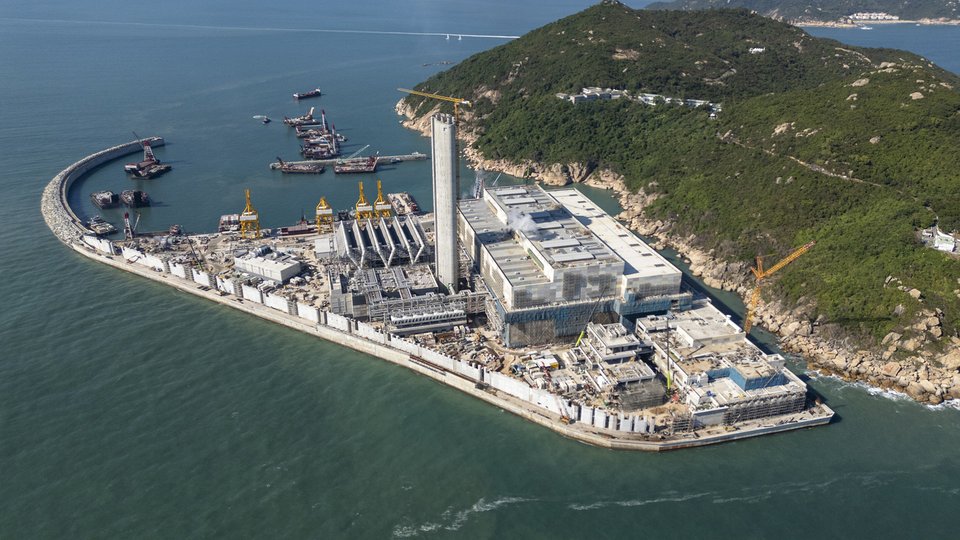
China has become the reference market for the large-scale implementation of energy recovery from waste, according to the Global Waste-to-Energy Research and Technology Council (WtERT). With more than 1,135 waste incineration plants, the country has the world's largest waste-to-energy infrastructure and accounts for over half of global installed capacity. The facilities process around 1.1 million tonnes of waste per day, equivalent to approximately 55,000 fully loaded trucks, assuming a payload of 20 tonnes per vehicle. Their combined installed capacity is 27,000 MW. This development is receiving significant attention and is increasingly shaping discussion of long-term waste management strategies. WtERT summarised its assessment at a specialist conference on energy recovery from waste in Xi'an: "The debate is over: waste-to-energy works. It is scalable and delivers results. China shows that waste-to-energy is the future, cleaner, smarter, and more cost-effective than landfills."
Scale of China's waste-to-energy infrastructure
On an annual basis, the installed capacity of 27,000 MW corresponds to approximately 236.5 TWh, based on operation for 24 hours per day and 365 days per year. The source estimates that this amount of energy could supply roughly 79 million households, assuming annual consumption of 3 MWh per household. It is also presented as equivalent to the annual output of 27 nuclear power plants with a capacity of 1 GW each.
From WtERT's perspective, the scale achieved in China demonstrates that modern waste-to-energy systems can be technically reliable, emission-controlled and economically viable. The council therefore regards the country as a model for scalability, environmental impact and cost efficiency in thermal waste treatment.
WtERT is an internationally networked research institute and think tank based at the Earth Engineering Center of Columbia University in New York. It brings together representatives of academia, industry and government to develop solutions to waste and energy challenges.
Market growth and landfill costs
The global waste-to-energy market is estimated at around USD 11.8 billion in 2025 and is expected to reach approximately USD 15.9 billion by 2035. The projected value is described as almost two-thirds of NASA's 2025 budget. Factors supporting the market include growing volumes of urban waste, favourable policy frameworks and the increasing integration of energy recovery from waste into circular economy concepts.
Analyses cited in the source indicate that waste-to-energy can provide long-term economic benefits when the environmental and health costs associated with landfilling are included. These costs cover methane emissions, leachate generation and land use.
Status under the EU Taxonomy
Energy recovery from waste is also gaining regulatory relevance. A legal analysis of the EU Taxonomy Regulation concluded that waste-to-energy can be regarded as an environmentally sustainable economic activity, provided that the waste hierarchy is respected. The analysis was commissioned by the European Waste Management Association FEAD at the request of the German Association of Waste Management, Water and Circular Economy (BDE).
According to the source, practical experience in China, Japan, Singapore and Sweden indicates that thermal waste treatment with energy recovery can be considered a component of a sustainable circular economy. It may also provide a relevant signal for investors and policymakers.
Sources and calculation assumptions:
- WtERT statement on the scale and performance of China's waste-to-energy infrastructure.
- Truck equivalent: one fully loaded vehicle was assumed to carry 20 tonnes.
- Annual energy calculation: 27,000 MW × 24 hours × 365 days, approximately 236.5 TWh.
- Household equivalent: 236.5 TWh divided by 3 MWh per household per year, approximately 78.8 million households.
- Nuclear equivalent: 236.5 TWh divided by 8.76 TWh per year for a 1 GW nuclear power plant, approximately 27 reactors.
- Market estimates from Global Growth Insights; landfill cost analysis published by ScienceDirect; legal analysis referenced by BDE.
Source: yes or no Media GmbH