Evolution of the Turkish plastics industry
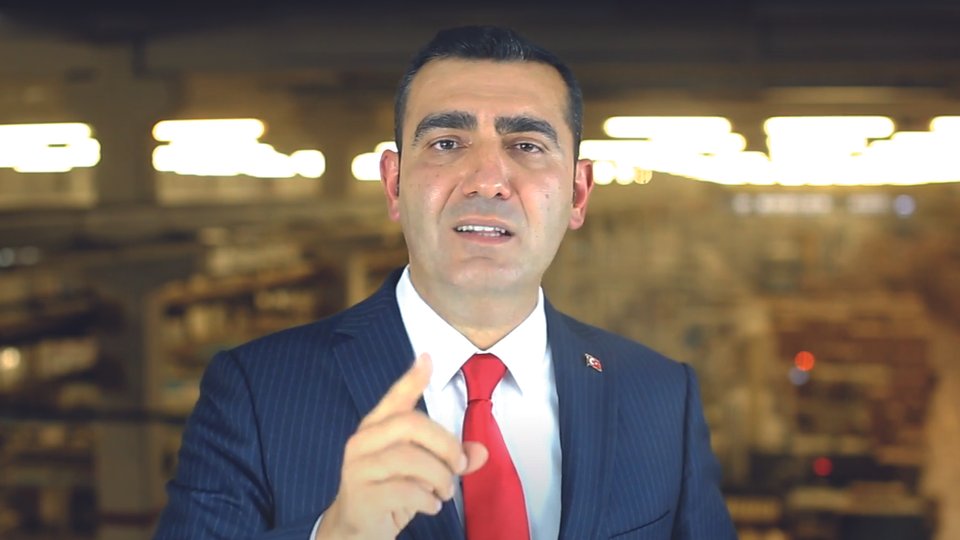
At the last edition of the fair, we had the opportunity to talk to Yavuz Eroğlu, chairman of the PAGEV association - the largest trade organisation that represents the plastics industry in Turkey.
The 31st edition of Plast Eurasia, held at the end of November last year in Istanbul, brought together more than 1,000 companies from 41 countries, representing the plastics processing industry in its broadest sense.
The Tuyap Fair and Convention Center located in the Istanbul suburb of Büyükçekmece attracted more than 64,000 visitors this time, including 10,000 from outside Turkey. This represents a slight increase from 2021 when the Istanbul exhibition attracted around 61 000 visitors, including just under 9 000 from abroad.
However, when we look at the attendance taking into account the global political - economic turmoil, we can conclude that the Turkish exhibition remains the largest annual exhibition event for the plastics industry in Europe.
The plastics industry in Turkey developed slowly in the first half of the 20th century. In the 1950s and 1960s, the Turkish government began to support the development of the sector, which contributed to the establishment of several plastics factories in the country. In the following decades, the industry continued to grow and the number of plastic factories increased significantly. In the 1980s and 1990s, Turkey's plastics industry developed rapidly and the country became an important player in the European and Asian markets. Today, the plastics industry in Turkey is one of the most important sectors of the country's economy, with numerous plants producing plastics and machinery and equipment for their production.
In 2020, the Turkish plastics industry was affected by the global COVID-19 pandemic, which had a negative impact on economies around the world. In the first half of the year, the economic slowdown and production freeze in many industries resulted in a decrease in demand for plastics. In the second half of the year, the situation improved and the plastics processing industry experienced growth, but did not reach pre-pandemic levels. The industry focused on adapting production to the new market conditions and changing demand, primarily increasing production of medical products and specialised packaging.
There are approximately 7,000 companies in Turkey producing and supplying materials to major industries such as automotive, electrical, electronics, packaging, textiles and construction. Around 99% of the companies are small and medium enterprises.
At the last edition of the fair, we had the opportunity to talk to Yavuz Eroğlu, chairman of the PAGEV association - the largest trade organisation that represents the plastics industry in Turkey. PAGEV - Plastic Industrialists' Association (Turkish: Plastik Sanayicileri Derneği) was established in 1971 and has since represented the interests of the Turkish plastics industry, both nationally and internationally. The organisation works to increase the competitiveness of the Turkish plastics industry by promoting innovation and encouraging the development of new technologies and products. The association also works to improve the image of the plastics industry and promote the responsible use and disposal of plastic products. PAGEV is also the organiser of the Plast Eurasia trade fair.
How do you evaluate the latest edition of the Plast Eurasia exhibition?
I am happy that we can come together at the event we organise annually at the Tuyap Fair and Convention Center. The current edition of Plast Eurasia has definitely exceeded our expectations. Although we expected an increase in the number of visitors, we did not expect the number to be a record. We expect the number of visitors to be around 65,000, but the most important thing is that the fair is popular with foreign visitors. This year we have recorded an increase of more than 20 per cent in their numbers compared to the 2021 edition. We are very pleased with this.
As organisers of this exhibition, we visit the stands of PAGEV member companies and ask them about their impressions of the fair. I can say that optimism shines through in these conversations. All in all, we are very satisfied with the current edition of Plast Eurasia in many aspects.
What is the current situation of the Turkish plastics industry? What is the sector's position compared to other countries?
Turkey's plastics industry is one of the largest in the world. We estimate that in 2022 the Turkish industry will produce around 11 million tonnes of plastic products, placing Turkey sixth in the global ranking of plastic producers.
In terms of the European continent, Turkey ranks second after Germany, and the Turkish converting sector generates revenues of approximately $44 billion per year.
What impact has the COVID-19 pandemic had on the industry?
Of course, the pandemic and all the restrictions associated with it have affected the Turkish economy as much as the economies of other countries. However, I feel that we have adapted to the situation and learned the correct lessons from it.
I can say that the domestic sector has focused on improving the quality of its products and not just on increasing sales volumes.
Over the last two years, a lot of Turkish plastic products have gone to the defence industry, and we have to remember that we have one of the largest defence industries in this part of the world. Turkey has, in a very short period of time, gone from being a country that buys armaments (including often used armaments) to becoming one of the world leaders in the production of advanced military and special technology.
Today, most of Turkey's arms manufacturers use highly advanced plastic products produced by the indigenous processing sector. In addition, during the pandemic, a large cluster of manufacturers of medical plastic products has emerged.
In the packaging industry, on the other hand, we have seen an increase in the number of manufacturers producing barrier packaging.
It has to be said that the increased cooperation with the defence industry, the medical industry and the packaging industry has definitely increased the added value of the Turkish plastics processing industry. And although the global economic situation is not good at the moment, after all, we see signs of recession in the EU and the US, the Turkish plastics industry is functioning normally and without disruption.
As far as we are concerned, in recent years textiles came first, followed by the automotive industry and then chemical products. We are now seeing a change in these trends. Chemicals are in first place, with plastics accounting for 35%, automotive is in second place and the textile industry has dropped to third place.
Please tell me what problems Turkish plastics processors are facing?
One of the biggest issues in the Turkish plastics processing industry is the lack of skilled labour. This is a global problem for the entire Turkish industry. Turkey is growing its economy dynamically, but it does not have enough skilled workers.
If you don't have a skilled workforce, you can of course still produce, but the quality of the products and their degree of technological advancement will be low. If, on the other hand, you want to produce high-value-added products, you must have a highly skilled workforce.
The industry association PAGEV, as the leading organisation for our sector, is trying to respond to these ills.
We have built two vocational schools. The PAGEV school in Küçükçekmece can accommodate 1,500 students, while the school in Gebze can accommodate 500. Every year there are more and more graduates - technicians in the field of plastics processing, so as an industry we are trying to solve the shortage of skilled labour by developing the vocational education system.
Let me add that this is an issue that also concerns processors in Poland. And in our country, too, industry organisations are looking for a solution.
So it looks like it is an international problem (laughs). The lack of adequate infrastructure is also a major barrier. In Turkey, it is extremely difficult to find land for industrial investment because most of the land is used for agriculture and industrial zones cannot be built there. PAGEV is trying to help solve this issue by creating two organised industrial sites in Turkey - one in the Gebze area, on the Asian side, where 143 large plastics companies are currently based, and another in the European part of Turkey.
An important and current issue both in Turkey and worldwide is the image of the plastics industry and of plastics themselves. Just saying that plastic should not be thrown away after use is not the solution to the problem. We need to change people's mindset and show them that plastic products are not meant to pollute nature, but to be disposed of.
We need to do even more. To this end, PAGCEV was founded is a non-profit organisation set up by PAGEV to ensure the separate collection of packaging waste and its recycling. Since 2014, PAGÇEV has been an authorised Ministry of Environment and Spatial Planning institution for the recycling of all types of packaging waste. PAGÇEV is responsible for the recycling and certification of packaging used by manufacturers or packaged products, and works with municipalities to ensure the separate collection of packaging waste and its recycling. PAGÇEV also conducts education and awareness-raising activities on packaging waste and recycling and campaigns to promote recycling.
What other fields are you active in?
An important element in the development of the sector is its innovation. Following the example of our German colleagues, who have corresponding units such as the Fraunhofer Institute or the IKV, we want to support the industry in terms of research and development projects or certification.
This is why we have decided to create the Plastics Centre of Excellence, a centre dedicated specifically to the plastics industry. It is a huge project, the entire complex consists of 11 buildings, which will house the various units involved in R&D activities, prototype production or certification or patent issues. The centre has been created next to one of our vocational schools, which will also allow students to benefit from this ecosystem.
Industry organisations sometimes have a problem identifying their objectives. How does this look in the case of the PAGEV association?
The answer is simple. PAGEV's main objective is to increase the added value of our industry. This is what all the activities I mentioned in our conversation serve. The last point I would like to make is that we need to create a market for our products. This is possible by organising an exhibition like Plast Eurasia. We organise it because we believe that if we create a market for our industry, people will be able to exchange ideas, present their raw materials, products technologies to a wide market.
This is, of course, a long-term activity, but we are also working on short-term projects, such as regulatory issues or rising raw material prices. At this point, I would like to thank representatives of the media, including your editorial team, because you publish information on this subject, which allows us to reach a larger audience with our problems.
Last year, we noticed that some polymer producers were taking advantage of market difficulties to inflate raw material prices. In our view, such a dramatic increase in the price of polymers, which are used to make everyday items, would eventually lead to inflation, the effects of which would ultimately be felt by consumers anyway, especially those on low incomes. We recognised that the problem therefore ceased to be an industry-specific one and became a threat to the economy as a whole. Our position reverberated around the world.