First day at BrauBeviale 2018 - KHS news at a glance
At BrauBeviale 2018 KHS presents the InnoPET Blomax Series V, sets new standards in beer filling with DPG and DRS, expands Bottles & Shapes consulting program and resolves juice production challenge with glass-coated PET bottles.
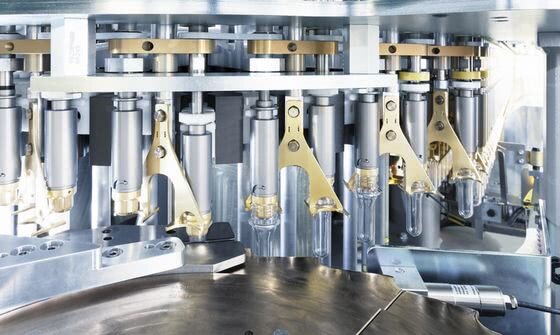
The next generation: KHS presents the InnoPET Blomax Series V
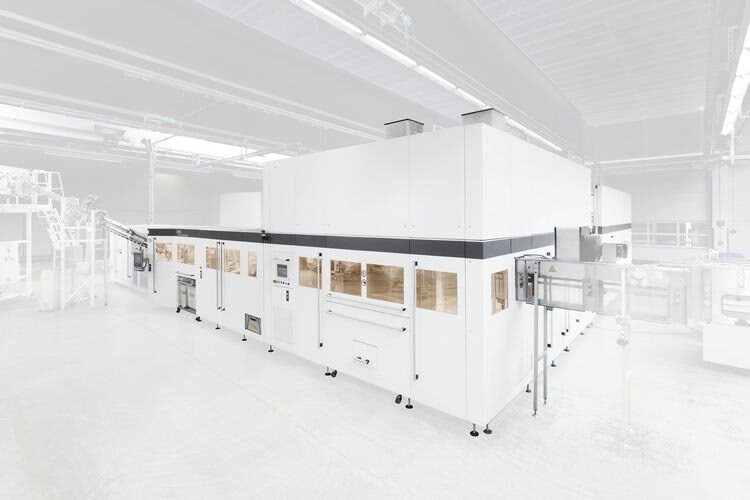
In the development of stretch blow molders KHS can look back on over 40 years of experience in PET processing. It is therefore not without good reason that the InnoPET Blomax stretch blow molder has been setting standards in the production of PET bottles since its conception. KHS is now offering its customers a new milestone with the Series V. The Dortmund systems supplier will be celebrating the world premiere thereof at this year’s BrauBeviale in Nuremberg from November 13 to 15.
The InnoPET Blomax stretch blow molder is one of the most reliable and efficient machines of its kind. At the end of the year, for the first time the general public will be able to preview the fifth generation which thanks to numerous innovations constitutes the most sustainable and powerful InnoPET Blomax to date. "We've always listened closely to what our customers have to say and work this into the continuous improvement of our stretch blow molder. In this series the greatest technological advance came with the development of the machine's new heating concept, however," smiles Marco Böhnke, product manager for block and stretch blow molding technology at KHS. "With the new Series V generation of machines we want to define just what a stretch blow molder can do."
With the InnoPET Blomax Series V users opt for sustainable and powerful technology. The machine produces up to 90,000 PET bottles an hour holding between around 0.2 and 3.0 liters. It manufactures lightweight or premium variants just as reliably as individual bottles and containers. Depending on requirements six to 36 blow stations are possible, each of which has a capacity of up to 2,500 bottles per hour. Thanks to the machine's quick-change system format changeovers involve only a few manual adjustments performed in a very short time indeed, ensuring permanently high line availability. The new generation of stretch blow molders seamlessly ties in with the KHS Group's blocked machine strategy and can be combined with a filler, labeler or Plasmax barrier technology or with several modules at once.
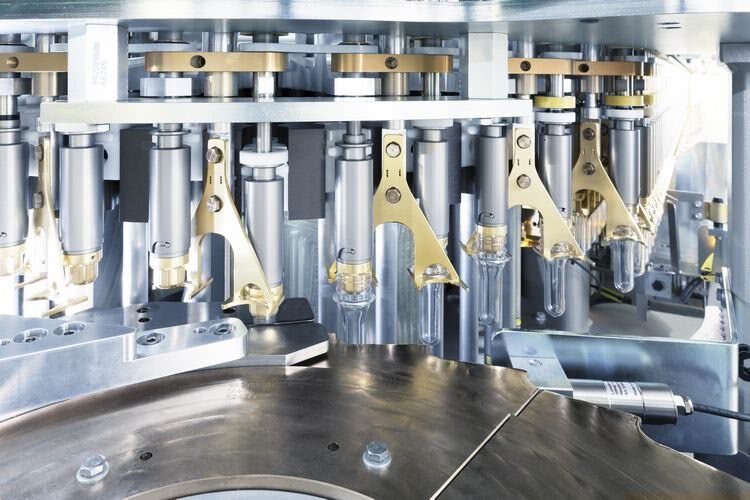
Innovative features for more sustainability
The Series V saves up to 40% in energy compared to its predecessor through the implementation of a completely new heating concept. The near infrared heater centrally installed in the closed reflector tunnel forms the nucleus of this. In the heater the preforms pass the centrally arranged heating units to both the left and right. This means that the preforms have a very small pitch of 18 millimeters instead of the previous approximately 37 millimeters. KHS has thus been able to reduce the number of heater boxes by up to 40% which not only results in such vast energy savings but also cuts down on the amount of radiation loss.
New cooling concept saves even more energy
In the new DuoCooling cooling concept an external cooler supplies two cooling circuits with different temperatures. One of these is for the base mold and the other for the stretch drives, outer mold shells and, if required, the control cabinet cooling unit. This efficient cooling system prevents condensation from forming on the outer mold shells, for example, and further reduces energy consumption by up to 15%.
In the Series V KHS has supplemented its patented AirbackPlus air recycling system for an up to 40% saving in compressed air with its new EcoDry air management system. This uses the residual air from the blowing and recycling process to replace a separate air drier in the base mold area and in the blow wheel. In combination with DuoCooling this means that the entire blow mold is free of condensation and corrosion even in unfavorable climatic conditions. This enables operators of the EcoDry system to save approximately €50,000 at 5,000 hours of production per annum. “We’re proud to again be setting new standards with the InnoPET Blomax Series V and to pass these benefits on to our customers, allowing them to enjoy even more efficient and sustainable production,” states Böhnke.
KHS sets new standards in beer filling with DPG and DRS
Sustainability is essential in the development of the machines of the KHS Group. The optimized models of the Innofill Glass DPG and DRS high-performance fillers set milestones in filling technology. For the first time KHS is offering the Eco version of the DPG which enables customers to achieve savings in the areas of CO2, water and electricity. In addition to improved resource efficiency, these glass bottling systems offer advantages in the areas of filling process monitoring and adjustment, increased efficiency and quality assurance.
The KHS Group has been a symbol of innovative and reliable filling technology for 150 years. "Aspects such as sustainability have become increasingly important in the brewing industry in recent years," explains Manfred Härtel, product manager for filling technology at KHS in Bad Kreuznach. With its new models of the high-performance Innofill Glass DPG and DRS fillers, KHS is taking a major step towards resource efficiency for its customers.
Small modifications, big benefits
The KHS engineers followed this motto during the development of the pneumatically controlled DPG glass bottle filler. Thanks to a new evacuation and CO2 purging process, they have been able to reduce the CO2 consumption of the system by up to 50% and at the same time reduce the oxygen pickup in comparison to conventional methods. This reduction lowers the capacity of the vacuum pump so that it consumes significantly less power and water. On customer request KHS can also equip older DPG fillers with the advantages of the Eco process with the help of a conversion kit.
Maintain beer quality, increase effectiveness
The computer-aided DRS high-performance filler has been a fixed feature in the brewing industry for many years. The hygienic design and fast format part changing ensure high system efficiency and flexibility in production planning. As a new standard, KHS offers the new hygienic QUICKLOCK quick-release locking system for format parts for both the DRS and the DPG fillers. With this system, bottle guide parts can be changed quickly and easily without tools. Thanks to the positive fit, the format parts are held securely in place between the mount and the format part. The time required for filler changeover is thus reduced by about 30% thereby improving machine availability.
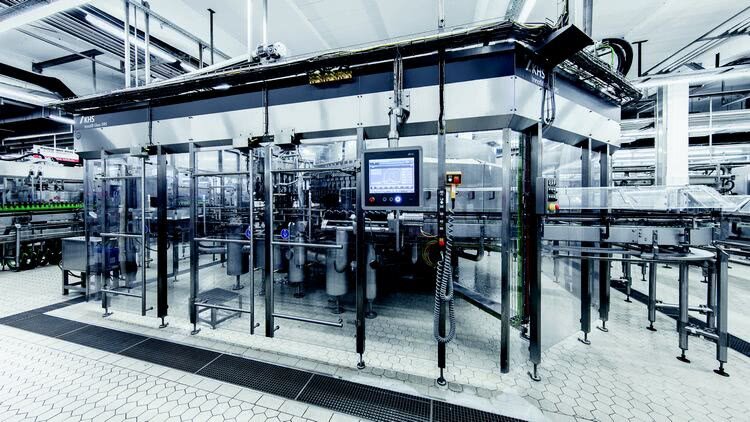
Another new feature of the DRS is the optional and patented DIAS diagnostic and assistance system that enables breweries to monitor and optimally adjust the filling process down to the last detail. Pressure sensors in each individual filling valve seamlessly monitor the pressure curve, switching times and step sequences. The system detects well in advance deviations from setpoint values caused by increasing wear. "It also saves time-consuming troubleshooting and avoids the related loss of production time," explains Härtel. This not only results in selective and quick repairs but also supports preventive maintenance measures. The additional option of additionally retrieving filling sequences via KHS' REDIS remote diagnosis system creates the prerequisites for precise support by specialist staff. Using the data, it is possible to statistically assess numerous functions and thus eliminate future sources of failure in advance. This ensures consistent quality and longer machine availability.
Individual systems for increased product safety
With its camera-guided Opticam control and monitoring system and the Softstop bottle flowgate, KHS offers two further innovations in the field of filling technology. Both systems are available for the DRS as well as the DPG.
Opticam monitors the foam intensity with two cameras before and after placement of the crown caps. It also continuously optimizes the pressure for the foaming jet in order to remove residual oxygen from the bottles. This allows constant control and regulation of the foam crown independent of the machine operator and thereby ensures a consistently low oxygen pickup. Breweries are thus able to counteract extreme beer loss caused by excessive foaming by reducing today's usual practice of precautionary overfilling; insufficiently foamed bottles are detected and rejected. Production is stopped if there is an increased occurrence of foaming faults.
KHS has developed the patent-pending Softstop system to smoothly and gently interrupt the flow of bottles. This compact and hygienic built-in bottle flowgate is activated when running at fully capacity. A light sensor measures the distances between containers as they are fed to the filler. A controlled braking wedge then gently decelerates the bottle flow as quickly as possible. The bottles still remaining in the filler are filled and foamed at constant high capacity in consistent quality. "The Softstop system ensures that the quality of the bottling process remains stable and reduces bottle breakage and noise," concludes Härtel.
Fully recyclable: glass-coated PET bottles resolve juice production challenge
Priority for fully recyclable PET bottles: when the German Packaging Law comes into effect on January 1, 2019, the new legislation will set down binding rules to increase recycling quotas. The amendment will levy higher fees for packaging which is difficult to recycle. This includes non-returnable PET bottles with composite materials for juice and nectar, among other products. Juice and nectar producers are thus currently looking for solutions which will help them to avoid the ensuing increase in costs. Here, FreshSafe PET technology from KHS presents a viable alternative as it combines product protection with bottle-to-bottle recyclability. In view of the European Strategy for Plastics and other national legislation in countries outside Germany, KHS' unique barrier technology is also gaining in significance at an international level.
When the new Packaging Law supersedes the present Packaging Ordinance at the start of next year as the legal framework for the German market, it not only defines a new target quota of 70% for returnable systems. The new regulations also prescribe increased recycling quotas for all types of packaging - also for plastics. As of January 58.5% of all plastic waste is to be recycled, i.e. the separate materials recovered and reused. From 2022 onwards this figure is to rise to 63%. At the moment the amount of plastic recycled in Germany totals around 36%.
In this context the dual waste disposal systems responsible for the collection of recyclable materials, such as non-returnable juice and nectar PET bottles, will be obliged to significantly increase their recycling quotas in the future. The new law allows them to reduce costs for easily and effectively recyclable materials and to charge more for packaging which is difficult to reuse. In the future the participation fees calculated on this basis will be determined by a number of ecological criteria. The better a type of packaging can be segregated and recycled, the lower the fees for beverage producers and retailers.
Additives in PET bottles complicate recycling
In particular, this rule has an effect on all those beverages whose packaging materials cannot be easily recycled as they contain additives. Juice and nectar producers especially, who fill their products into PET bottles, are affected in some areas. Non-returnable PET bottles are essentially fully recyclable; however, most of today's juice and nectar bottles do not consist solely of PET. In many cases they contain multilayer, blended or scavenger materials which protect the sensitive beverages from external influences such as oxygen pickup.
The composition of these PET bottles is such that it does not allow the materials to be collected by type and recycled together with PET bottles which fall under the one-way deposit system, thus hindering the establishment of a global recycling process. "One quarter of the clear rPET flakes from yellow recycling sacks contain scavengers which impair the quality with their yellowish color, for example," states Herbert Snell, managing director of the MultiPet GmbH recycling company. "Mixing PET bottles like these with other beverage bottles made of PET makes it more much more difficult to use these rPET flakes for bottle-to-bottle recycling."
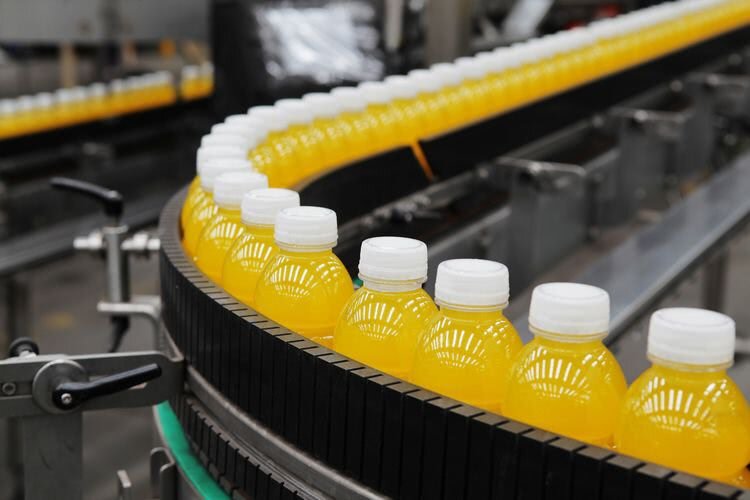
This is why at the moment they cannot be included in the German deposit system for one-way packaging, says Snell. According to a current study by packaging market research institute GVM, about 10% of all non-returnable PET bottles do not carry a deposit, meaning that in 2017 38,000 metric tons of PET material bypassed the deposit system. At present the majority of such containers is used to bottle juices and nectars. If producers in this beverage segment fail to optimize their packaging portfolio with a view to full recyclability, they also face the threat of higher additional fees for placing classic PET bottles with additives on the market.
FreshSafe PET juice bottles 100% recyclable
Beverage producers can find one alternative in the FreshSafe PET technology provided by KHS. After the PET bottle has been manufactured, an ultra-thin glass coating is applied to its inside wall. These coated PET bottles are 100% recyclable as the coating is washed off during the recycling process, producing pure, fully segregated PET.
This is also confirmed by packaging expert Benedikt Kauertz, head of Environmental Assessment of Packaging at the independent Institute for Energy and Environmental Research (ifeu) in Heidelberg, Germany. "Glass-coated PET bottles allow juice and nectar bottles to be included in the pure PET cycle and their materials to be recycled together with other used PET bottles for water and carbonated beverages, for instance. To this end, however, the deposit-assisted return system must be extended to include these specially optimized bottles."
97.9% of non-returnable deposit PET bottles are now recycled in this manner; juice bottles are not included in this figure. The first premium juice producers have realized this and are now already using the new FreshSafe PET technology worldwide. This can reduce the circulation of non-returnable PET bottles which are hard to recycle in the medium to long term, acknowledges Mario Dechent, director of Research and Development for the Eckes-Granini Group GmbH. "We directed our attention to the full recyclability of PET juice bottles very early on. With FreshSafe PET coating technology we've been using a sustainable system to fill our beverages for over ten years now, one which also permits pure-grade bottle-to-bottle recycling and thus increases the availability of useful recycling materials."
Barrier costs also pay off thanks to lower fees
Beverage producers naturally incur additional costs when they invest in barrier technology. However, as the overall operating costs are reduced, the procurement pays off relatively quickly. With it juice and nectar producers can switch to less expensive standard PET preforms, relieving them of the obligation to source preforms from a specific manufacturer. Furthermore, compared to standard composite materials FreshSafe PET provides a much better barrier quality and ensures much longer shelf lives. As they are fully recyclable, in the future FreshSafe PET bottles prove more favorable when it comes to the calculation of participation fees.
KHS offers beverage producers an individual consideration of the total costs accrued when using this barrier technology. "Measured against the huge benefit of additional product protection and longer product shelf lives in particular, the costs per bottle are actually lower," says Philipp Langhammer, product manager for barrier technology at KHS Corpoplast. "In view of the possible extra costs for the circulation of PET bottles which are tricky to recycle levied by the new Packaging Law, beverage producers should make their packaging portfolio future proof now and thus help to introduce a sustainable packaging system."
Possible full ban on plastics which are difficult to recycle
Non-returnable PET bottles for juice and nectar which are difficult to recycle not only face the threat of higher fees due to their unfavorable properties. In the long term a complete ban on packaging such as the above could also even come into effect. The European Strategy for Plastics presented by the European Commission at the beginning of 2018 envisages all plastics having to be recycled by 2030. Various national initiatives in other countries of Europe are also promoting the reduction in plastic waste. In France, for example, the only plastics in use by 2025 at the latest should be recyclable. Moreover, in Great Britain new plastic packaging is to consist of an average of 30% recycled PET. International beverage producers have also begun to set themselves targets for a much higher recycling quota as a voluntary obligation.
"By steadily ousting PET bottles for juice and nectar which are hard to recycle the market is increasingly opening up to recyclable packaging systems," emphasizes Langhammer. The growing demand for FreshSafe PET also illustrates that barrier technology has already hit a nerve among beverage producers. With it KHS provides a system which can significantly raise recycling quotas for PET beverage packaging the world over. "The move away from composite materials which are difficult to recycle has already begun," states Langhammer. "With the help of our technology the opportunities for processing pure PET are fundamentally increased."
KHS now expands Bottles & Shapes consulting program to include bottles and cans
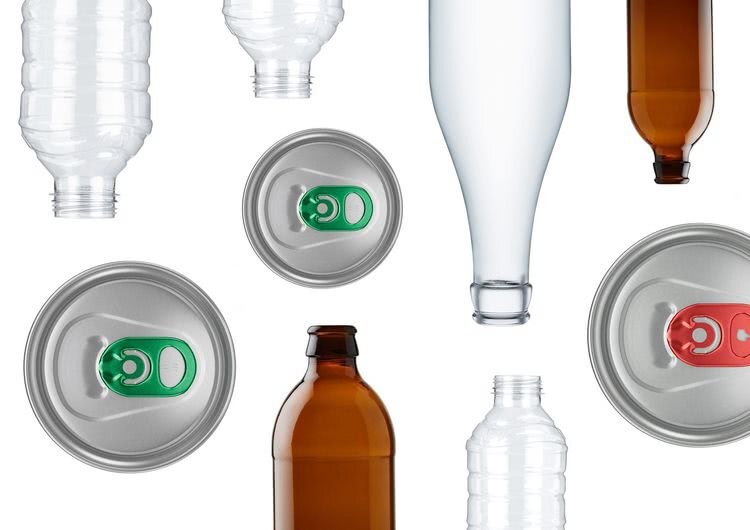
Individual design that combines functionality and efficiency: The KHS Group is expanding its Bottles & Shapes program and is now also offering its holistic consulting expertise in container development and optimization for cans and glass bottles. Customers have already benefited to date from decades of know-how gained by the PET bottle specialists. System provider KHS supports customers at an early stage starting from the idea up to market maturity, thus ensuring planning reliability and a smooth process of synchronizing the new product with the existing line. KHS also continues to assume responsibility for sustainable actions: besides making optimal use of raw materials, additional energy-saving measures also reduce the consumption of resources for bottlers.
The design of the glass bottles and cans should be oriented to the product and target group, the containers should be easy to handle, cost-efficient, sustainable and as easy and reliable as possible to process on the line: the requirements in the development of containers are initially numerous and often vague. This is exactly where this service comes into play with the consulting expertise from KHS. "When a bottler approaches us with a request to develop a new or improve an existing container, we have the overall process in mind right from the start," says Armin Wille, head of Bottles & Shapes at KHS. As a system provider, KHS focuses on rapid and individually coordinated project planning and implementation.
"We do this by discussing ideas with our customers, giving advice on individual design and, at the same time, identifying the efficiency potential throughout the entire line. Even in this first step, the high requirements for aesthetics and uniqueness of the containers is taken into account and are optimally combined with technical functionality in the best possible way," says Wille. KHS relies on digital 3D animation to develop containers with Bottles & Shapes. "This enables us to make an initial assessment of the bottle shape and then systematically optimize it."
Production of precisely fitting format parts
Together with global partners, the experts carry out detailed technical evaluations in advance and check whether the cans or glass bottles can be filled without difficulty on customer machines. The new format parts are then produced to exactly fit the existing lines. By quickly assembling the corresponding format parts and the corresponding customization conversions on the system, KHS ensures that new products can be launched smoothly. Bottling plants are thus able to profit from high production reliability.
"Our turnkey system offers comprehensive project management extending from receipt of the order to commissioning," explains Wille. After completion of the technical clarification, machinery and systems manufacturer KHS implements the format conversions for filling cans, glass and PET bottles in the line within a maximum period of only eight weeks. Through integrated planning with the help of Bottles & Shapes, KHS makes it possible to seamlessly launch new products to the market and ensure a reliable time to market and at the same time focus on material and energy savings by developing lightweight cans and glass bottles. Bottlers profit from reduced costs once the production launch is successfully completed.
Source: KHS