From waste to treasure: the Polish recycling industry
Investment in the waste management sector in Poland remains stable. Investments are mainly in energy from waste. But Poland is slowly catching up in recycling.
Poland generates ca. 110–130 million tonnes of waste every year. In 2018 it was 128 million tonnes of which 10% was municipal waste. Compared to the EU average (486 kg) and other EU countries (e.g. Denmark - 781 kg, Germany - 633 kg or Luxembourg - 607 kg), Poland has one of the lowest rates of municipal waste generation per capita (325 kg) (Eurostat, 2020). The problem, however, is the low level of recycling. In 2018 only 57% of the municipal waste collected was intended for recovery, of which 26% was subjected to mechanical and chemical recycling and 23% to energy recycling. The structure of municipal waste is dominated by: biodegradable waste (26 kg per inhabitant), mixed packaging waste (15 kg), bulky waste (14 kg), glass (13 kg), plastics (9 kg), paper and cardboard (7 kg).
Plastics are the third largest stream of mixed municipal waste (14%), immediately after bio-waste (which accounts for nearly 20%) and the segment of paper and cardboard (14.5%). Plastics constitute about 10% by weight and 40% by volume of household waste. Although the amount of municipal waste collected selectively has increased (in 2005 it constituted 5% of municipal waste collected while in 2018 it was 29%), but the recycling of plastic waste is largely based on easily collected waste from commercial networks and transport (Statistics Poland [GUS], 2019).
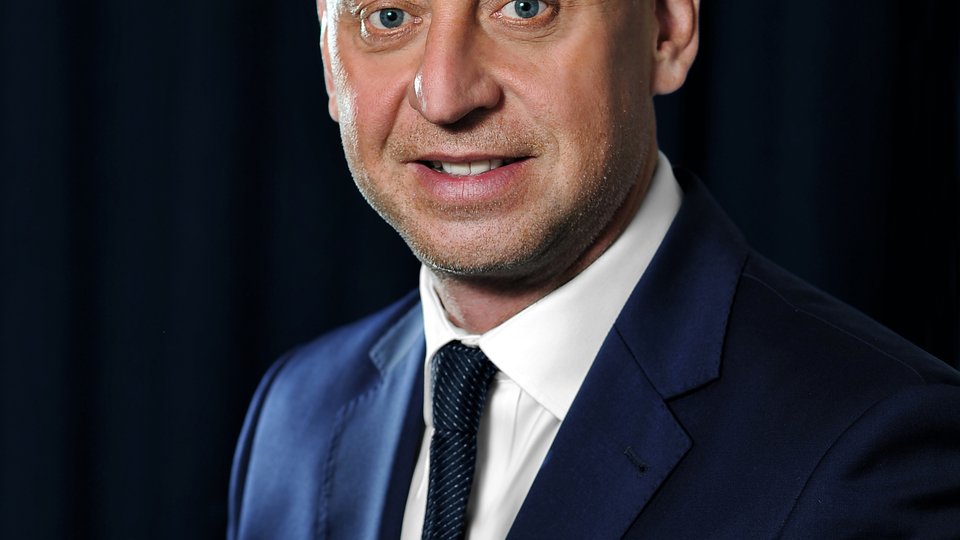
We talk about the history of recycling in Poland, the current situation and the opportunities and concerns of the industry with Tomasz Mikulski, CEO of ML Polyolefins, a Polish recycling company.
Mr President, the company you run has been present on the Polish market for 20 years. Please tell us what the beginning of recyclates production was like for you.
We started in 2000, but as a trading company for packaging and supplying waste to companies that needed it for processing. We started producing regranulates in 2006, when we set up our first recycling line. This allowed us to produce 70 tonnes of polypropylene regranulate per month. The beginnings were difficult, the crisis came in 2008 and demand for materials was much lower. However, we successively carried out further investments, developing the machine park and building our position on the market.
Did you already know then that recycling would be such an important part of the economy?
At the beginning, my job involved a lot of travelling and visit to western companies dealing with selective waste collection, thanks to which I could gain knowledge and experience. I was convinced that it would be possible to transfer Western models to Poland and improve waste management in our country. At the same time, the approach to waste was changing. We started to see it as a valuable material. We knew that this was an innovative action and an investment in the future.
What was the processing of waste into raw material like in the early days of the recycling industry in Poland?
Of course, in terms of material, in the early days, recyclate was very different from virgin plastics. However, there were many products that could be successfully made from regranulate, and the main reason for using it at the time was the economic factor. Over the years, awareness of recycling has increased among consumers and companies have developed technologically, so that the quality of recyclates is now very close to that of virgin materials. Now the added value for a product is the fact that it has been made from recycled materials.
What is the state of the company today, what do you specialise in?
Our speciality is the production of polypropylene regranulate. The production capacity of our plant is constantly growing. In 2020, we set up a fourth recycling line and now have a production capacity of 25,000 tonnes per year. Since 2015, we have also been producing compounds based on recyclates. For filling we use minerals and chemical additives. Thus, we are able to develop an application individually adapted to the requirements of our customers. In addition, we have modernised the laboratory. This allows us to monitor the technical parameters of the material in real time, and our products are characterised by high quality and reproducibility, so that contractors use them in more advanced details.
How do you assess the Polish recycling industry today?
In Poland, we are getting better at recycling. Today’s technology allows us to produce high quality recyclates with stable parameters. However, we must remember that recycling starts with collection and effective waste segregation. Systemic waste management solutions are necessary not only for recyclers but for the entire economy. Therefore, the emphasis should be on unifying regulations and educating the public. Coming back to the recycling industry, companies in Poland do not have as much production capacity as those in Western Europe, but we must find our advantage in the quality of recyclates and compete in this way. The demand for recycled material continues to grow, and there is also a lot of talk about the circular economy, which is also influenced by EU legislation. All this makes recyclates very popular.
We are in the TOP5 countries by in the European Union. What is our potential and where can we position ourselves?
Looking at the change in GDP per capita over the last 30 years, the Polish economy is growing the fastest of all EU countries. We are still an emerging market, so the potential for growth is huge. This is also confirmed by recent data - the unemployment rate in Poland is much lower than EU average. Coming back to the recycling industry, there is no denying that Polish regulations were modelled on Western solutions. We still need to transfer proven solutions to our ground, analyse and observe the current activities and draw conclusions to use this potential. Of course, the pillar in this matter is the EU legislation, which sets the path for the Member States to achieve a climate-neutral Europe.
And in your opinion, can Polish recyclates conquere foreign markets?
Of course, Polish recyclates can compete effectively with materials produced abroad. I can say that in the case of my company, the revenue structure indicates that domestic and foreign trade are of similar importance. As I mentioned earlier, our western competitors are often larger in terms of production capacity. However, we have access to the same technology and have developed our own know-how. Thanks to our lower production volume, we are also able to respond to the needs of processors by creating individual projects for them and thus compete in foreign markets.
What is the future of mechanical recycling? What are the threats and opportunities?
The processing of plastic waste is based on mechanical recycling. One thing needs to be said - if we are to meet EU plans for the recyclate content of new products we need to develop mechanical recycling. Western countries have much greater capacity, but overall Europe lacks capacity and an even distribution of capacity. Our industry is also very energy-consuming and there is considerable concern about this given the current energy market situation. However, the basis for setting the industry’s direction is legislation and the requirements for counting recycling levels.
So what does the plastics and recycling industry need to continue to grow?
Coherent legislation and consistency in its implementation. Although the effects of the waste management and recovery legislation introduced by European Union are visible in Western Europe, recycling levels are still low in Central Europe. As a recycling company, we operate with a long-term strategy and we need EU targets to be defined in this way as well. This allows us to better plan investments to increase European recycling capacity. And this brings us closer to the main goal of moving towards a circular and resource-efficient economy.
Read more: