Plastics industry in Poland
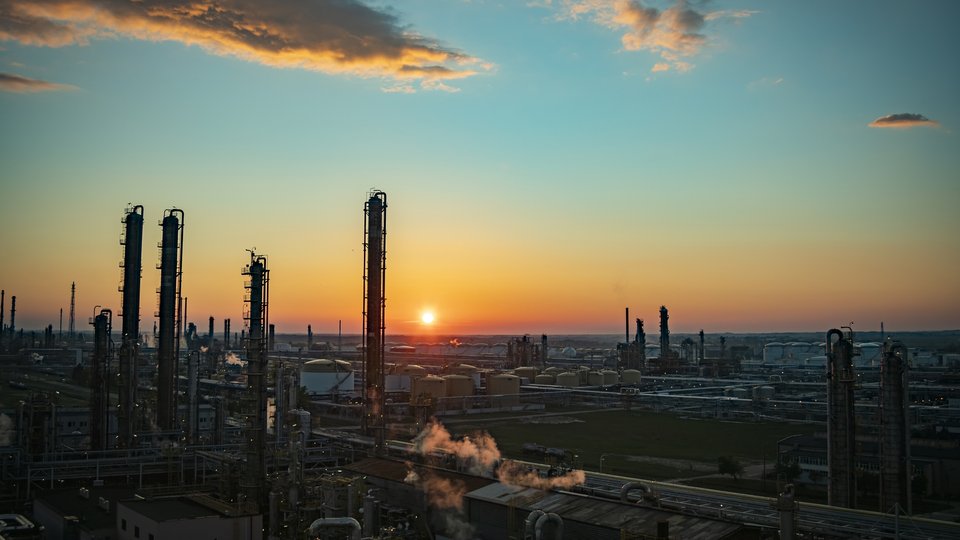
The plastics industry is one of the main branches of the economy in Poland. The Polish plastics industry employs more than 220,000 people and total production in Poland has exceeded €25 billion (more than 6% of the value of the domestic industry). Plastic converters are the largest sector of the plastics industry.
Between 2018 and 2021, global plastics exports have increased by 26.1% - from €528.4 billion in 2017 to €666.5 billion in 2021. In Europe, plastics production and processing are considered to be one of the most important segments of the EU industry.
The plastics industry is one of the main branches of the economy in Poland. The Polish plastics industry employs more than 220,000 people and total production in Poland has exceeded €25 billion (more than 6% of the value of the domestic industry). Plastic converters are the largest sector of the plastics industry.
Market structure
According to Plastics Europe Polska, Poland with about 7.5% share of total polymer consumption by plastic converters, ranks 4th in Europe (EU + UK, Switzerland and Norway). Currently, the Polish industry processes more plastics than the other Central European countries combined. More than 7,000 entrepreneurs in Poland are active in plastics industry. Interestingly, Plastics Europe Polska annual reports show that among the 300+ largest plastics processing companies, more than 60% are companies with Polish ownership.
The Plastech.pl database - the largest Polish vortal for the plastics industry - currently lists 1,700 companies dealing with plastics and raw materials for their manufacture, 870 companies producing and distributing plastics processing machinery, 1,110 manufacturers of plastics products and 824 companies providing services related to the operation of the industry.
The steady increase in demand for plastics in Poland has caused polymer production to grow faster than Polish industry as a whole in previous years. In the period of 2015–2020, the sold production of plastic and rubber products increased by a total of 34.1%, while the sales growth of industrial processing was 21.9%.
The largest customer of plastics processors is the packaging industry, which consumes more than 1.1 million tons of polymers annually (32.5% of the country’s plastics demand). The largest customer of plastics processors is the packaging industry, which consumes more than 1.1 million tons of polymers annually (32.5% of the country’s plastics demand). The construction industry is source of large polymer orders, using more than 900,000 tons of plastics (25.9%) and the automotive industry (360,000 tons - 10.3%).
The Polish construction sector includes the highly competitive market for plastic pipes for water and wastewater transmission. The Polish market includes global players as well as established domestic manufacturers who produce not only for the local market, but also for international export.
“Due to the fact that Poland is a member of the European Union, the requirements for construction products are the same as in other EU countries. At present, a major challenge will be to adapt the requirements for construction products by the revised European Parliament Construction Product Regulation, as well as the Drinking Water Directive with regard to products in contact with drinking water”, says Piotr Falkowski, director of the Polish Association of Pipes and Fittings Producers.
“Currently, judging objectively, the condition of the Polish plastics industry is good. In some sectors we have also become leaders in the EU, for example, in the production of PVC windows, stretch film, products for the automotive industry. Polish PVC joinery has conquered the whole of Europe, and in terms of sales volume it is number one in the EU”, says Robert Szyman, general manager of the Polish Union of Plastics Converters.
Polymer production
Poland’s polymer production sector is dominated by large corporations with large-scale facilities. Both their capital and know-how play an important role in the industry. Although large players account for about ¾ of the industry’s total revenue, this share has shown a gentle downward trend in recent years. This is because alongside them there is a relatively large group of smaller, but dynamically growing manufacturers focusing on more niche areas (plastics with various specialized applications).
Various types of polymers are produced in Poland, including polyolefins, polyvinyl chloride, polystyrene, polyethylene terephthalate (PET), as well as some engineering plastics such as polyamide 6 and polyacetal (POM), polyurethane systems, and polyesters and epoxy resins.
In Poland, polyethylenes are the most popular, with just over 1 million tons required in 2017 (accounting for 30% of the country’s plastics demand), as well as: polypropylene (19% - about 670,000 tons), polyvinyl chloride (13% - 460,000 tons) and polystyrene (12% - 420,000 tons).
Domestic production of plastics does not fully meet the demand in this area, hence the need to import polymers, mainly from Germany, Belgium and the Netherlands.
Despite the large and unfulfilled local demand, the plastics industry in Poland exports about 40% of its production. The main recipients of Polish polymers are EU countries (more than 80% of the total export value in 2021), and among non-EU markets, Russia and Ukraine have played the biggest role so far (total share of 7%). Germany remains the key foreign market (as much as 28% of total plastics exports), although the importance of this direction has clearly been declining in recent years (a decrease in share by 7 percentage points since 2015), while exports to, among others, some countries in the region (Hungary, Romania) have grown at an above-average rate.
The high demand for polymers on the domestic market, as well as the opportunities of favorable exports, are prompting some entrepreneurs in the industry to expand production capacity, with the Azoty Group being the best example. At the end of 2017, a new polyamide plant was put into operation in Tarnow (the cost of the investment is more than €65 million), where a mechanically strong engineering plastic that is resistant to high temperatures and chemical agents is produced. It is widely used in the automotive, textile, electrical and electronic industries and medicine, among others.
The most important investment project at the moment is the polypropylene plant owned by the Azoty Group in Police. Due to the cost of construction, which may exceed €1 billion, it is considered a strategic undertaking for both the Azoty Group and the entire national economy. The investment is expected to enable the production of up to 440,000 tons of plastic per year, and the plant is scheduled to begin commercial operations in 2024. There should be no problem with the sale of polypropylene from Police, due to its wide use in packaging, construction, automotive and electronics. Part of the production will probably go abroad, which will be facilitated by the plant’s coastal location and easy access to the very absorptive German and Scandinavian markets, which are facing a shortage of polypropylene.
Recycling of plastics
“Compared to Western Europe, Polish recycling industry is relatively young, as is the entire plastic waste management industry. Poland is making up for years of neglect at an accelerated pace, with very strong potential for growth as one of the largest EU countries. Especially in the past two decades, companies have developed in Poland that are boldly operating not only in the local market, but also throughout Europe. Importantly, they have made excellent use of the opportunities to obtain subsidies from the European Union, so that today they have a modern machinery park that allows them to produce high-quality recyclates. In addition, Polish entrepreneurs implement many innovations, based on the know-how developed in recent years, and offer increasingly better products”, explains Krzysztof Nowosielski, commercial director of ML Polyolefins - one of the leaders of the PP recyclates segment in Central and Eastern Europe.
In Poland, plastic waste is subject to mandatory separate collection as one of the four basic raw materials for material recycling. Reports from the Plastics Europe Foundation show that the amount of recycled waste in Poland increased 2.4 times between 2006 and 2016.
According to Conversio, 1.919 million Mg of post-consumer plastic waste was collected in Poland in 2018 (excluding post-consumer plastic waste from agriculture and household appliances, sports and leisure), of which:
- 525 thousand Mg were recycled (27.4%),
- 582 thousand Mg were subjected to energy recovery in incineration and co-incineration processes (30.3%),
- 812 thousand Mg were stored in landfills (42.3%).
According to Statistics Poland, 5.47 million Mg of all packaging was placed on the market in 2018, including 984.92 thousand Mg of plastic packaging. 346.35 thousand Mg of packaging waste was recycled, which accounted for 35.2% of the weight of packaging put on the market. This is less than the average in the European Union.
According to the survey, the highest level of separate collection is for PET packaging waste (depending on the type, from 58.1% to 80.2%), while the lowest for small packaging made of PP, PS or PE (yogurt packaging) – 25.9%.
In the case of PET bottles, as a result of their re-sorting at the recycling and processing plant, the product yield efficiency is:
- about 70% of the delivered waste in processing bottles into flake,
- about 65% of the delivered waste in processing bottles into regranulate.
One of the problems is the lack of plants to process some specific types of plastic waste. Among the plastic wastes that are difficult or not recycled are polystyrene and foamed polystyrene, PET trays and PE/PP films.
“In general, the problem is the increasing prevalence of composite packaging materials, consisting of several materials (e.g., paper and plastic or aluminum and plastic packaging), or multilayer packaging. Currently, in the PET tray market, only 40% of all products are made of mono-PET material. The remaining 60% are a combination of materials, such as PET, PP, PVC or similar, and PE, for example. As it is difficult to separate the barrier layer and/or PE sealable layer of such “composite” packaging using simple and inexpensive mechanical methods, its recycling is very difficult and affects the quality of the final product. As of today, there is a lack of effective technologies for processing this type of packaging”, indicates the Polish Institute of Environmental Protection - National Research Institute.
Can the Polish recycling industry be competitive with foreign companies?
“Certainly our advantage is what some people consider a weakness, namely the of our recycling companies. Compared to the largest companies in this industry in Western Europe, we do not have such spectacular capacity, but this makes us more flexible in adapting to customer requirements. We realise that we still have a long way to go to join the top of the largest in terms of “capacity”, so we try to make up for it with quality, recyclate repeatability, or service. We are still looking for our competitive edge and as I mentioned earlier Polish companies are betting on innovation. On the other hand, the sheer of the domestic market and neighboring countries gives us natural, great conditions for development, which, with wise management and attention to customers, will certainly be very visible in the coming years”, emphasizes Krzysztof Nowosielski.
Market environment
There are many active industry organizations and associations in Poland. These include the Plastics Europe Polska Foundation, which publishes periodic reports on plastics production, plastics processing, and plastics waste collection and processing.
“Issues related to the role and importance of plastics in sustainable development, focusing on the pursuit of zero-carbon and circularity, have been our priorities for many years. At Plastics Europe, we see our role as a catalyst for change in the plastics industry to accelerate the development of sustainable solutions valued by society”, says Anna Kozera-Szałkowska, EngD - managing director of Plastics Europe Polska.
The Polish Union of Plastics Converters (PUPC) is an organization of plastics converters from across Poland. The activity of organization started in 1992. PUPC is a member of European Plastics Converters Association.
The Union is a member of Polish Confederation of Private Entrepreneurs “Lewiatan” based in Warsaw. Lewiatan is concentrating 56 branch unions. It represents about 3.000 companies. Confederation monitors and reviews changes in economical law. Membership of the PUPC is open to plastics processing industry employers operating in the Republic of Poland or employers indirectly related to the plastics processing industry.
In the plastic pipe sector, the leading industry organization is the Polish Association of Pipes and Fittings Producers. The association actively works for the Polish pipe industry, while also being a member of TEPPFA - the European Plastic Pipes and Fittings Association. The main tasks of the association include cooperation with other organizations in the field of standardisation.
Bydgoszcz is home to Bydgoszcz Industrial Cluster Tool Valley which brings together companies of the tool and plastics processing industry and a range of business environment institutions, including universities, research and development units, offices, entrepreneurs associations and guarantee fund.
COVID-19 pandemic and the war in Ukraine
Despite the difficult situation in 2020 caused by the COVID-19 pandemic, demand for plastics in Poland increased by about 3% compared to 2019, amounting to about 3.7 million tons.
“The plastics industry in Poland, which has been growing intensively for more than two decades, has coped quite well with the challenges of the pandemic. First of all, companies have maintained a stable level of employment, which in the context of the crisis faced by all industries is of a great importance. In 2021, production in the rubber and plastic products sector showed a marked increase in output sold compared to the pre-pandemic period.
In addition, a very optimistic effect is the growing foreign exchange balance of plastic products – in 2020 it amounted to 960,000 tons. This is certainly the result of a systematic increase in domestic and foreign investment in capacity and modern technologies in the plastics processing industry, which we have been observing in Poland for several years”, explains Anna Kozera-Szałkowska, EngD.
“The impact of the war in Ukraine is moderate. Limited access to the Russian market, often also due to ethical reasons, where processors themselves give up cooperation, can be compensated by sales in other directions. Additionally, we are more tied up with the EU than eastern markets. With regard to Ukraine, of course, cooperation is limited due to the hostilities”, says Robert Szyman, General Director of The Polish Union of Plastics Converters.
“As far as the construction industry is concerned, we can expect an economic slowdown in the near future, caused, for example, by a sharp decline in mortgage lending and the impact on the development of residential construction. On the other hand, the development of water supply and sewage infrastructure is supported all the time by national as well as EU funds”, adds Piotr Falkowski, director of the Polish Association of Pipes and Fittings Producers.
Both the plastics and other materials markets are subject to similar changes and influences of economic factors. Today we can talk about the impact of hostilities in Ukraine and the economic sanctions imposed on the Russian Federation. This negative impact is felt by the entire economy, not only in Poland but also in Europe.
Jacek Leszczyński
Photo: PKN Orlen
Read more: