HI!-Plastics examines advanced materials for industry
The first HI!-Plastics seminar examined developments in composites, fire safety, advanced manufacturing, surface functionalisation, hydrogen applications and dual-use technologies.
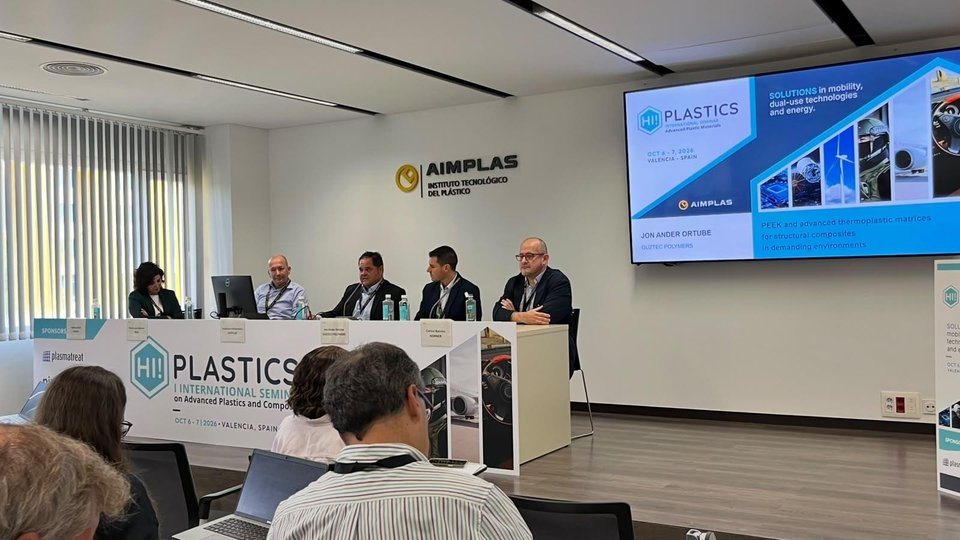
Advanced plastic materials can support competitiveness, sustainability and industrial autonomy in strategic sectors, according to the first HI!-Plastics International Seminar on Advanced Plastic Materials. Organised by AIMPLAS, Plastics Technology Centre, and sponsored by Plasmatreat and Pinfa, the two-day event brought together specialists from across the value chain to review recent developments in composite materials, fire resistance, advanced manufacturing, surface functionalisation and applications for demanding industrial sectors.
The programme showed how advanced materials are enabling lighter, more resistant, sustainable and intelligent solutions for automotive, construction, energy, aeronautics, the naval sector, electronics and dual-use technologies. Discussions covered both material performance and the requirements for transferring new solutions into industrial production, including scalability, economic competitiveness, compliance, certification, durability and end-of-life management.
Composite materials and industrial scalability
The first part of the seminar addressed advanced and structural composite materials and the trends shaping their next generation. The sessions underlined the importance of cooperation across the industrial ecosystem in accelerating technology adoption. They also noted growing interest in thermoplastic composites as an alternative to conventional thermoset solutions.
Factors supporting this transition include faster manufacturing processes, material weldability and the potential for reuse and recycling. These characteristics may facilitate wider industrialisation and improve competitiveness in applications with rising production volumes.
Participants also examined high-performance thermoplastic matrices for structural applications in demanding environments. Self-reinforced polymers were discussed as a means of combining lightweight design, mechanical performance and recyclability. Such solutions may offer opportunities for the automotive sector, where reduced weight, energy efficiency and circularity are strategic considerations.
The presentations indicated that the further development of composites will require not only higher performance, but also industrial scalability, economic competitiveness and sustainability throughout the full life cycle.
Fire safety requirements
Fire resistance formed another major part of the programme, covering regulatory requirements and technological developments intended to improve the fire performance of advanced materials.
Electric mobility was among the sectors analysed. Vehicle electrification and the integration of energy storage systems are creating more stringent safety requirements. The sessions presented strategies for improving fire protection in components made from thermoplastic and thermoset materials, including solutions intended for future generations of electrified vehicles.
In construction, the programme focused particularly on the fire protection of insulation materials. Presentations covered reactive flame retardants incorporated directly into the structure of materials used in buildings, with the aim of improving durability and sustainability. Speakers also reviewed regulatory developments affecting these additives and the increasing importance of smoke emission control in the European reaction-to-fire classification.
For electrical and electronic applications, discussions considered the requirements of the European Construction Products Regulation, which covers not only flame spread but also smoke emissions, flaming droplets and gas acidity. The contributions showed that cable compound formulations must balance safety, sustainability and regulatory compliance.
International regulatory trends and new generations of flame-retardant additives provided a broader view of fire safety developments in Europe, the United States, Canada and Australia.
Advanced manufacturing and functional materials
The advanced manufacturing sessions reviewed current technologies for producing thermoplastic composites. These included UD tapes, organosheets, pultrusion processes and long-fibre-reinforced materials, which combine high mechanical performance with increased productivity and processing flexibility.
The role of functional additives in meeting safety, sustainability and regulatory requirements at the same time was also discussed, particularly in sectors where fire protection is critical.
Examples of products based on high-performance fibres and composites covered naval, automotive, energy, civil engineering and aeronautical applications. Speakers emphasised the need to integrate material development with manufacturing, characterisation, certification and structural monitoring to support effective implementation in industrial applications.
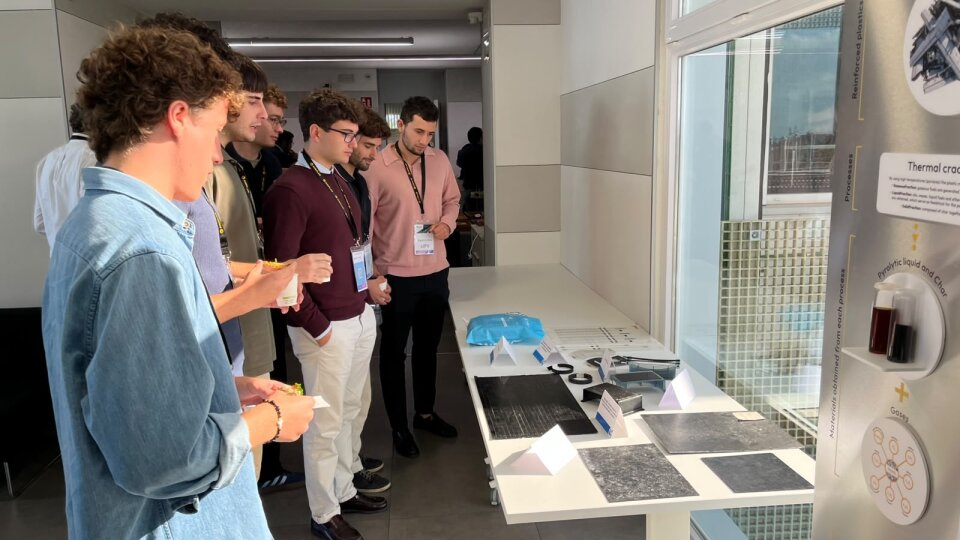
Hydrogen and dual-use applications
The second day addressed energy and dual-use technologies. The hydrogen-focused sessions examined advanced materials for tanks and other components intended to store and transport hydrogen more efficiently and safely. According to the presentations, composites can reduce system weight, improve performance and lower the carbon footprint of systems associated with hydrogen, which is regarded as an enabler of decarbonisation in several industrial sectors.
Dual-use technologies, with both civil and security or defence applications, were considered in areas including ballistic protection, integrated sensing, weight reduction and improved durability of equipment and structures. Circular economy strategies discussed for these fields included extending product service life, reducing maintenance requirements, promoting reuse and recovering critical raw materials to strengthen technological and industrial autonomy.
Applications presented during the session included antifouling materials for maritime use, shielding systems designed to reduce the electromagnetic signature of platforms and equipment, anti-icing solutions for aircraft, and sensors for monitoring users' health and comfort or detecting contaminants in complex environments. Additive manufacturing was also covered as a method for producing or repairing components directly at the point of operation, reducing intervention time and logistical requirements.
The session also presented the use of advanced materials in marine renewable energy. For technologies such as tidal energy, resistance to extreme environmental conditions, durability and lower maintenance costs are important factors in improving viability and competitiveness.
Functional industrial coatings
The final part of the seminar focused on functional coatings used to provide materials with additional properties and extend their service life in demanding applications.
Developments included energy-efficient heated coatings designed to prevent ice accumulation on aeronautical components. These solutions are intended to improve operational safety while reducing the energy demand associated with conventional systems.
Plasma-based surface functionalisation technologies were presented for cleaning, activating and modifying surfaces. Their functions include improving adhesion between materials, optimising multi-material joining and introducing specific properties such as repellency to selected external agents.
The programme also covered self-healing coatings for components exposed to severe environmental conditions, including wind energy installations. These coatings are intended to extend component life and reduce maintenance costs.
Finally, speakers addressed the use of functional pigments to adjust the spectral response of surfaces. This technology is relevant to applications requiring control over the interaction of materials with different ranges of electromagnetic radiation.