Knauf Industries marks 40 years in business
Knauf Industries is reviewing four decades of development in EPS and EPP moulding and thermoplastics injection moulding. The company also reports on measures to reduce its carbon footprint, improve safety and develop solutions supporting circularity.
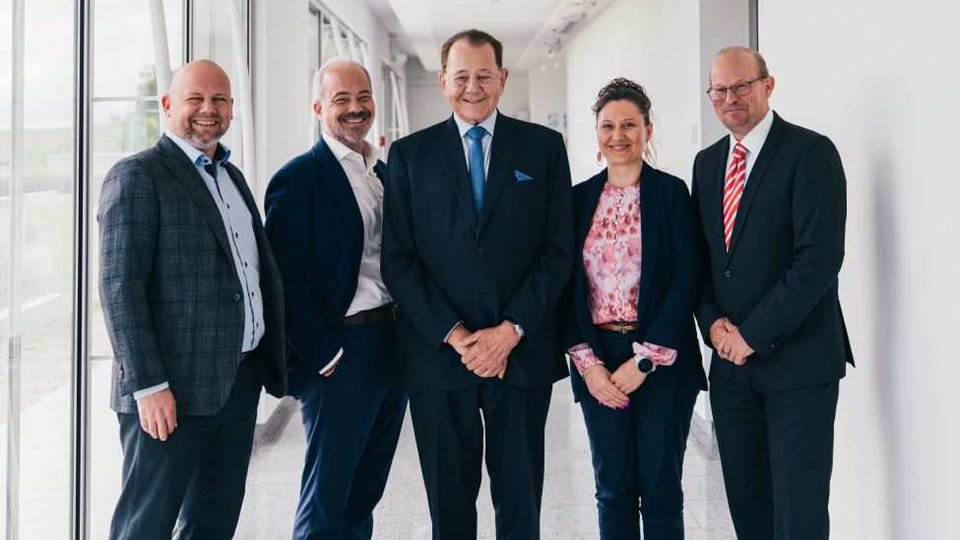
In 2026, Knauf Industries marks 40 years in business. The company, part of the Knauf Group, was founded in 1986 by Thies Knauf. Over four decades, it has developed its operations in the production of components through EPS and EPP foam moulding and thermoplastics injection moulding for the global industrial sector. The organisation now also specialises in two-component injection moulding, overmoulding and insert moulding. Knauf Industries employs 2,000 people and operates at 36 locations in eight countries. It serves customers in the industrial, automotive, construction and food sectors, supplying, among other products, custom-designed components, protective packaging, structural mouldings and insulation elements. The company's development focuses on improving plastics processing solutions and technologies, as well as adapting materials, products and processes to technical, regulatory and environmental requirements.
Social and environmental responsibility strategy
Knauf Industries is implementing a global CSR strategy launched in 2020. It covers four pillars: governance, the environment, social issues and relations with business partners. The measures are based on measurable objectives and key indicators, including Scope 1 and Scope 2 emissions, water consumption and waste levels.
"Our sustainability action plan began with calculating our carbon footprint. Since 2021, more than one hundred projects aimed at reducing it have been launched across the Knauf Industries group. These initiatives focus on changing energy sources, raw materials that provide alternatives to fossil-based materials, dedicated solutions reducing product weight, design supported by numerical simulations, as well as more efficient processes, reduced water consumption and improved waste sorting," says Patrick Sutter, Innovation and Sustainability Director.
Between 2021 and 2025, the company reduced its carbon footprint by 18%. The result is confirmed by calculations based on Sphera's methodology, a provider of environmental software and analytics.
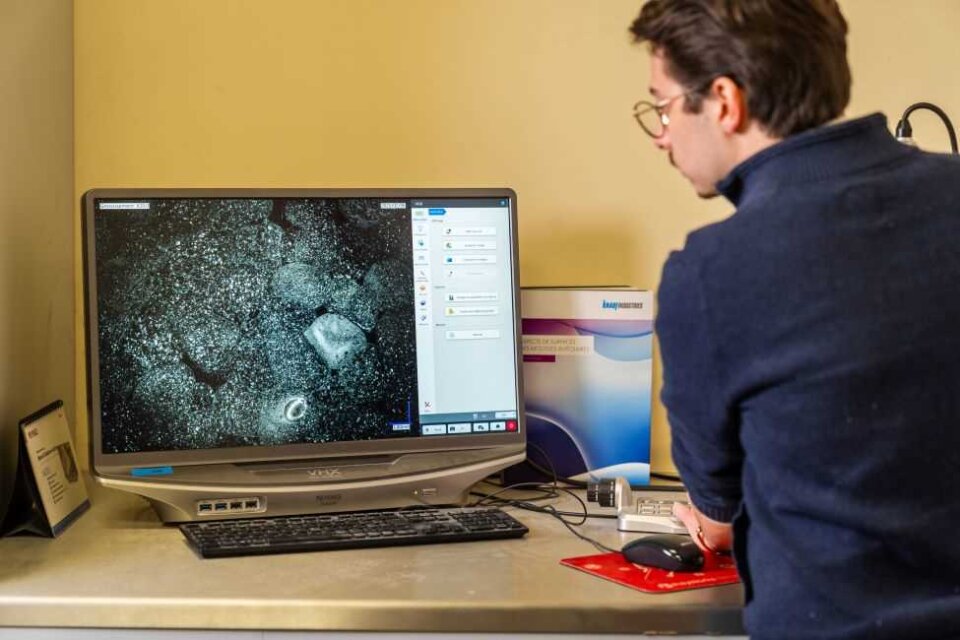
Knauf Industries uses digital simulation methods
Safety, equality and product compliance
Knauf Industries is developing an organisational culture based on ethics, transparency and accountability. The company applies rules on preventing corruption, compliance with competition rules and due diligence, as set out in the Knauf Group's code of conduct.
"The two main pillars of our social policy are the safety and health of all our employees, and workplace equality and attractiveness: diversity and inclusion, competence development, recruitment and integration, and talent identification," says Patrycja Grębowiec, HR Manager.
The share of women in the workforce increased from 23.4% in 2017 to 37% in 2025. The company indicates that this is the result of its equality measures. Safety remains a priority with regard to both employees and consumers. Knauf Industries also verifies product compliance with applicable regulations and specifications, including through tests for heavy metal content.
ID Lab develops and validates new solutions
ID Lab, Knauf Industries' development and innovation laboratory, consists of a multidisciplinary team led by scientists with doctoral degrees, engineers and technicians. The unit develops and validates solutions intended to form the basis of future innovations. Its tasks include implementing regulatory changes, developing solutions that support circularity, optimising materials and processes, and carrying out initiatives to reduce emissions and improve environmental performance.
The ID Lab testing laboratory enables the examination and validation of solutions under development. Numerical simulation tools are used to analyse product behaviour, optimise design and shorten development cycles.
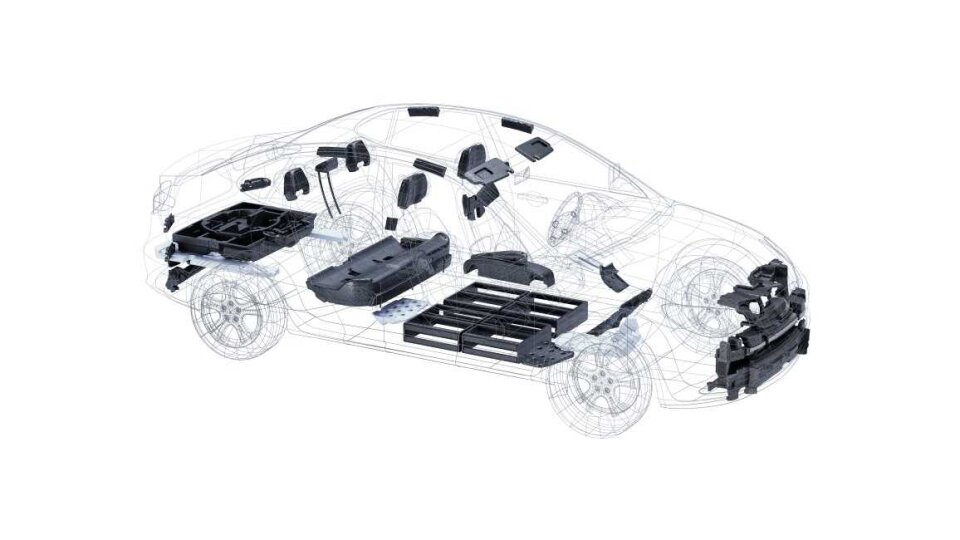
The automotive sector and electromobility solutions are among the company's key areas of technological development
Read more: