Luxury through innovation
New plastic materials and techniques can provide cost-effective luxury packaging solutions in the beauty market - writes Gérald Martines from RPC.
The importance of packaging in the beauty and personal care markets cannot be overstated. For every product, the right image and the ability to stand out in a crowded market are essential. A pack plays a vital role in this.
To get noticed in this highly competitive sector, a pack design must create an immediate emotional response - the desire to have and hold. Once taken off the shelf, the pack must continue this response and maintain its image through both its quality and functionality, which needs to be consistent throughout its life.
There is of course one other factor that needs to be taken into account when designing packs for the beauty market - cost. Even the most high-end products are now subject to the same fierce competition as mass-market brands.
One only has to look at what has been happening in the beauty packaging sector to see the effects of this cost-conscious approach. The increased costs of materials and manufacturing and, more particularly, the tendency for customers to source packs from regions with lower labour costs, has led to many packaging suppliers in the Western hemisphere downsizing, closing or relocating plants, or exiting the market altogether.
Nevertheless, the truth remains that in a market where image is everything, brand owners cannot afford the luxury of taking shortcuts in their packaging - because luxury is the very commodity they are selling.
Certainly the trend to source from countries with low costs is now slowing down, since some of the low-cost suppliers struggle to provide the high levels of quality and service that most brands require, while their costs are increasing as a result of rapid inflation in the region, and trade taxes that have been imposed by some western countries. At the same time, forward-looking western manufacturers have continued to enhance their offerings in terms of innovation, service and quality while also refining and further automating their processes to become more competitive.
For plastics, the demand for upmarket but cost-effective packaging continues to open up new opportunities. The material`s superb design flexibility has long been acknowledged, allowing the creation of many unique, eye-catching packs that maximise shelf stand out and consumer appeal.
The wide choice of polymers available can meet a huge variety of product requirements or design specifications. Coloured, tinted or clear, with numerous decoration options and the availability of special effects and finishes, packs can be created that establish and project the individual identity that all beauty and personal care brands are seeking.
More importantly, ongoing developments are bringing plastics more and more into the premium sector. One example is Surlyn, a material that combines excellent transparency with the kind of thickness usually associated with glass.
Surlyn`s flexibility enables it to be used to create a variety of shapes (from simple and crisp to elaborate and baroque), sizes (from small to very large), special effects and finishes. Thanks to its transulance, a depth can be achieved that would be difficult to recreate using alternative methods. Surlyn can also be used in combination with technologies such as overmoulding and electroplating to create cost-effective eye-catching finishes.
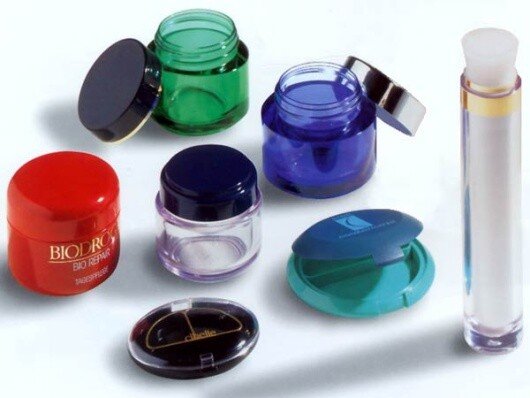
RPC beauté has used Surlyn in a number of customised packs, such as for a new closure created by using a three material construction - incorporating Surlyn with ABS and polypropylene - to overmould a plated part. This type of procedure offers the potential to cost-effectively design and produce very high quality packaging for a variety of cosmetic and beauty applications such as high end fragrance or personal care caps or colour cosmetics items.
Similarly, crčme jars, produced at sites in the RPC Bramlage-Wiko cluster, are
another area where advanced manufacturing techniques have enabled plastics to make inroads into what was once the sole domain of glass. Double wall technology provides the thickness of finished pack to satisfy the quality perception requirements for these types of products. At the same time, plastics also have the flexibility to create bespoke designs.
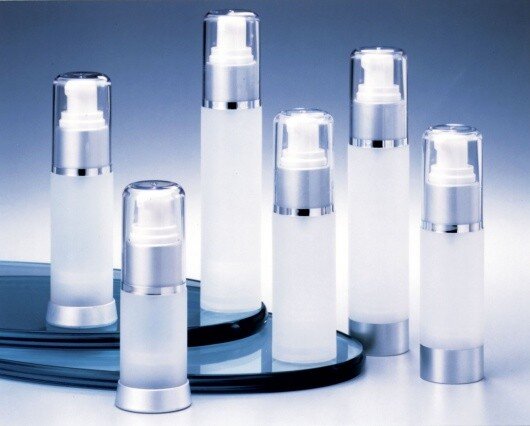
Functionality is another vital aspect of a successful pack. Advanced dispensing technologies, such as the airless system from RPC Bramlage-Wiko which delivers controlled and hygienic dosing for all types of lotions, creams and gels, can help to create the high level of consumer convenience that ensures repeat purchases.
All three of these examples, in their different ways, show how even in today`s tough trading environment, plastics can help beauty packaging continue to deliver the ?wow` factor. The even better news is that this does not have to come at a high price.