Plastic-Trader: Recyclate quality starts with waste selection
Customers expect recyclates to offer properties similar to virgin plastics, but price remains a major purchasing factor. Plastic-Trader therefore selects feedstock for each customer's requirements and checks its quality at successive processing stages.
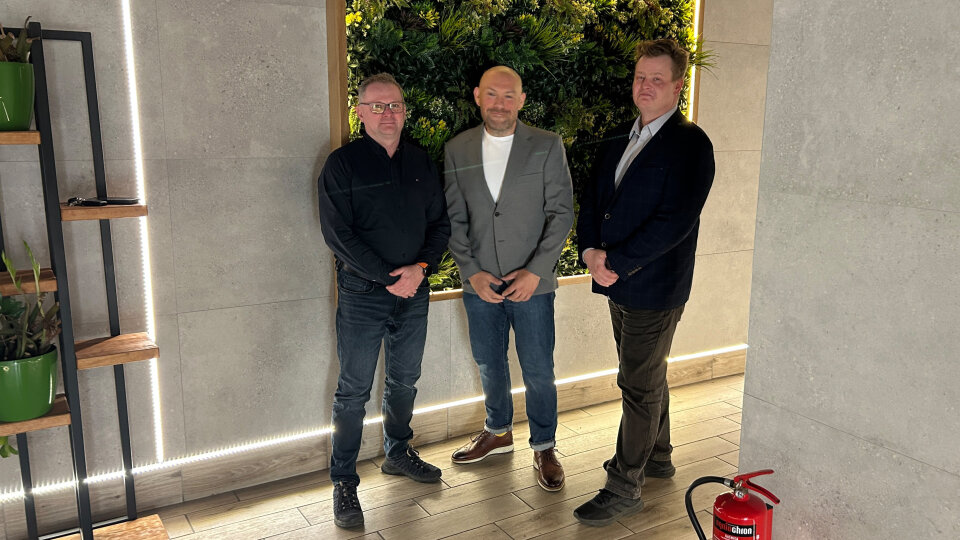
Paweł Górnik, owner of Plastic-Trader, Bartłomiej Szpek, Sales Director, and Michał Tomiczek, Plant Director, discuss the company's operations. Watch the video report from our visit.
From waste trading to in-house processing
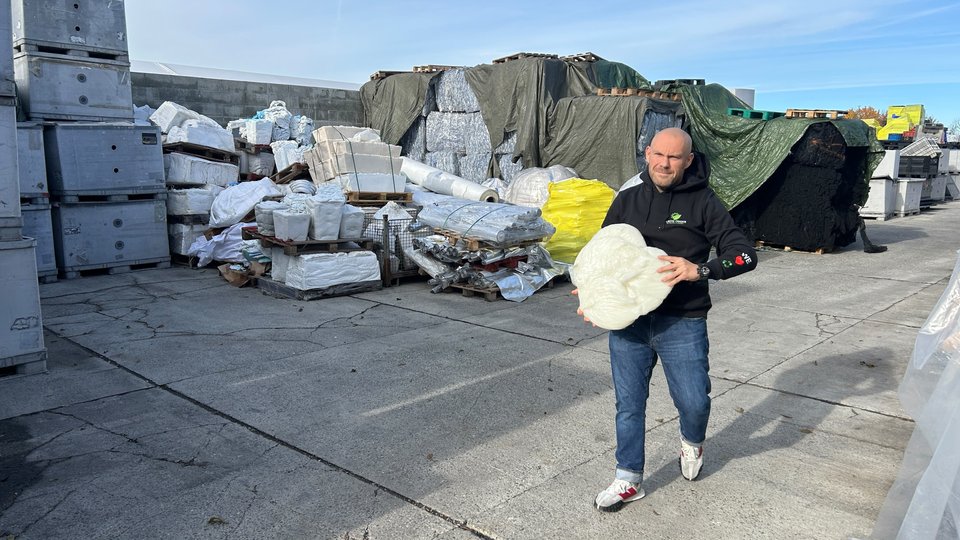
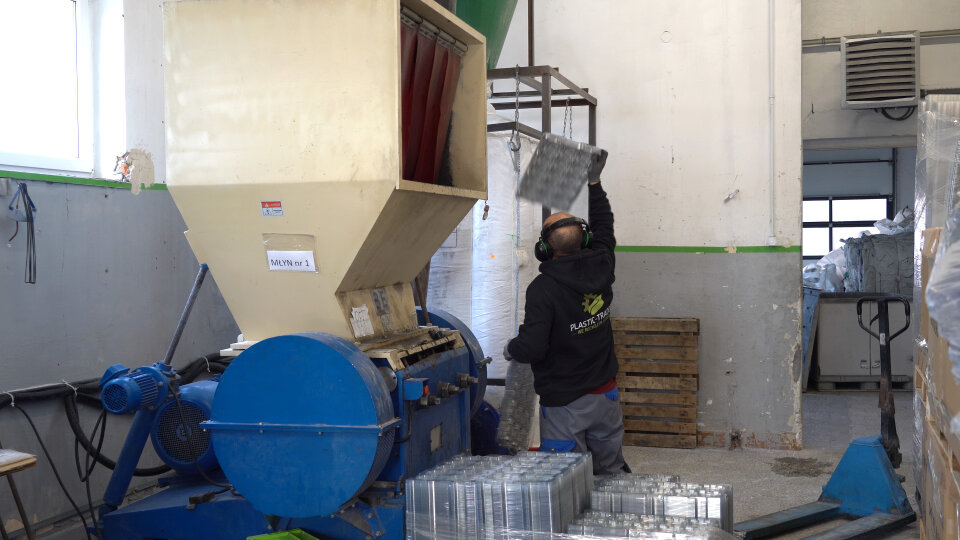
Plastic-Trader began operations in 2002, trading plastic waste and organising its transport. Today, the company occupies a 5.5 ha site in Cieszyn. It has warehouses, its own transport fleet, a laboratory and nine crushing and grinding lines.
Paweł Górnik considers the expansion of the company's own processing facilities to have been a pivotal decision. This required significant investment and adjustments to the plant in response to changing legislation. Warehouses and in-house transport enable the company to organise regular waste collections and maintain a continuous supply of raw materials to customers.
Raw material matched to the application
As Bartłomiej Szpek explains, the company sources waste with a specific recyclate application in mind. When selecting feedstock, it already takes account of the future customer's requirements.
It then conducts laboratory tests and production trials, after which the prepared batches are sent to the customer for testing. Regular deliveries begin only after these stages have been completed. According to the Sales Director, sourcing suitable waste and selling the finished raw material are so closely linked that it is difficult to determine which stage presents the greater challenge.
Customers require consistent material quality, batch traceability, test results and shipping documentation. Szpek also mentions the use of an ERP system and RecyClass procedures.
Based on his observations, Polish and international customers have similar quality requirements. The company applies the same service and control rules to both groups. The main differences concern documentation and shipment organisation.
Control from waste acceptance to finished product
Waste acceptance is subject to formal requirements, and material inspection begins while the load is still on the truck. As Michał Tomiczek explains, employees check whether the delivery matches the order. The material is labelled and assigned identification numbers, weighed, and then sent to the warehouse for further processing.
The laboratory identifies the plastics and tests their melt flow index (MFI) and impact strength. When specialist certified tests are required, the plant also uses accredited laboratories.
In some cases, material that appears satisfactory on receipt proves unsuitable for a specific application after testing. According to Tomiczek, such cases are rare. This risk is reduced through inspections on receipt, during production and before shipment.
– Every stage of our production is entirely dependent on human work – says the Plant Director.
Although machines perform many demanding operations, employees remain essential for production organisation and material inspection.
The company uses its ERP system to document the waste journey from collection, through successive processing stages, to the finished product. This enables it to provide customers with the history of the material supplied.
Challenging materials and packaging design
Szpek identifies waste combining several materials, containing adhesives, metallised layers or metal admixtures as among the most demanding. Tomiczek also points to difficulties associated with size. The plant can process, among other materials, fused plastic lumps measuring up to approximately 1.5 × 1 m. He also lists thin PET films among the more difficult materials to process.
The processing of complex waste is supported by dry-cleaning and optical and mechanical separation equipment being developed for the market. The Plant Director considers these solutions to be one of the more important directions of change in recycling technology.
Another area of Plastic-Trader's operations is the neutralisation of pyrotechnic charges in automotive safety systems. Górnik lists the launch of processing for such components among the investments that required particular technical preparation.
The company owner also draws attention to packaging design. In his view, manufacturers should consult recyclers more frequently about the solutions they use. Despite advances in sorting, separation and laboratory testing, multi-material structures and complex packaging construction remain, in his assessment, one of the bottlenecks in recycling.
High requirements and price pressure
Increasing quality requirements are accompanied by strong price pressure. Górnik regards market instability and competition from inexpensive virgin plastics imported from outside Europe as the industry's main problems.
Szpek observes that interest in recyclates increases when virgin raw material prices rise or their availability declines. However, this does not mean there is widespread willingness to pay more for recycled material.
– I still believe that price dominates the market – says the Sales Director.
In his assessment, Polish companies are generally unwilling to accept a higher price for recyclate. However, he observes greater willingness among some international customers to accept it because of processing costs.
Górnik calls for a stable legal framework and consistent enforcement of regulations on recyclate content in finished products. He also points to the need to ensure a continuous supply of suitable-quality feedstock for the industry.
Further development in the automotive and electronics sectors
Plastic-Trader plans further automation and investment in processing multi-material waste from the automotive and electronics sectors. The company has its own photovoltaic installation, and Paweł Górnik plans to further increase the use of green energy and work towards carbon neutrality at the plant.
Video: Inside Plastic-Trader
See the Cieszyn plant and hear discussions about raw material quality, the day-to-day work of a recycler and market challenges.
