Regranulate quality starts before waste purchase
The quality of waste determines far more than its purchase cost. Proper qualification, knowledge of the material’s origin and its properties are the first step towards obtaining stable, valuable regranulate.
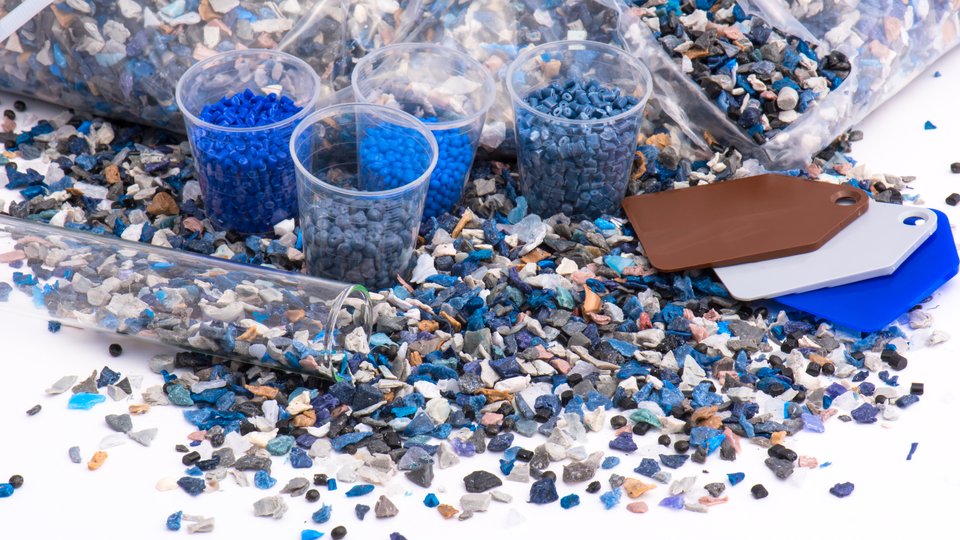
The growing use of secondary raw materials means that more companies are looking for ways to reuse post-production plastic waste. From a recycler’s perspective, however, such material requires a different approach: waste is not yet a raw material. Only proper qualification makes it possible to assess whether it can be efficiently processed and reused in industry.
This is largely where the quality of the future regranulate begins. What matters is not only the type of polymer, but also its homogeneity, origin, storage method, moisture and contamination levels, material form, and the repeatability of subsequent deliveries.
Price per tonne is only the start of the calculation
One common mistake is to assess material mainly through the purchase price. Yet cheaper waste does not necessarily mean a more cost-effective raw material.
If the material requires additional sorting, drying, size reduction, filtration or testing, its actual cost rises quickly. Production losses and the risk of obtaining regranulate with unstable parameters must also be added. Therefore, in professional recycling, what matters is not only the input price, but the total cost of bringing the material up to the quality expected by the customer.
Clean, homogeneous and repeatable waste streams from controlled production processes are particularly valuable. They make it easier to predict how the plastic will behave during processing, stabilise the process and maintain repeatability of parameters in successive batches of regranulate.
A sample says more than a photo
Material descriptions and documentation are important, but in many cases they cannot replace a representative sample. A sample makes it possible to verify the declared type of plastic, the presence of admixtures, moisture content, odour and other characteristics that may affect further processing.
For non-standard materials, blends or TPE and TPV elastomers, technological trials also become particularly important. Two materials described by the same name may differ significantly in their properties and process behaviour.
The history of the waste is equally important. Material stored outdoors for a long time may be damp, contaminated or partially degraded. What at first glance appears to be an attractive batch may therefore prove much less valuable once preparation costs are taken into account.
Good recycling starts with information
Professional material qualification is therefore more than a stage preceding purchase. It is an element of quality and risk management for the entire process.
The more that is known about the origin of the waste, its composition, storage method, available quantity and delivery repeatability, the more accurately the technology can be selected and the potential application of the future regranulate defined.
In practice, effective recycling therefore begins not at the processing line, but much earlier - during the first discussion with the supplier. This is when decisions are made that later affect process stability, processing economics and the final quality of the secondary raw material.