Recycled material production requires tighter control
Material variability, waste stream quality and supply continuity affect the use of recyclate in production. Maciej Słojewski of Cedo discusses the technical, economic and regulatory conditions of the process.
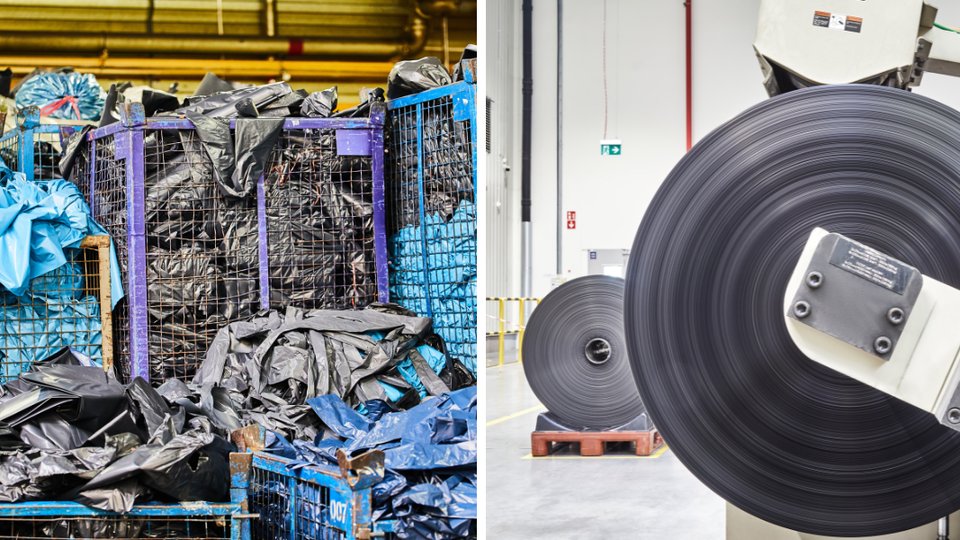
Recycling is one of the pillars of the circular economy, but using secondary materials in production involves greater process complexity than simply replacing virgin raw material with recyclate might suggest. It requires tighter control of input material, flexible process management and quality management at successive processing stages. These factors affect both manufacturers' operations and the plastics market as a whole.
Packaging waste statistics illustrate the scale of the challenge. According to Eurostat, an average of 35.3 kg of plastic packaging waste was generated per EU resident in 2023, of which 14.8 kg was recycled. The recycling rate was therefore 42.1%, compared with 38.2% a decade earlier. Despite this increase, a significant proportion of the waste generated still does not enter recycling.
Material variability requires continuous control
One of the fundamental differences between virgin raw materials and recycled materials concerns the predictability of their properties. Virgin polymers have defined, repeatable parameters, while the characteristics of recyclate may vary depending on factors including the waste source, stream composition and contamination level. Manufacturers must therefore continuously monitor raw material quality.
"In recyclate-based production, we cannot assume that each successive batch of material will behave exactly like the previous one. Variability is inherent in this process and must be managed. At Cedo, we combine the perspectives of a recycler and a manufacturer. Over the past two years, our Group has been joined by Plasta in Lithuania, Rullpack in Sweden, Vinatic in Vietnam and Polimero in Italy, enabling us to work with different waste streams and develop recycling expertise across several markets. Today, our plants have a combined capacity to process more than 160,000 tonnes of flexible plastic waste annually. The key is to obtain a raw material from waste with parameters that subsequently allow consistent quality of the finished product to be maintained," says Maciej Słojewski, Group Communications Manager at Cedo.
Before the material can return to production, it passes through successive preparation stages, including sorting, shredding, cleaning and processing. Each stage affects the properties of the resulting raw material. Quality control therefore begins long before the recyclate reaches the production line.
Not all collected waste can be reused
Collecting waste does not mean that all of the material will be suitable for reuse. Its suitability depends on factors including stream composition, contamination level and the possibility of effectively separating individual types of plastics.
"In recycling, what matters is not only how much waste enters the system, but above all how much valuable raw material we can recover from it. If the input material is heavily contaminated or contains plastics that cannot be effectively separated, part of the stream will be lost at subsequent process stages. From a manufacturer's perspective, the final result is most important: obtaining recyclate with parameters that allow it to be reused without compromising the product's required functionality. The quality of incoming waste therefore directly determines its potential for reuse," Maciej Słojewski emphasises.
The scale of the issue is presented in an analysis of plastics flows in the EU-27 prepared by the European Commission's Joint Research Centre. According to data for 2022, 36.6 million tonnes of plastic waste were properly collected, corresponding to 86% of the total waste stream generated. However, the same analysis indicates that the average end-of-life recycling rate was 19.6%.
Economics and regulation affect recyclate use
Industrial recycling depends not only on technology but also on process economics. Manufacturers assess recyclate price, quality and availability, as well as continuity of supply. New regulations are also relevant. The EU Packaging and Packaging Waste Regulation, PPWR, applicable from 12 August 2026, establishes requirements concerning, among other matters, packaging recyclability and the use of recycled materials. Individual obligations will be introduced in stages, including minimum recycled content levels for specified plastic packaging.
"Recyclate is no longer solely an environmental issue but is becoming a raw material of strategic importance to industry. Access to material alone is not enough; its appropriate quality and stable supply must be ensured, and manufacturers must know how to use it efficiently in production. At Cedo, we combine recycling and manufacturing expertise, giving us greater control over the material's path, from waste to finished product. As requirements for the use of secondary raw materials increase, such experience will become increasingly important to manufacturers' competitiveness," Maciej Słojewski concludes.
Production using recyclate is not a straightforward equivalent of processing virgin raw materials. It requires specialised expertise at every stage, from sourcing and preparing waste to using secondary material in the finished product.