How PPWR is changing the economics of recycling
Recycled-content requirements are shifting value from recovered volumes toward material quality. TOMRA Recycling identifies traceability, feedstock quality and sorting performance as key factors shaping market access under PPWR.
Most discussions about the Packaging and Packaging Waste Regulation, PPWR, focus on compliance. According to Lars Enge, EVP and Head of TOMRA Recycling, however, its wider economic implications are equally important. The regulation is expected to increase European demand for recycled content, particularly in high-value plastics applications, while raising expectations concerning quality, traceability and recyclability.
This shift affects the entire circular value chain. Brand owners need recycled content to meet future requirements, packaging producers must ensure that packaging can be recycled in practice, and converters require reliable access to quality recyclates. Material recovery facilities, MRFs, face pressure to deliver cleaner material streams, while recyclers are expected to provide alternatives to virgin polymers.
PPWR reinforces these trends simultaneously. As a result, sorting is increasingly moving beyond material recovery and toward the production of secondary raw materials with defined quality specifications and documented performance. This changes how operators assess investments, process control and the commercial value of sorted fractions.
Compliance becomes measurable
Demand for documented evidence is increasing. Previously, it was often sufficient to state that a material was recyclable or contained recycled content. Customers, regulators and value-chain partners are now expected to seek answers to more specific questions:
- What materials entered the process?
- What contamination levels were present?
- How stable is the incoming feedstock?
- What purity was achieved?
- Can quality be monitored and documented over time?
For recyclers and MRF operators, the ability to provide this information is gaining value. TOMRA reports strong interest in material intelligence solutions that provide deeper insight into waste streams and sorting performance. Such systems can move process assessment from assumptions and periodic sampling toward continuous monitoring based on real-time data.
This information can support the analysis of material flows, reduction of losses, validation of recycled-content claims and demonstration of compliance, including in food-contact applications.
Purity determines market access
Material quality has always influenced recycling economics, but PPWR is expected to connect it more directly with market access. A recycler producing material suitable for food-contact applications operates in a different market from a supplier of lower-grade recyclates. The same distinction applies to bottle-to-bottle and tray-to-tray PET recycling, as well as prospective food-grade polyolefin applications.
Even relatively small improvements in purity can therefore affect the value of the final product. According to TOMRA, the quality required for circular packaging is increasingly achievable at industrial scale. Deep-learning artificial intelligence can improve object recognition, while more precise material separation and higher-purity flake production can allow operators to recover more value from each processed ton.
The objective is not only to improve sorting efficiency, but to produce materials capable of repeated use in high-value applications. PET remains a major focus, while demand is also emerging for high-quality recycled PP and PE suitable for food-grade polyolefin applications. Quality consequently becomes both an operating parameter and a source of business value.
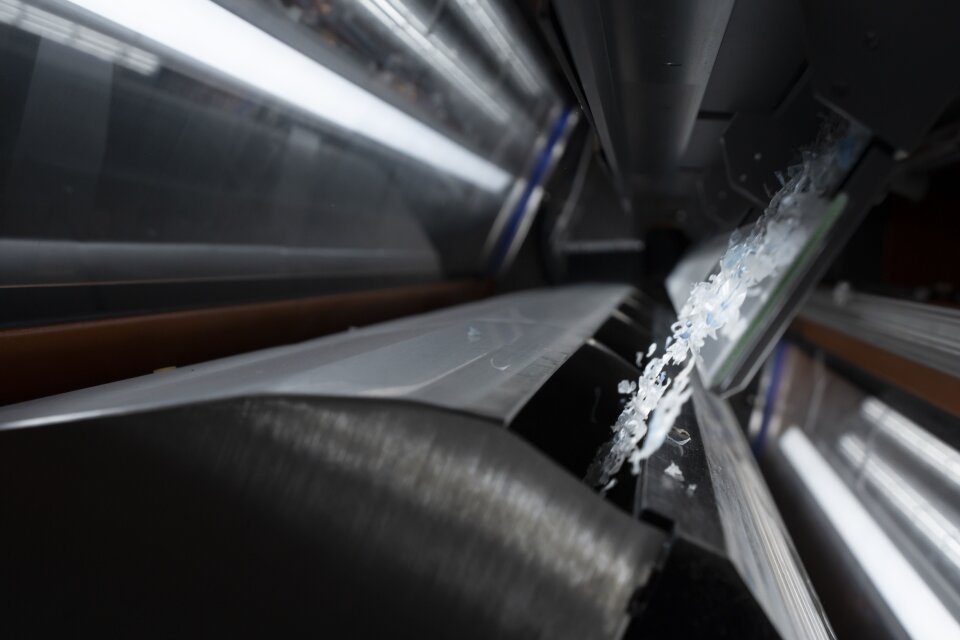
Higher-purity flake production for demanding applications is expected to benefit from PPWR
Feedstock quality as a strategic asset
Access to suitable feedstock is another factor shaping the market. Additional recycling capacity alone does not guarantee the availability of material needed for high-quality plastics recycling. As competition for cleaner feedstock increases, MRFs and waste management operators will have a stronger influence on the quality of fractions delivered to recyclers.
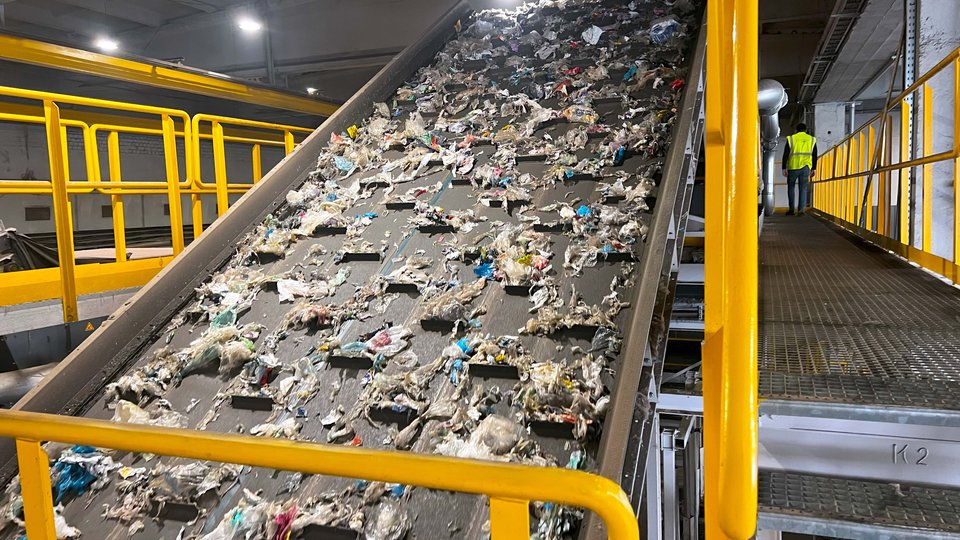
The issue is particularly visible in flexible packaging. Films account for a significant share of packaging placed on the market, but recycling infrastructure and end-market development still have room to grow. PPWR is expected to increase demand for high-quality recycled film fractions.
Operators able to recover and upgrade these fractions may gain access to higher-value circular applications. Organizations that improve feedstock quality now could therefore be better positioned as flexible packaging recycling markets develop.
Packaging design for circularity
The regulation is also influencing packaging development. Brand owners, packaging producers, recyclers and technology providers are working more closely to validate designs, improve sortability and increase the use of high-quality recycled content.
Recyclability is becoming a measurable performance criterion rather than solely a design objective. Packaging must demonstrate not only technical recyclability, but also the ability to be collected, sorted and recycled effectively at scale in operating systems.
Actual recovery remains dependent on local collection and sorting infrastructure. Nevertheless, recyclability and sortability assessments are becoming important for supporting compliance and demonstrating the quality outcomes achievable through advanced mechanical recycling.
Sorting and material intelligence solutions
TOMRA identifies several capabilities for which market demand is increasing:
- Greater visibility into material streams and plant performance
- Better object recognition and material identification
- Higher-purity flake production for demanding applications
- Improved recovery of flexible packaging fractions
- Recyclability and sortability assessments
Examples of industrial-scale implementation include Cirrec and Sulayr Recycling, which have demonstrated food-grade and tray-to-tray PET recycling with purity levels above 99.8%. Amcor Circular Polymers is producing contact-sensitive recycled PP for demanding food-contact applications, while AB Plasta produces high-quality recyclates from post-consumer film at industrial scale.
The supporting technologies cited by TOMRA include the Gainnext AI system, Innossort Flake and Autosort Flake flake sorters, and the Autosort Speedair film sorting solution. PolyPerception's Waste Analyzer and TOMRA Local Control add material intelligence and automation functions, providing information on material streams and enabling sorting performance to be optimized continuously using real-time quality data.
From recovered volume to material performance
According to Enge, customer discussions are moving from compliance toward economics. The central question is increasingly not whether demand for recycled content will grow, but which suppliers will be able to provide the quality required by the market.
Organizations investing early in material intelligence, sorting performance and quality control may be better placed to use the opportunities created by PPWR. The focus is shifting from recovering material by volume toward producing secondary raw materials that can repeatedly re-enter demanding applications.
"Ultimately, PPWR will not only change compliance requirements, it will change the economics of plastic recycling itself," Enge said.
Lars Enge, EVP and Head of TOMRA Recycling: "PPWR will not only change compliance requirements, it will change the economics of plastic recycling itself."