Engel to present four moulding cells at Plastimagen 2026
Engel will demonstrate four injection moulding applications at Plastimagen 2026 in Mexico, covering transport crates, automotive connectors, liquid silicone rubber parts and medical plungers. The company will also present its EVA virtual assistant.
Engel will operate four injection moulding machines across a 480 m² stand at Plastimagen 2026, held from 10 to 13 November at Centro Citibanamex in Mexico City. The exhibits will address applications relevant to Mexico's plastics industry, ranging from high-volume production to precision moulding. An agricultural transport crate and an automotive connector will demonstrate approaches to controlling unit costs in large production runs. Two further cells will produce a liquid silicone rubber soap dish and a polypropylene syringe plunger for a medical application. The company will also present EVA, the Engel Virtual Assistant, which is intended to provide operators with production-specific information on the shop floor. The live demonstrations will serve as a basis for discussions about output, process stability, energy and material consumption, automation, maintenance and production cell design.
High-volume production with controlled costs
For transport crate manufacturers, production output must be balanced against reliable product performance, material consumption, energy demand and unit costs. Engel will use an application for a customer from Michoacán to demonstrate the Wintec t-win 6500. The standardised two-platen injection moulding machine has a clamping force of 6,500 kN and is designed for high-volume production.
Short dry-cycle times and high machine availability are intended to support higher output, while the compact design reduces the required floor space. Robust technology and readily accessible maintenance points are designed to limit downtime without requiring investment in expensive special equipment.
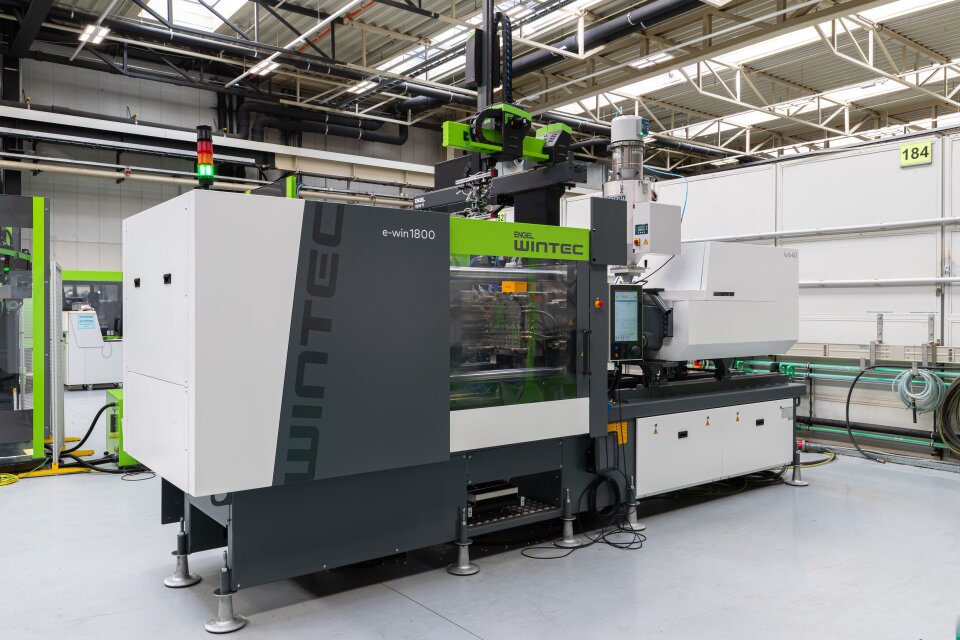
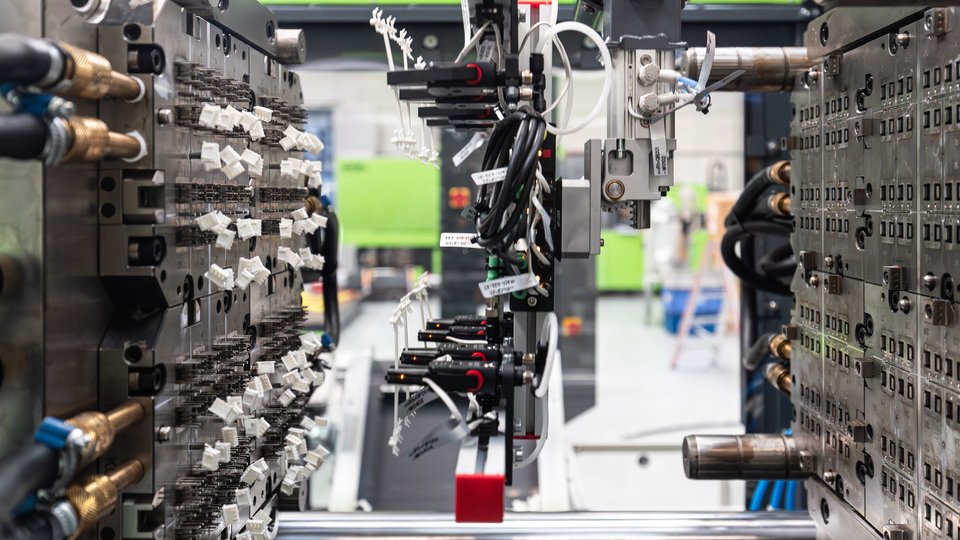
The second high-volume application concerns automotive connectors, where stable processes and low unit costs are important for competitiveness. The all-electric Wintec e-win 1800 is configured for the specific application and avoids unnecessary special equipment, helping to control capital and operating costs. A 128-cavity mould operating with an eight-second cycle time produces 57,600 parts per hour. Plastimagen 2026 will mark the first presentation of the e-win in Mexico.
Precision moulding for silicone and medical parts
A soap dish made from liquid silicone rubber will demonstrate the material's non-slip properties, cleanability and suitability for contact with surfaces. Engel will produce the part on an all-electric e-mac 165/110 LIM using a two-cavity mould supplied by KIPE Molds. The cycle time is 51 seconds.
The cold-runner system eliminates sprue waste and thereby helps reduce material costs. An Engel viper 12 robot removes the parts inside the safety enclosure and places them on a conveyor belt. This arrangement keeps the automated production cell compact.
For the medical application, Engel will produce a polypropylene syringe plunger on a victory electric 220. Consistent part quality over numerous production cycles is a central requirement for this component. The machine's tie-bar-less clamping unit provides access to the mould and space for larger moulds, while its electric injection unit enables precise, energy-efficient processing. According to Engel, this configuration gives processors more flexibility when designing the production cell without compromising repeatability.
Virtual assistant uses production context
EVA, the Engel Virtual Assistant, is designed to give machine operators access to relevant knowledge when it is needed. As part of Engel's inject AI approach, operators can ask questions about a specific production situation instead of searching for a generic answer. Questions can be entered in the operator's own words by text or voice.
EVA places each question in the context of the machine and production order. It then links the available data with Engel's machine, process and service expertise, explains the relevant connections and recommends a next step. For approved use cases, the assistant can prepare changes, but transfers them to the machine control system only after confirmation by the operator.
The underlying technology is the Engel AI Interface. Based on the Model Context Protocol (MCP), it supplies structured machine information to approved Engel applications. The interface is available as an option for new Engel and Wintec injection moulding cells. It can also be retrofitted to existing machines equipped with CC300 or C3 control systems.
Engel experts will discuss the applications and production requirements with visitors at stand 813.
High-volume production rethought: the complete solution featuring the Wintec e-win 1800 and the new Engel viper 6 combines injection moulding and automation in a coordinated production cell