Südpack reports progress on 2030 sustainability goals
Südpack's sixth Sustainability Report records progress in recyclable films, emissions reduction, renewable electricity and supply chain transparency. The report covers the company's activities in 2024 and 2025.
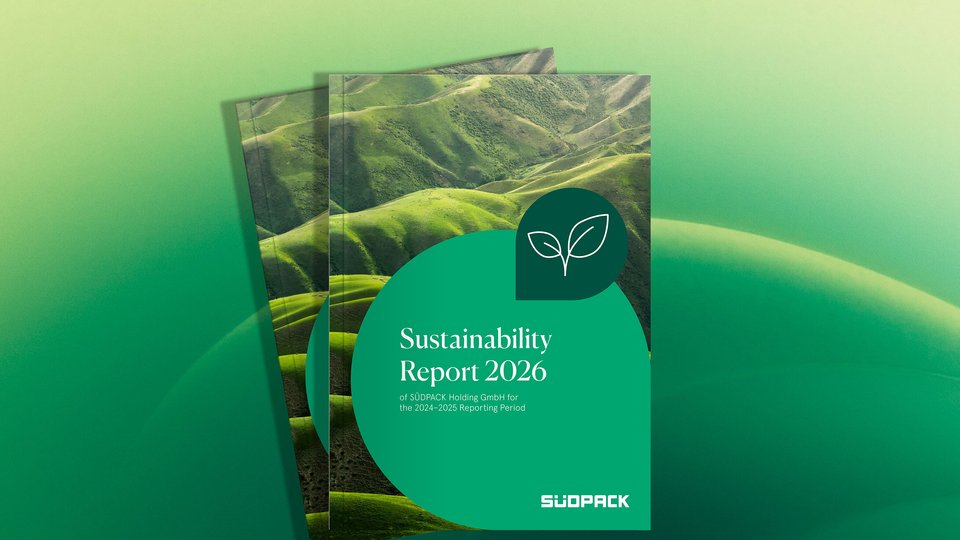
Südpack Group has published its sixth Sustainability Report, covering 2024 and 2025 and documenting the implementation of its Sustainability Strategy for 2030. The film manufacturer structures its approach around three related areas: Circular Economy, Climate and Nature, and Social Responsibility. The report combines validated materiality findings with goals, key performance indicators and progress data intended to support the measurement and management of sustainability activities.
During the reporting period, Südpack continued to implement the strategy through defined responsibilities and targets. Some measures were extended across the Group. The Sustainability function reports directly to the Management Board, which, according to the company, supports faster prioritisation of emerging issues and the ongoing refinement of the strategy.
The report presents developments in products and production, greenhouse gas emissions, energy consumption, water and biodiversity, as well as supply chain assessment. It also provides information on progress towards targets validated by the Science Based Targets initiative and on the use of supplier sustainability ratings.
Recycling-compatible film structures
A central product-related focus is the development of mono-material films based on polypropylene and polyethylene. Südpack is expanding its capacity in this area through investments at its Erolzheim site and in new extrusion lines. Recycling-compatible films currently represent 27% of the company's sales volume. However, Südpack reports that the difficult economic environment in Germany is contributing to continued caution among manufacturers and retailers regarding the transition to modern mono-material structures.
The Packaging and Packaging Waste Regulation, PPWR, and the Corporate Sustainability Reporting Directive, CSRD, are also leading to closer dialogue along the value chain. Recent developments named in the report include polyethylene pouch solutions from the CarbonLite product family, the NutriGuard mono-material blister concept for nutraceutical products and advanced high-performance polypropylene films. Südpack has also established additional targets concerning Design for Recycling, post-consumer recycled content and carbon dioxide equivalent intensity, which are being implemented progressively.
Emissions and energy consumption
Südpack is working at all production sites to reduce greenhouse gas emissions, improve energy efficiency and support more climate-friendly solutions across the value chain. Its near-term targets, validated by the Science Based Targets initiative, include a 76% reduction in direct and energy-related emissions by 2030 compared with the 2021 base year. By 2025, the company had achieved 96% of this reduction target.
Progress in Scope 3 emissions has been more limited. The categories "Purchased Goods and Services" and "End-of-Life Treatment of Sold Products" together account for 85% of these emissions. Nevertheless, Südpack has achieved 64% of its 2030 near-term target for reducing indirect emissions in the "Purchased Goods and Services" category by 25%.
In 2025, renewable sources accounted for 92% of the electricity consumed across the Südpack Group. Energy consumption decreased by 2.6% compared with 2024 and by 19% in total compared with the 2021 base year.
The company also plans to give greater strategic importance to water and biodiversity. Water currently has a lower material significance because Südpack's consumption is relatively low, but the company intends to integrate both water and the related area of biodiversity more firmly into its strategy.
Supply chain assessment
Südpack's approach to supply chain transparency is guided by its materiality analysis and the requirements of SA8000. The company uses sustainability ratings and supplier product carbon footprint and life cycle assessment data to track progress. Sustainability ratings currently cover 78% of purchasing volume.
In the 2025 EcoVadis assessment, Südpack received 86 points out of 100, placing it among the top 1% of assessed companies. The company recorded its largest improvements in Ethics and Sustainable Procurement, while maintaining strong results in the Environment and Labour and Human Rights categories.
The average EcoVadis result of Südpack's listed suppliers also increased. More than 95% of these suppliers now achieve at least 45 points. By 2030, the company aims to cover 90% of supplier spend through EcoVadis or an equivalent rating system. Further data are available in Südpack's Sustainability Report on the company's website.
Read more: