PlastiLoop is not only a brand, it is a global ecosystem
An interview with Sven Saura from Veolia.
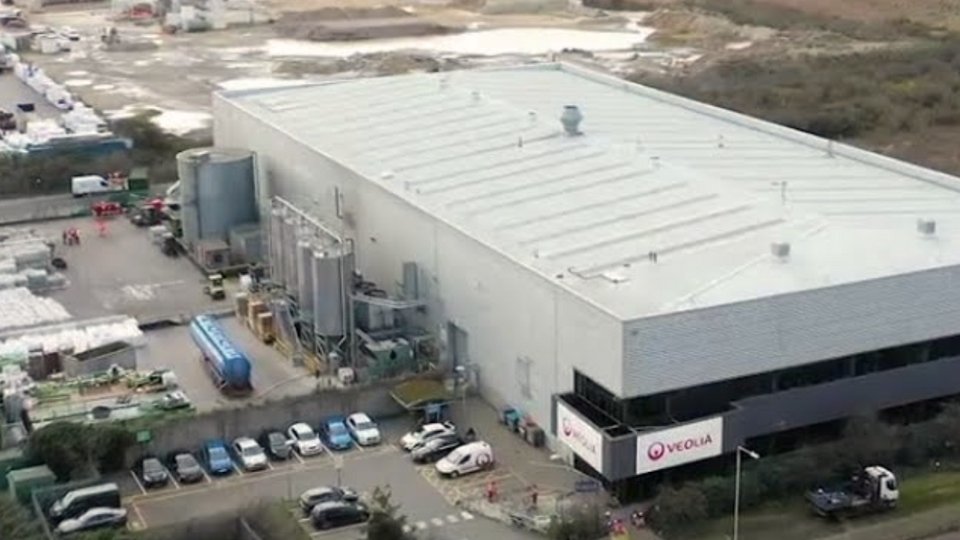
An interview with Sven Saura from Veolia
Veolia is present in many international markets. What are the challenges of operating on such a large scale, and how has the company managed to become a leader in natural resource management?
Veolia is definitely operating at large scale worldwide but in each of this geography Veolia is one actor among others of comparable: the challenge is to be able to adapt technically and economically our operations to the local regulatory environment keeping our own internal environmental and health & safety standards.
Veolia has a strong commitment to sustainability. What specific initiatives is the company pursuing in this area, both globally and locally?
Veolia has defined its Raison d’Etre which includes a set of principles including for example:
Globally:
Circular Economy: Veolia is pursuing a global circular economy strategy, aiming to transform waste into new resources. This includes initiatives for material recycling, water reuse, and energy recovery from waste for example.
Climate Change Mitigation: The company has set ambitious targets to reduce greenhouse gas emissions across its operations and for its customers. This includes increasing the production of renewable and alternative energies as well as energy efficiency.
Biodiversity Protection: Veolia has global programs to assess and reduce the impact of its activities on ecosystems, as well as initiatives to promote biodiversity at its sites.
Sustainable Development Goals (SDGs): The company aligns its strategy with the UN's SDGs, particularly focusing on clean water and sanitation, affordable and clean energy, and responsible consumption and production.
Locally:
Water Management: In various localities, Veolia implements advanced water treatment and distribution systems to ensure access to clean water and efficient wastewater management.
Waste Management: The company tailors waste collection and treatment solutions to local needs, often introducing innovative recycling programs in different cities.
Energy Efficiency: Veolia works with local municipalities and industries to implement energy-efficient solutions, such as district heating networks or cogeneration plants.
Community Engagement: The Veolia Foundation supports local projects related to environmental conservation, workforce development, and social inclusion in areas where the company operates.
Adaptation to Local Contexts: Veolia adapts its global expertise to address specific local challenges. For example, in water-scarce regions, they might focus more on water reuse and desalination technologies.
These initiatives reflect Veolia's commitment to "Resource the world," aiming to design and implement solutions for water, waste, and energy management that foster the transition toward a circular economy. The company's approach combines global strategies with locally tailored solutions to address specific sustainability challenges in different regions.
Veolia works with a number of companies and governments in the area of the circular economy. What partnerships are key to achieving global recycling goals?
Veolia is acting in a sector where essential services are part of government responsibility when it comes to water supply and sanitation, waste management and to a lesser extent energy production.
Partnerships with local entities (municipalities, local governments, etc.) are key to develop our services such as waste collection and sorting but also water supply and treatment for reuse or back to the environment solution.
This also applies to the industrial sector which is also subject to the applicable regulation on many of their material and energy streams or to internal policies with regards to recycling goals. We see a lot of private actors fixing their own standards often exceeding legal requirements to maintain their corporate set of rules.
Of course this also implies a close connection with all local stakeholders such as local suppliers, technology providers and research centers as well as the whole ecosystem involved when implementing an infrastructure (banks, local associations, NGOs, etc…).
Plastiloop is an innovative project that aims to solve the plastic problem. Can you tell us what exactly Plastiloop is and what are the main objectives of this project?
Veolia sells recycled plastics all around the world, through its industrial brand PlastiLoop.
PlastiLoop is not only a brand, it is a global ecosystem of 4 key pillars interacting with each other to contribute to grow a truly impacting circular economy of plastics, to the benefit of our planet.
One identity , One common language supported by a structured product range , One coordinated market & customer approach supported by industrial processes , One common circular ambition shared with our customers.
What plastic recycling technologies are used in the Plastiloop project? Are they innovative technologies that differ from traditional plastic processing methods?
PlastiLoop project encompasses the full extent of the recycling activity, from feedstock sourcing to plastic pellets selling but also operating and maintaining a process with skilled operators. The recycling includes the full scope of operations from the feeding point to the final extrusion through intensive mechanical and optical sorting of plastic containers for example, washing and then optical flake sorting to reach the highest purity level. Our internal laboratories are equipped the best available technologies to monitor the quality of our production and ensure our customers of the safety they deserve.
Does the Plastiloop project face any particular difficulties in Europe, in the context of different waste and recycling regulations? What legislative changes do you see as crucial for the project to move forward?
As explained earlier Veolia and its PlastiLoop activity are acting for many years in different regulatory environments and they are used to it as it is a part of its NDA. In terms of legislative approach, we are strongly advocating for a constant increase of recycled product content within the final product to make recycled products somehow decoupled from alternative virgin material. This will foster collection, sorting and recycling activities. In addition to this pull, we know there needs to be also a push to more sustainable waste treatment modes which would not aim at material or energy recovery.
Plastic recycling is one of the biggest challenges of today's circular economy. What are the biggest difficulties you are facing with the Plastiloop project?
The biggest difficulties are directly linked to risk management. High volatility of virgin material as well as legal uncertainties which induce a very low level of visibility for any reasonable investor. This is why we strongly advocate for minimum recycled content requirement to decouple as much as possible the price of recycled material from virgin.
As any activity linked to sales of material and not services PlastiLoop needs to develop a wide customer portfolio and if possible build long term partnership to secure the investment decision, on top of this customer portfolio it is also critical to secure feedstock to be able to produce what our customers are asking for. This requires also to install very flexible processes to adapt the settings to allow a large spectrum of feedstock quality but still serve our offtakers specifications for the final products. Finding the right combination of feedstock / process / final products is where PlastiLoop brings its full potential.
Finally, what would you like to pass on to other companies and organisations that are just beginning their journey towards sustainability? What steps can they take to make an effective contribution to environmental protection?
Start small, be flexible, be patient but focused on the target, embark all stakeholders, this has to be seen as a partnership, it takes time to establish but it is the condition to make it last.