We live in the age of plastic
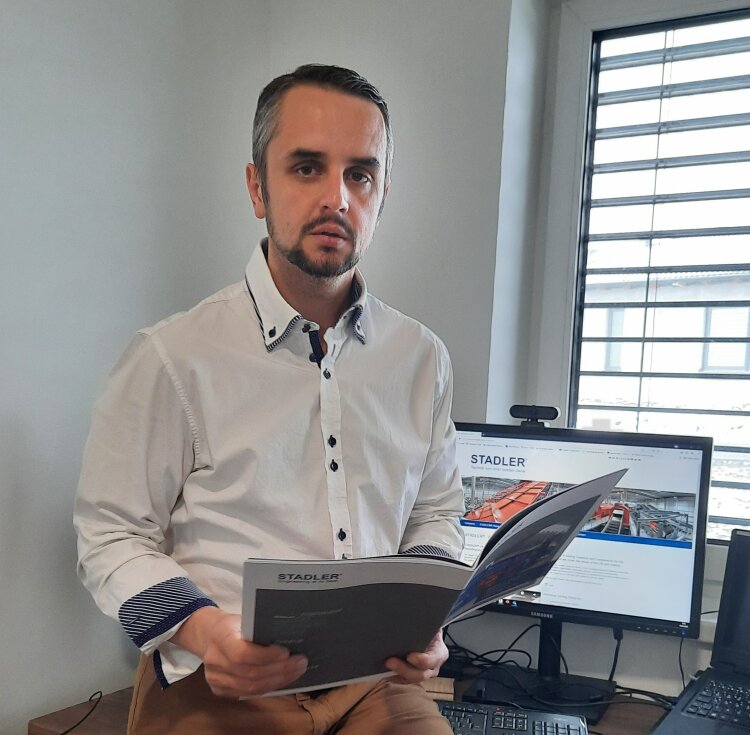
An interview with Miloš Krásá, Sales Manager for the Czech and Polish markets at Stadler.
With their inherent versatility and capacity for innovation, plastics have a crucial role to play in a sustainable economy. However, to fully deliver on this potential, it is crucial to address the many challenges relating to littering and the end-of-life options for plastic waste. What role does recycling technologies play in this area?
First of all, we have to change the way we think about plastic waste and treat it as a secondary raw material. In this case, recycling technologies have a big role to play – and this includes rough sorting technologies as well as special applications. They enable us to work with plastic waste and re-use suitable plastic materials with new potential. As the technology continues to evolve and advance every day, we are able to use more and more plastics materials. Of course, a lot of them contain fire retardants, glass fibres, various additives or are made with compounds. It is more complicated to work with these, and sometimes they are impossible to re-use. However, new technological developments are constantly coming on stream, opening new doors. We are now able to sort and recognize with precision a wider range of plastics, and the ratio of “unusable” ones is shrinking. The other materials in the recycling stream can go through a thermal process and serve for instance as a building material. The quantity of virgin plastic is decreasing, consequently efforts are focused on finding a process and technology to produce from waste plastics of high quality that can replace virgin material.
There are more and more voices saying that we should significantly reduce the share of plastic in the economy. Is this a right direct?
As you know, in the history there was a Stone age, Bronze age, Iron age; now we are living in the Plastic age. The primary goal should be to avoid waste. If this is not possible, the materials should be reused or recycled. Plastic is only a problem if you don’t have the right way of handling it. On the other hand, it also solves many problems; it is an exceptional product, with numerous benefits that have made it indispensable to modern life. There is a lot of plastic in our lives, we use it all the time on a daily basis: it is in the packaging of most products, we use plastic food trays, boxes, bags, bottles – it’s everywhere. So plastic materials hold a significant place in the economy.
And I will tell you something that might surprise you: plastics are important to address the climate crisis. It can help to reduce the CO2 footprint in many fields of application, both in production and in a product’s life cycle. Lightweight plastic components in cars save fuel; building insulation reduces the consumption of heating fuel; packaging prevents the spoilage of foodstuffs with a particularly large CO2 footprint. Plastics can help to improve the carbon footprint and deliver real benefits to climate protection.
So the best option we have today to solve this problem is handle plastics correctly and recycle.
Can Post-Consumer Resin compete with virgin resin in terms of quality?
Yes, it can. Let’s take the example of PET bottles. They can already be produced from 100% recycled material with no loss of quality. Many companies, such as Coca-Cola or Pepsi, are already committed to using a high proportion of recyclate in new production. Also, huge efforts are currently being made in the field of polyolefins to achieve the same quality as virgin resin.
An important consideration to keep in mind is that producing 1 tonne of plastic with recyclates generates 1.3 to 4.2 tonnes less CO2 than with virgin material.
In order to achieve quality that can compete with virgin resin in recycling, it is necessary to sort the polymers from the waste stream with very high purity levels. With Stadler technology this is possible.
Technology has made huge progress in recent years, and today we are able to sort plastics at very high purity rates. A Stadler sorting plant can achieve more than 95% purity of its sorted fractions. In addition, manufacturers are finding new uses for PCR, so that recycling doesn’t have to be limited to bottle-to-bottle transformation. For example, recycled plastic can be used to make pellets instead of wood, water tanks instead of concrete; or paint pots instead of steel.
How do you assess the current state of recycling technology in Europe?
Recycling technology has made huge advances in recent years, especially in Europe, where the most important manufacturers of this equipment are based. For example, NIR detection in sorting systems has developed considerably and, in the future, it will be increasingly supported by Artificial Intelligence. The use of Laser technology is also expanding in recycling. The trend is towards building large sorting plants with as much automation as possible with the aim of achieving high yields and purity levels.
From my point of view, some European states have a very good system of waste management in place, with a high level of recycling technology. Of course, there is the other side of the coin, and not all countries do as well as that. However, I would say that, in general, waste management and the associated recycling technologies are improving. Awareness about waste and how to reuse materials is growing across the world, and so the pressure to take action is increasing. The difficulties hindering the installation of new sorting plants to address the issue are not always legislative or due to the lack of proper waste management systems, but are also financial.
What can still be improved in terms of technology? How will recycling develop?
The recycling technology – like all technologies - will improve continuously. There are many routes to pursue, focusing on purity, recovery rate, simplifying the process, monitoring material movement, improving identification of the plastic materials, and so on. Modern technologies and new technical developments will help us to improve the sorting process and achieve better results with simpler solutions.
Finding a way to identify the infeed material would help to improve the process. With exact information on what is contained in the infeed material and in which amount, the plant can be adjusted more effectively. Currently we work with material composition data provided by the customers, but it varies depending on the season and the provenance (village or city).
The current trend is towards replacing manual sorting with automation. In these fully automated sorting plants, manpower is dedicated to controlling the process, and maintenance and service work. They can process large amounts of materials, but require a significant investment and are more complex to operate and manage.
In medium-sized sorting plants, semi-automated operation is possible. This means that a quality control cabin at the end of the process ensures the quality of the end product. With optical sorters, drum screens, ballistic separators, screens and other technology we can prepare the material in the best way. The proper distribution of the material into the optical sorter can achieve good quality sorting and identification of the plastic material.
The big question is always about the type of infeed material, its composition and the aim of the sorting process. With this knowledge, it is easier to plan the sorting process.
So the recycling technology can be improved all the time.
How does Stadler compare to other companies in the recycling industry?
Stadler Anlagenbau is one of the leading companies in the recycling industry. We have many years of experience and know-how. Our name has become synonymous with quality, reliability and customer satisfaction. Sorting plants or units from Stadler are installed around the world. Every year we manufacture some 1500 conveyor belts and 60 ballistic separators, and we install around 10 new, large turnkey sorting plants for all types of waste not counting the many modernisations and expansions of existing plants.
Stadler invests around 5% of its turnover in R&D every year. We constantly develop new technologies and processes in order to remain at the top of the recycling chain and lead the market. We focus not only on the development of the plants, looking for the best ways to treat the materials, but also on ensuring that our clients are fully satisfied with the results – this is very important for us, and we work closely with them and remain in close contact over time.
We have built a very good reputation for always delivering on our promises, and we offer an excellent price-performance ratio.
Stadler also has an outstanding assembly team, which is incredibly fast and reliable. This is the biggest difference with our competitors.
And finally, in this sector we don´t act alone; we work with many high-quality partners, which produce the best machines to integrate in our sorting plants. All this enables Stadler to offer the highest purity rates of the output fractions and to build pioneering sorting plants, always bringing new processes to the market.
You are the Sales Manager for the Czech Republic and Poland, what is your opinion about the Central European markets?
These are very important markets. Significant investments will be needed in the coming years in order to meet the requirements of the EU and its climate targets.
As an internationally active company with a wealth of experience, Stadler is pleased to be able to contribute to these efforts.
And what is the specificity of the Polish market?
While Poland will need to invest to meet EU requirements as I mentioned, great efforts have already been made and various sorting plants have been built, especially in the area of municipal solid waste.
Stadler does not have its own subsidiary in Poland, so I serve this market.