Polymers in the photovoltaics industry
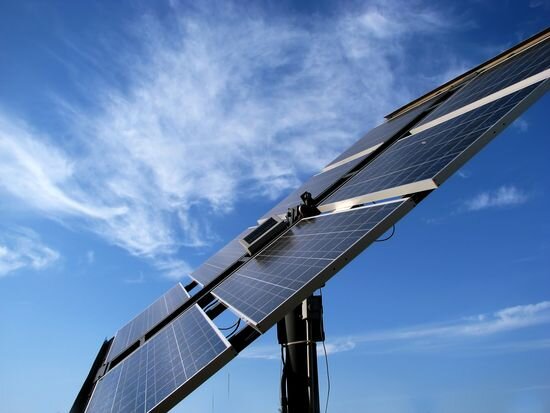
The solar power industry is continuing to grow exponentially worldwide and a total 16,000 MW of PV systems were installed globally in 2010, up from 7,200 MW in 2009. This expansion is expected to continue into 2011 according to Kerry Setterthwaite, Senior Consultant at Applied Market Information (AMI).
The technology of modules from the photoactive component to the packaging materials is still under review, which opens market opportunities for new materials.
A wide variety of polymers is already in use including EVA , PVB, silicone, fluoropolymers (such as PVF, PTFE, ECTFE and ETFE), PMMA, thermoplastic elastomers, EPDM, polyamide and PET. Setterthwaite was speaking at the AMI international conference, Polymers in Photovoltaics 2011, held in April in Germany. The cost per kWh is coming down due to factors such as vertical integration of the supply chain and thus the potential for the module industry is enormous, particularly in sunny regions.
Dr. Mohan Narayanan, Vice President of Technology at Hanwha SolarOne in China has reviewed the use of polymers in modules used for rural electrification. Nearly 1.4 billion people across the globe currently have no access to electricity, however by 2020 it is predicted that 750 million rural customers will be supplied up from 7.5 million in 2007. The barrier to this development is the low disposable income and the upfront investment cost.
In India, for example, current per capita use of electricity is low and expected to rise so that by 2020 another 280GW will be required: solar power is one possible solution as there are over 300 clear sunny days each year.
It will require government support for this expansion to be achieved. The demands on materials would be high: encapsulant would need to be highly transparent for maximum efficiency, water repellent, chemical resistant, have low permeability to water vapour, excellent adhesion and flexibility, and perform consistently across a wide temperature range.
The first IEC standard for crystalline photovoltaics was published in 1993. In 2010 the first standard for back and front sheets was developed alongside the standard IEC 61730-1, which covers module components. Several aspects are tested including the relative thermal endurance index (RTI), the flame spread index and weathering resistance. TÜV Rheinland is involved in the development of standards and performance testing.
Many roofs on commercial buildings in the US are unsuitable for solar panel installation due to the weight bearing load required, so new lightweight crystalline silicon technology is being developed. Fluoropolymers can replace the heavy glass front sheet: they are lightweight (as low as 0.1 kg per square metre); ETFE and FEP offer excellent light transmittance, and are resistant to chemicals, humidity, light and heat.
A rigid reinforcement is required where glass is not used, for example a rigid back panel. Saint-Gobain Performance Plastics supplies these front sheets: ETFE is already used as transparent roofing structures and has been subject to extensive testing including hail and cut resistance.
Solvay Solexis is another supplier of fluoropolymer materials and has worked on the development of solar films with Ajedium Films (a company division). There is a new transparent grade of PVDF with potential for backsheets and frontsheets, while ECTFE has potential in front sheets including for UV blocking films. A typical backsheet is a multilayer structure with PET and tie layers.
Toray Films produces PET based backsheets as an alternative to fluoropolymers, which dominated the market in the 1990s. Backsheets need to offer electrical insulation, mechanical strength, UV and weathering stability: in this case different layers of PET materials provide the different properties required. These Lumirror films have been used in Japan since the 1990s.
Acrylic materials have a role in photovoltaics too: PMMA from Evonik Röhm is already proven for outdoor applications from automotive glazing to signage under the brand name Plexiglass. The light transmission properties can be adjusted to optimise solar module performance. It has been field tested, for example for more than 12 years in an Amonix concentrated PV (CPV) system, and in protection of CPV lenses for over 17 years. At Intersolar 2010, the use of Plexiglass in frontsheets was demonstrated in a lightweight module measuring 4.5 m by 1.5 m.
There are new backsheets under development including the polyolefin-based coextruded sheet from Renolit with integrated adhesive. It can also be combined with EVA as an upper encapsulant. Renolit’s waterproof membrane production has given the company extensive experience of weather-exposed polymer materials.
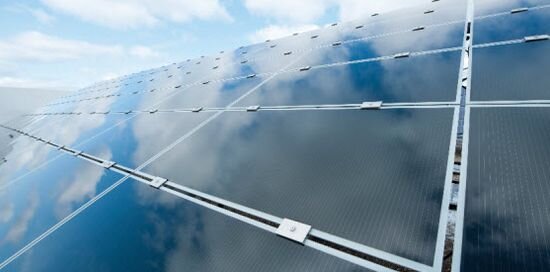
Many backsheets are laminates, this one is coextruded with a reactive PE face for adhesion to module components; soft encapsulating PE layers (including functional fillers like flame retardants); a connecting layer; a PP layer with high concentrations of functional fillers such as reflective pigments; a PP layer with improved heat distortion and a surface treatment or primer layer.
3M supplies adhesives to the solar module industry, such as bonding for junction boxes, cell positioning tape and acrylic foam, frame-bonding tape. It also supplies fluoropolymer backsheets, which are UL and IEC certified.
Sealing is an important aspect of module durability: moisture ingress can cause delamination, leakage of current, discoloration and corrosion. SAES Getters provides sealant tape, which can give 3000 hours of damp heat stability in thin film CIGS modules. The breakthrough time is the time required for moisture to break through the barrier sealant. Active barriers based on chemical getters have higher breakthrough times and lower permeation rates.
Encapsulation materials should be transparent, provide cushioning and impact properties, electrical insulation and a high moisture barrier. EVA is the most commonly used polymer and has been in use for over 30 years. More recently silicone rubber, PVB, ionomers and TPU have all been used as alternatives.
There are special considerations for the extrusion of encapsulant polymers, as studied by Davis-Standard. A typical EVA encapsulant has a high VA content (33%) and contains additives, which must be correctly mixed: the extruder should have a corrosion-resistant liner and screw, provide adequate torque for low temperature processing and an L/D size which balances residence time against mixing requirements.
The rise in demand for materials from the solar power industry has caused suppliers to divert materials and expand. For example, USI Corp. in Taipei is diverting EVA to the solar industry and Repsol is expanding its EVA production site in Puertollano, Spain, while in the third quarter of 2010 DuPont announced increased production of PVF in North Caroline for Tedlar film for backsheet applications.