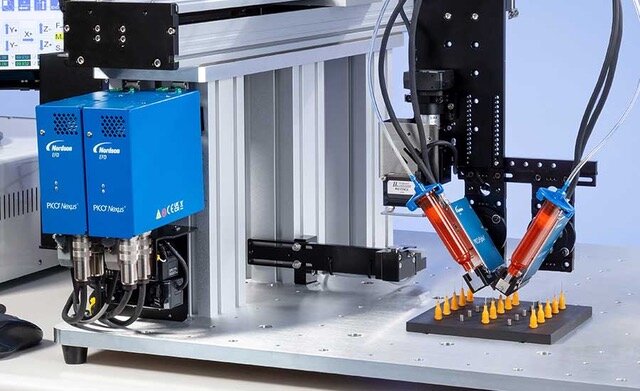
Nordson EFD: Why size matters in fluid-based assembly applications
There is explosive demand for highly engineered products in industries such as electronics and medical devices. Forward-thinking engineering teams are aligning technology strategies and the required expertise to leverage these growth opportunities. The need to guarantee quality part assembly is a critical, real-world challenge and requires extensive fluid process and dispensing expertise.
Dispensing requires the delicate balance of fluid properties and operational output
Choosing the right dispensing technology requires striking a delicate balance between a fluid’s physical properties and the demands of a manufacturer’s operational output, such as throughput and precision requirements. Optimizing this pairing prevents costly material waste, process interruption and downtime. Automated dispense systems also bridge the gap between fluid properties and production demands by eliminating operator variability and delivering the exact fluid shot size at the same location, time after time, to radically increase efficiencies.
Size is fundamental, not optional
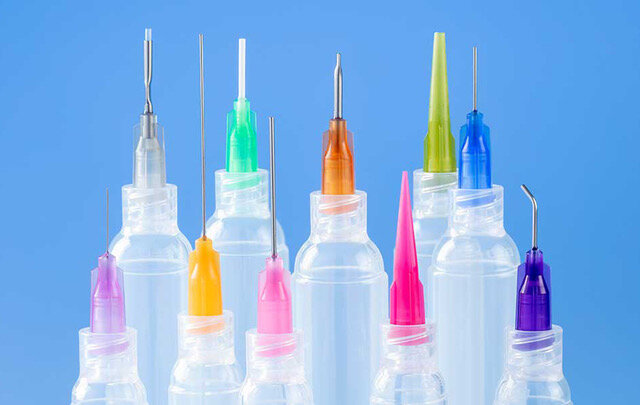
In assembly production, size matters. Finding the right size fluid dispensing components is not optional. It is fundamental. To place an accurate bead of fluid, size selection is critical for single-use plastic components like dispense tips used with hand-held dispensers or the most sophisticated automation systems. Serving as the “point-of-dispense,” dispense tips also come in a multitude of styles, lengths, and outer/inner diameters.
Tips are instrumental in controlling how a fluid leaves a syringe barrel or valve as it is deposited onto a substrate. The miniaturization of products, especially in the medical and electronics space, has created demand for even smaller, more precise tips to dispense without overflow in hard-to-reach areas.
A customer’s unique assembly application always drives the sizing requirements. If the manufacturer is assembling thousands of parts a day versus a few hundred, a cartridge may be another option for the dispensing system. Formulators of fluids like epoxies and adhesives typically package this material in either a syringe barrel or cartridge when working with a single or pre-mixed fluid. Syringe barrel volumes range from 3cc to 70cc and cartridges vary from 2.5 fl oz to 32 fl oz. The upper volume range in syringe barrels, such as the popular 70cc size, provides the flexibility needed to add more fluid capacity to each cycle, which translates to less downtime as the fluid body is switched out less frequently.
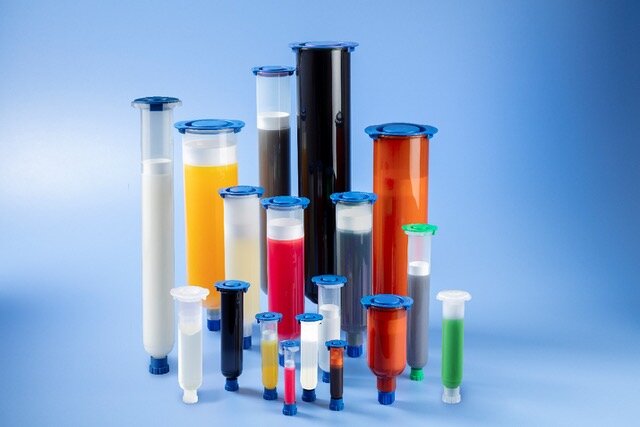
For smaller batch dispensing, syringe barrels may be the better fit. A general rule of thumb is to dispense fluid containers from full-to-empty in any given shift, achieving maximum value-dispensing to the very last deposit. This practice reduces fluid waste and saves money on syringe barrel or cartridge usage.
Keeping assembly operations top of mind
The sizing principles outlined for fluid dispense applications shine a light on the path toward constructing highly engineered parts and products with confidence and quality. The surge in demand for next generation products sensors, semiconductors, smart medical devices and fiber optics has manufacturers rethinking their production models.
The competitive reality for OEMs and contract manufacturers lies in prioritizing assembly processes much earlier in the product development cycle to streamline time to market. Getting ahead of the process control curve simply saves time and money in the long run.