Envalior introduces new halogen-free flame-retardant PBT grade
Envalior has launched Pocan BFN4135, the first grade in a new family of halogen-free flame-retardant PBT compounds that offers mechanical properties comparable with conventional PBT containing halogenated flame-retardant systems.
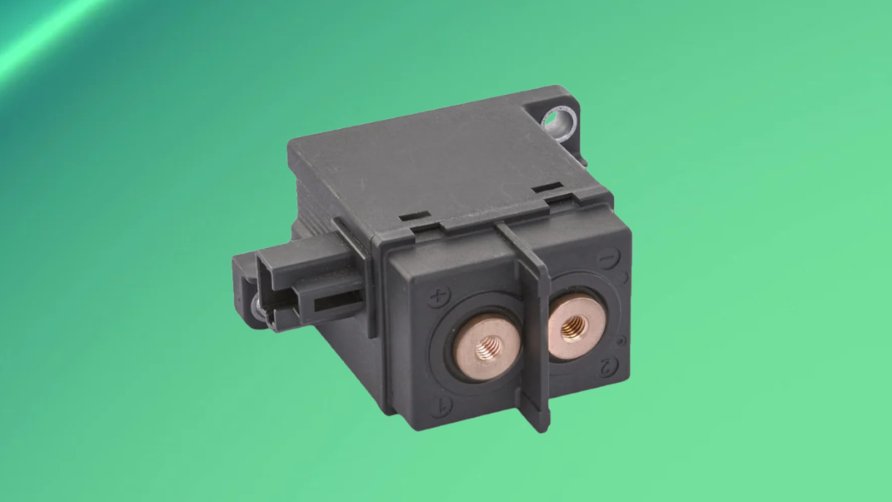
Envalior, a manufacturer of sustainable and high-performance engineering materials, has introduced a new halogen-free flame-retardant polybutylene terephthalate (PBT). As the first grade in a new product family, Pocan BFN4135 delivers mechanical properties comparable with conventional PBT compounds containing halogenated flame-retardant systems.
Until now, the lower mechanical performance of halogen-free flame-retardant PBT has limited its use in demanding applications requiring high strength and elongation at break. According to the company, Pocan BFN4135 closes this performance gap. Potential applications include connectors, connector housings and bobbins.
"The key strength of our PFAS-free material innovation lies in its state-of-the-art flame-retardant package, which complies with the latest and upcoming requirements for sustainability, health, and workplace safety," says Lucas Lichius, Global Product Manager for PBT at Envalior. "As a result, processors can avoid the risk of unexpected portfolio changes driven by regulatory developments and benefit from greater planning certainty and long-term investment security."
Optimised for direct material replacement
The new PBT compound offers a combination of tensile modulus, tensile strength, Charpy impact strength, elongation at break and shrinkage behaviour. For example, its elongation at break reaches 2.4% (ISO 527-1/-2), which helps reduce susceptibility to stress cracking in finished components.
The material has been engineered to allow processors to replace conventional halogenated flame-retardant PBT grades containing, for example, 30% glass fibre without significant adjustments to injection moulding parameters. Shrinkage behaviour remains virtually identical, enabling manufacturers to continue using existing tooling, reducing conversion costs and minimising changeover times.
Flame retardancy and electrical safety
The compound combines fire performance with electrical properties. In testing equivalent to the UL 94 flammability standard from Underwriters Laboratories (UL), it achieves the highest classification of V-0 at a wall thickness of 0.75 mm. This enables designers to develop thin-walled component geometries without compromising safety.
With a CTI A (Comparative Tracking Index, IEC 60112) of 450, the PBT compound offers significantly higher tracking resistance than comparable halogenated flame-retardant grades. In addition, material variants currently under development are set to achieve the maximum CTI A value of 600. These high CTI A values make the new material family particularly suitable for high-voltage DC applications, including fast-charging infrastructure and AI data centres.
Reduced scrap rates and lower maintenance costs
Processing performance is another advantage of the new PBT compound. In hot runner injection moulding systems, for example, the material exhibits minimal viscosity fluctuations, enabling highly stable manufacturing conditions. This results in lower scrap rates, reduced tool maintenance requirements and fewer production interruptions. As a result, processors benefit from lower operating costs, higher productivity and improved manufacturing efficiency.
Grades for overmoulding metal parts subjected to thermal shock
The development of halogen-free flame-retardant PBT grades with enhanced mechanical performance has been a strategic focus for Envalior for several years. Recently, the company introduced Pocan BFN4221Z and Pocan BFN4231Z, two materials designed for insert and overmoulding applications involving metal components exposed to rapid temperature changes. Thanks to their high elongation at break and temperature resistance, these compounds significantly reduce the risk of stress cracking caused by thermal shock.
Economic and regulatory pressure on halogenated systems
Demand for halogen-free flame-retardant PBT grades has increased significantly in recent years. One of the key drivers has been the prolonged period of elevated prices for raw materials used in halogenated flame-retardant systems, such as antimony trioxide and bromine. Although prices have eased somewhat, volatility remains high, prompting many processors to seek more stable alternatives.
In addition, halogenated flame retardants face increasing scrutiny regarding workplace safety, sustainability, recyclability and environmental impact, while regulatory pressure is intensifying worldwide. These market and regulatory developments were among the key factors that motivated Envalior to develop the new generation of materials.
Detailed information on Envalior's materials is available in the company's MaterialAdvisor, which provides digital tools and services that customers can use to find, select and evaluate materials.