The Linear LWB MultiStation paves the way for higher productivity in rubber manufacturing
At its first Next-Level Molding Days in Altdorf near Landshut, Shibaura Machine LWB presented the world premiere of the Linear LWB MultiStation, an automated production cell for rubber processing that runs injection, vulcanisation and demoulding in parallel.
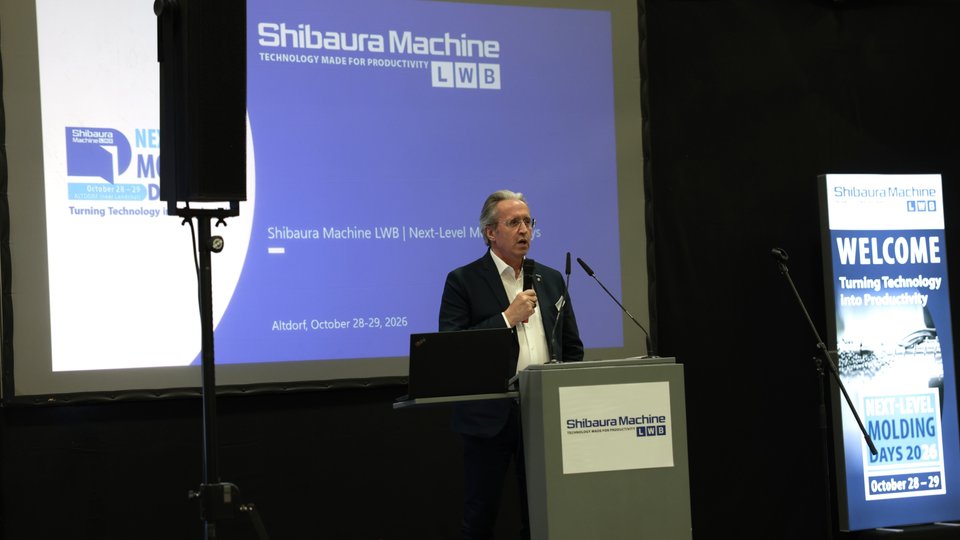
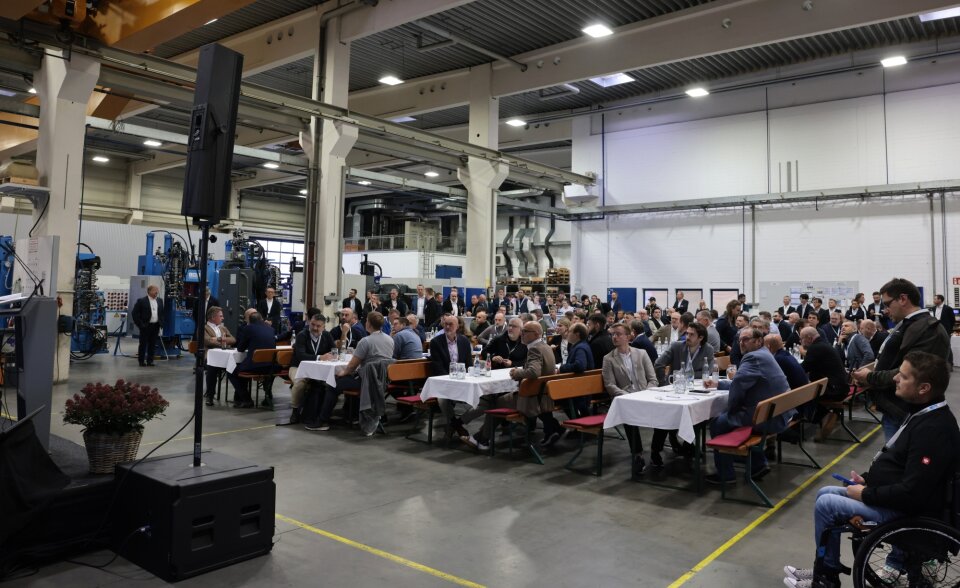
At the first Shibaura Machine LWB | Next-Level Molding Days, held on 28 and 29 October 2026 at the European Centre of Excellence in Altdorf near Landshut, Shibaura Machine LWB demonstrated how injection moulding processes can be made more efficient, productive and future-proof. The event, attended by around 250 guests, featured the world premiere of the new Linear LWB MultiStation. Under the theme "Turning Technology into Productivity", the company showed 15 horizontal and vertical injection moulding machines for thermoplastics and elastomers, many of them running live demonstrations. Shibaura Machine LWB also honoured three customers for decades of reliable use of vertical LWB injection moulding machines that are still in operation today.
"The Next-Level Molding Days showcased what makes SHIBAURA MACHINE LWB unique: we blend Japanese engineering expertise with German craftsmanship, in-depth application knowledge, and intelligent automation. This combination enables our customers to boost productivity and secure long-term investments. The enthusiasm of around 250 guests, who explored our technologies and shared their specific production needs, was particularly striking. My heartfelt thanks go to our team, whose dedication and seamless collaboration made this event a success," says Dr Georg Holzinger, Managing Executive Officer of Shibaura Machine and Chair of the Management Board of Shibaura Machine LWB GmbH.
Linear LWB MultiStation parallelises processes
The world premiere of the new Linear LWB MultiStation was the main focus of the event. This automated production cell separates injection moulding, vulcanisation and demoulding, allowing them to run in parallel. The LWB MultiStation shifts vulcanisation to separate heating stations, freeing the vertical injection moulding machine within minutes. While the component cures under heat and clamping pressure, the system already prepares the next mould. An automated gantry handling system moves two moulds, each weighing up to 800 kg.
"For suitable applications, the LWB MultiStation can replace several conventional vertical injection molding machines. This increases output whilst simultaneously reducing the capital expenditure per component produced," explains Dr Clemens Behmenburg, Executive Vice President Systems & Solutions at Shibaura Machine LWB GmbH. "A further advantage is the significantly lower staffing requirements, as automated mold handling and demolding reduce manual work on hot molds and heating plates."
The modular system adapts flexibly to mould programmes, cycle times and production targets, and can be expanded as needed. In this way, the LWB MultiStation combines higher efficiency with more ergonomic processes for elastomer production.
Horizontal and vertical injection moulding machines
Visitors also saw Shibaura Machine LWB's range of injection moulding machines. The portfolio covers precise, energy-efficient solutions for processing thermoplastics and flexibly configurable machines for demanding elastomer applications. On display were fully electric horizontal injection moulding machines from Shibaura Machine's EC-SXIII series, with clamping forces from 50 to 350 metric tons, as well as hydraulic horizontal machines from the S GenXt series, with clamping forces from 100 to 230 metric tons. The exhibition also included hydraulic vertical LWB injection moulding machines in C-frame, O-frame and four-column designs, which process elastomers and thermoplastics with clamping forces ranging from 50 to 900 tons. Several machines were running live.
In their presentations, international experts from industry and research discussed the future of injection moulding, market trends in North America, China, India and Africa, and new production concepts for plastics and rubber processing.
Awards for long-serving LWB machines
The campaign "Wanted: the oldest LWB injection molding machine still in production today" highlighted the value of investing in reliable machinery. Shibaura Machine LWB honoured three machines that remain in productive operation. First place went to Jung Gummiverarbeitung / Sonnenschutz e.K. from Hengersberg, Germany, whose vertical LWB injection moulding machine, built in 1989, is still in reliable operation. Second place was awarded to Aldec AG from Entlebuch, Switzerland, for its 1999 vertical LWB injection moulding machine. Third place went to Butser Rubber Ltd from Liss, UK, whose 2006 vertical LWB injection moulding machine continues to perform efficiently.
The submitted cases underline the importance of durability and reliability in the rubber and plastics industries. Decades of productivity result from robust construction, skilled maintenance, a supply of spare parts, modernisation and dedicated service. "Durability stems from experience ongoing technological progress, and strong partnerships with our customers," says Pascal Dorweg, Head of International Service at Shibaura Machine LWB. "Our goal is to support customers turn technology into measurable productivity while ensuring long-term investment security."
Around 250 guests attended the Shibaura Machine LWB | Next-Level Molding Days