Prof. Igor Čatić: bans and orders
In 2011 Italy imposed ban on single-use PE bags. We publish an article written by Croatian scientist Igor Čatić. Author is a retired professor of the Faculty of Mechanical Engineering and Naval Architecture of the University of Zagreb. His article concerns polyethylene packagings and ban imposed by the Italian government.
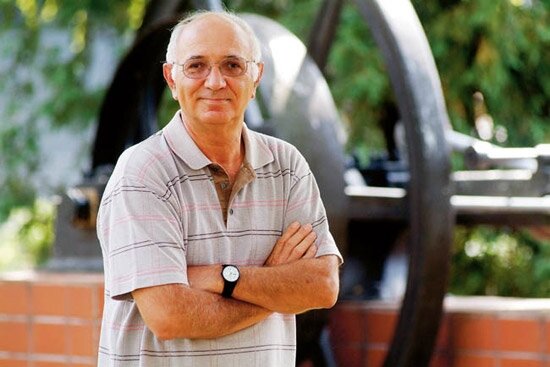
In 2011 Italy imposed ban on single-use PE bags. We publish an article written by Croatian scientist Igor Čatić. The author is a retired professor of the Faculty of Mechanical Engineering and Naval Architecture of the University of Zagreb. His article concerns polyethylene packagings and ban imposed by the Italian government.
Prof. Igor Čatić: - Why are only polymers or products made from natural sources banned and never metals? Why do journalists always repeat the once adopted incorrect information? Do you know that we in Zagreb have a dog who eats PE bottle caps?
The direct motive for the question why only polymers are banned and metals not, lies in the ban on plastic bags in Italy which entered into force on 1 January 2011. The above question could be put only as a result of the latest findings from the synthesiological research where the classical classification of materials into metals and non-metals has been abandoned.
There is a new classification introduced - into polymers and non-polymers. For this story it is important that organic polymers include: proteins, polysaccharides and nucleic acids, microorganisms, and macroorganisms, plants and animals, including humans, from dead plants and animals produced fossil fuels (oil, natural gas and coal). They are used to produce most part of plastics and the main component for rubber, natural rubber. For these materials, experts worldwide, including the author of these lines, have unjustifiably appropriated the name polymers.
For these considerations it is of least importance that a radio and television rising star, Mislav Togonal in the News 3 of the Croatian Television, in his TV report about a truly negligible, and even environmental problem, made an absolutely unprofessional contribution. Nor can the article in Vjesnik, written by Anita Koncar, be fully accepted because she repeated incorrect stereotypes, although Vjesnik archive is full of more accurate data. As a consolation, you may find similar articles in the Serbian newspapers, especially Politika.
Not listed are the authors who were the only ones who wrote about the subject as described. In doing so they were not informed about one important detail. The Italian government has violated with this ban the European acquis communautaire, and for their decision there is no scientific evidence. Therefore, the Italian government was reported to the European Commission (Communication from the European Association of Plastics Processors, 6 January 2011).
There was a similar reaction on 11th January from the Association PlasticsEurope and they emphasize that when a similar action tried to be carried out in France, the arguments were too strong, so they gave it up. Particular attention is drawn to a statement from the official position: »Then the ADEME, the French agency for environment and atomic energy, conducted a study which showed that from the viewpoint of environmental protection the biodegradable bags do not have any advantage«. For the continuation of this text only one word is important – the ban.
I have just finished reading a book written by D. Drndić, a professor of English at the University of Rijeka. And this completed the circle, because it made me think: one day the cyborgs will conclude that natural persons should be banned. But joking aside.
In synthesiological research it is not necessary to find when something occurred. It is important to notice the pattern. Therefore, I will start with the oldest prohibition I know, the one regarding alcohol in the United States. It is namely that alcohol is made mainly from organic polymers of plant origin. We know how this prohibition ended. Then followed the ban on smoking in a country that in the 1930s cleaned anything unclean, including tobacco, again a biopolymer. Now, a much larger number of countries, including Croatia, are cleaning their population from this unclean matters.
Nobody, however, has banned tobacco growing since excise taxes, taxes and all other levies are still much too dear for the budgets, and come in handy to all the manufacturers of various smoke-removal equipment. Let’s get this straight, I do not smoke and I never smoked, and as far as alcohol consumption is concerned I never drink more than a glass of red wine per day. But what is about vehicle pollution? Why has nobody banned this?
From the country that banned smoking in 1930s originated the idea of Codex Alimentarius (1.3 million articles) that was pulled through the FAO in 1962 by Fritz ter Meer (9000 articles). The goal: the food will have become weapon by 31 December 2009.
This is why cucumbers may have a deflection of 10 percent only, which means that, expressed in simple words, their deformation may be only 10 millimetres. Kumice (peasant women selling their products at outdoor market places) have to have refrigerator-showcases for cheese, and chickens must be provided with a space for intimacy.
I have not yet heard that anyone required or banned any inorganic non-polymer – metal. It is also metals that destroy the nature, if in no other way then as ammunition or by sinking of a large ship full of oil.
Indeed, I find it already intolerable to fill the pages of this diary with texts on polyethylene bags. I will just repeat some key ideas. Of all the bags - paper bags (organic polymer), cloth bags (organic polymer) and those polyethylene bags (manufactured by artificial synthesis) made of oil or natural gas (organic polymers), regarding the traces (or prints) that they leave in nature - the most favourable are the bags made of polyethylene recyclate.
And the degradable, often advertised as biodegradable bags, for example the compostable ones, require a special management system that is currently in Croatia in a difficult situation and has not resolved the management of 27,000 tons of polyethylene, nor about 12,000 tons of laminates, such as long-life milk packaging. And finally, how many of these bags are there? If, let’s say, every Croat uses on the average about 150 bags, this is about 3,000 tons. And Croatia consumes annually 300,000 tons of plastic.
The result of a survey on polyethylene bags was first published in Vjesnik on 4 April 2007. At that time, 70 percent of readers supported precisely these bags. After the Italian ban on these bags (and by the way, they are not capable of solving the issue of waste in Naples) and direct support of the Croatian media to the Italian initiative on the basis of obsolete data, I was very much interested in the repeated question. The support dropped to 55 percent, but this support is on a relatively large sample. This can be explained only by the fact that the Vjesnik readership in these areas is most familiar with the advantages and drawbacks of plastics, including also the problem of polyethylene bags.
And what about the plastic dog owned by a renowned plastics expert. This dog likes to play with PET bottles and when he gets bored with this, he unscrews the polyethylene cap, bites it all over and eats it! This is the best proof that even when they are eaten, polyethylene particles do not cause the death of mammals, a typical stereotype. Based on a report by Canadian researchers, where they replaced nylon by polyethylene. Animals can choke on the ingested polyamide, popular nylon fishing nets.
Every day sees more and more bans or orders. Undoubtedly in favour of the powerful who are in the position to impose these, with underinformed media, because of their interests, namely, profits. Therefore, in the foreseeable future we may expect to have an information bubble which will filter through only the information permitted or there will be micro-chipping required, as pet chipping nowadays.
If the Croatian TV continues to broadcast contributions such as the one by Togonal on ban of polyethylene bags, I will require strict ban of public performances by anyone being an expert and professional in the respective field. All it takes is a statement of an Italian woman in the street, an expert on everything and anything, or of somebody who has forgotten that it was he who commissioned the first Croatian study on one group of waste. It was in 1997, and, of course, it referred to plastic waste.
Finally, a part of a somewhat expanded text from the article Aggressive promotion (Vjesnik, April 24, 2009) should be repeated. »Manipulation of plastic bags is easy for governments, traders and customers. Through various funds, the state charges a fee for management. If charging the bags, the traders realize additional revenue, not spending on the necessary packaging, and the customers therefore only pay more expensive food (food is weapon). At the same time, due to the influence of the media, customers feel as if they were environmentally aware, and contributing to the preservation of our planet. Time has come for a change in thinking; fortunately, plastic bags are not the planet’s penitence, their greatest evil is that they distract our attention from more urgent matters« (Guardian, April 8, 2009).
The author is a retired professor of the Faculty of Mechanical Engineering and Naval Architecture of the University of Zagreb.
The article was also published in Croatia newspaper Vjesnik, 2011-01-14
