Schütz recyclate receives first Monitored Materials rating
Schütz has received the first Premium classification under plastship's Monitored Materials system. Its regranulate for Green Layer industrial packaging scored 9.3 out of 10.
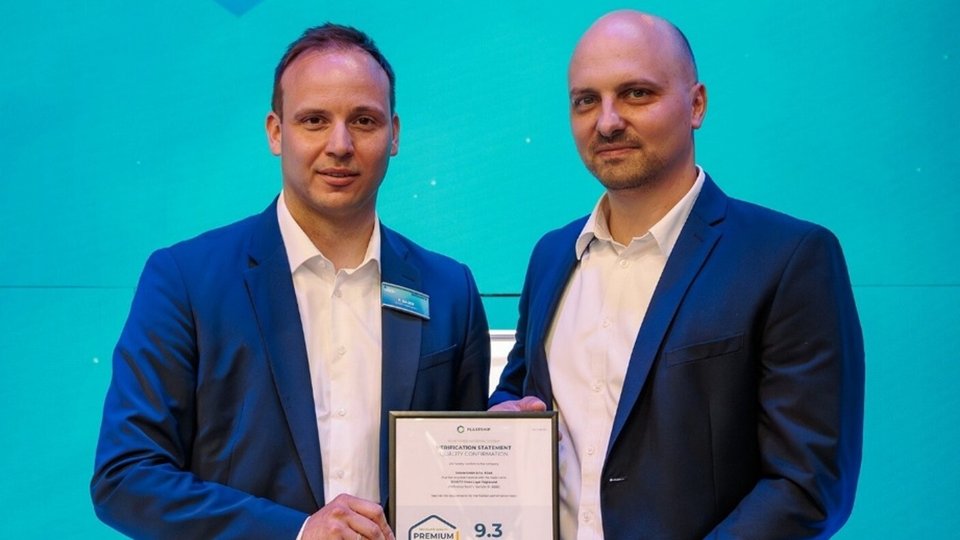
Plastship has awarded the first assessment certificate under its newly developed Monitored Materials system to Schütz GmbH & Co. KGaA. The system provides standardised data intended to improve transparency and comparability when assessing recycled plastics. Schütz uses the certified regranulate, which it processes in-house, as the central layer in its extrusion blow-moulded Green Layer intermediate bulk containers, drums and canisters. At Interpack 2026, Andreas Bastian, Managing Director of plastship GmbH, presented the certificate to Patrick Bauer, Global Head of SHEQ Management and Technical Customer Service at Schütz. The material received 9.3 points out of 10 and was placed in the Premium quality segment. According to the assessment, its performance and processing properties are comparable to those of virgin material. Within the system's database of 224 materials, the Schütz regranulate currently ranks among the top 5% of the European market.
Standardised basis for recyclate assessment
The Monitored Materials system is designed to provide a consistent data basis for classifying recyclate quality across companies, conducting objective comparisons and supporting decisions on material use. It replaces differing structures and terminology in individual technical data sheets with documents based on a standardised, directly comparable format and language.
Targeted testing is used to identify structural differences between virgin and recycled materials resulting from material streams, processing methods and applications. Laboratory data and material flow information are combined to make material quality more transparent throughout the value chain.
"With Monitored Materials, we are creating a neutral data basis for the quality of plastic recyclates. It enables the industry to make sound decisions and contributes to a shared understanding of recyclate quality. In this way, it lays the groundwork for an increasing number of high-quality applications for recyclates," Bastian said.
The assessment uses a score from 0 to 10 and assigns each tested material to one of three quality segments: Premium, Plus or Proven. Recyclate manufacturers can use the results to position their products in the market, while plastics processors gain a validated basis for decisions concerning material use. Direct access to structured data sets is also intended to reduce the work involved in searching for and qualifying materials during procurement and approval procedures.
Database supports raw material management
Customers that have a product tested as a Monitored Material and annual subscribers receive access to the associated database. The database can be used to create dynamic quality rankings, compare recycled plastics with virgin reference materials or the wider market, and conduct direct comparisons between materials.
The system also supports more detailed analyses, including the allocation of material qualities to specific waste streams, and includes market data on production capacities. Plastship positions these functions as a tool for planning and managing the procurement of recycled raw materials.
Data for regulatory compliance
Plastship expects regulations such as the EU Packaging and Packaging Waste Regulation, PPWR, to increase requirements concerning recycled content and the associated technical documentation. Monitored Materials is intended to provide a basis for future compliance evidence. The system is aligned with the EN 18065 standard on data quality and converts recycled material data into validated quality statements.
The data determined for each Monitored Material is recorded in a verification certificate. For recyclers, the certificate provides an objective and validated description of material quality. For plastics processors, it provides documented confirmation for customers and brand owners that the recycled material meets the assessed performance and processing criteria.
Read more: