Sunglasses for consumers with an eye for design and safety
High-performance polymers make sunglasses unbreakable.

With the arrival of summer, many people decide to get a new pair of stylish sunglasses. However, consumers should be sure not to focus on good looks alone – sunglasses have to provide protection against harmful UV light and must be highly durable. High-performance polymers such as TROGAMID, making them a clearly unbreakable breakthrough for manufacturers, retailers, and, above all, for wearers of sunglasses. World-renowned brands are taking advantage of these quality benefits, although the fact that plastic lenses can literally be ‘unbreakable’ tends to be generally unknown...
This summer will be a rainbow of colors – definitely when it comes to sunglasses. "High fashion style currently goes for large and colorful," says Paul Rottler, an optician who operates some fifty optician's shops throughout Germany. "Large sunglasses in noticeable, dominant colors are the style of the season. That includes lenses with green, red or orange-yellow mirrored surfaces, even blue. These aren't pastels, but bold colors that actually make a statement." They say, 'hello, here I am and I am looking forward to summer.' In addition to the loud models, cool hasn't gone out of style: "Classic black sunglasses are still in demand, and I don't believe that will change." According to Rottler, panto glasses in the style of the 1940s, cat eye frames with classic drop-shaped lenses and aviator shapes are this year's preferred choices. The summer 2015 trends favor round shapes over angles and delicate features over chunky ones. Some rules apply regardless of style–sunglasses have to provide effective protection against UV light and despite all their elegance must be sturdy enough to avoid health damage or unnecessary costs.
Sunglasses made of 'unbreakable' plastic
That represents a special challenge for manufacturers of sunglasses. "Sunglasses have to withstand enormous stresses, which is a major concern," explains Rottler. Heat, sand, dust, creams–sunglasses are exposed to a lot. "Let's take the extreme example of leaving your sunglasses on the black dashboard of your car below the windshield. Temperatures can easily reach 60 degrees Celsius or more, which separates the wheat from the chaff." As the master optician has had to learn, glasses made of plain materials frequently are not able to withstand these conditions. They become brittle, while sunscreen residue may react with the material of plain sunglasses frames, leaving unsightly permanent stains. The picture is different for eyeglass frames and lenses made of high-quality materials such as TROGAMID CX. "They don't become brittle or hard, but consistently maintain their quality," says the optician. Sunscreen, hair gel or hairspray does not affect the special plastic. "That's a major benefit of this technology,” Rottler notes. "Our high-end material is ideally suited for designers," explains Klaus Hülsmann of Evonik Industries, which manufactures the plastic. "It offers a wide range of creative choices, as the material is flexible yet extremely resistant."
Since the substance is also transparent, it can be tinted in any imaginable color. It is flexible, virtually indestructible, and allows for highly delicate processing. "TROGAMID CX just doesn't create any problems in everyday handling. We like to call it 'trouble-free'," says Hülsmann with a smile. Tests performed by the TÜV Rheinland testing institute have demonstrated just how sturdy the plastic made by Evonik really is. Some test series involved bouncing steel balls off TROGAMID lenses–without leaving a trace of damage. Such tests are crucial to determine the breakage safety of lenses, for example during sports, when a ball may hit a pair of glasses. Breaking glass or splintering plastic lenses would be disastrous in that case.
Breakage safety is particularly important for children
Breakage safety is an important issue for children's sunglasses. "Children should always wear high-quality plastic lenses and plastic eyeglass frames to effectively prevent injuries," advises Dr. Frank Holz, professor and medical director of the Ophthalmology Clinic at Bonn University Hospital. Splinters of real glass could lead to eye damage and temples that break during a fall may cause injury. Caution is advised, as the harm caused by cheap plastic toy sunglasses can do more damage than good. "Toy sunglasses are not sufficient in any case," emphasizes Holz. They become brittle after a short time and the risk of injury increases, which makes high-value plastic materials a good choice here. On the other hand, sunglasses made of plain materials generally do not offer sufficient UV protection, which is essential for children and adults, as the eye expert explains. Even though many people view sunglasses as a fashion accessory, physicians consider them indispensable to maintain ocular health, especially in the summer. "Sunglasses protect the sensitive retinal tissue of the eye, particularly in the presence of intense sunlight," says Holz.
Protection against facial skin irritation
Although sunglasses primarily protect the eyes, they also have to be gentle on the skin. During the summer heat, our faces tend to sweat more than usual, including in places where glasses touch the skin. That requires additional caution with the metallic temples of sunglasses, especially for those with nickel allergies. Even temples and nose pads that are coated with non-allergenic material may become eroded by sweat and release allergenic material, says Berlin dermatologist Dr. Jeanette Eicholtz. "Glasses made of plastic are relatively unproblematic in that regard," she advises. Nickel allergy symptoms include skin rash and itching at the contact points. Even those who are not allergic may notice red skin, particularly in the area of the nose pads. "That tends to be caused by contact pressure, possibly because the glasses weigh a little more," says Eicholtz. Conversely, that means lighter glasses made of non-allergenic TROGAMID are associated with fewer problems.

Rodenstock's Porsche Design is on board
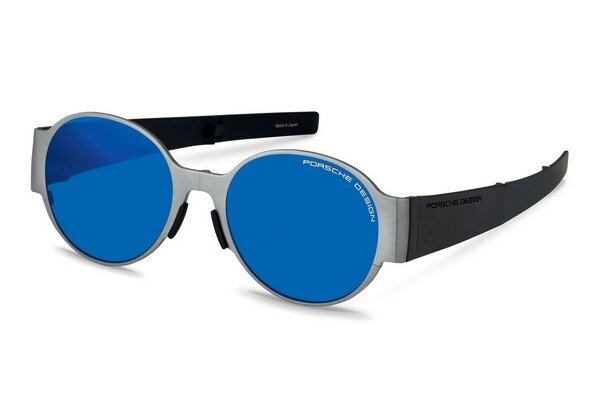
Master optician Paul Rottler is enthusiastic about TROGAMID – and pleased that a growing number of manufacturers use the material for their production of glasses. "We keep a few models such as Porsche Design P‘8592 by Rodenstock in our assortment that have temples made of TROGAMID. The flexibility is nothing short of impressive," he says. Many of Rottler's customers have their eye on design and are pleased with the combination of high resistance and very low weight, and give preference to stylishly designed sunglasses made of the material.
10 tips for purchasing sunglasses
1. UV filter
UV light is damaging to the eyes. However, as a word of caution, the best protection does not come from the lenses with the darkest tint (tinting strength), but from sunglass lenses made from high-quality material with an integrated UV filter.
2. Tinting strength
Depending on their level of tinting, sunglasses are suitable for different activities, and are organized into so-called lens categories from 0 to 4. While category 2 is a suitable summertime choice for Germany, category 3 is best for Southern Europe and category 4 is recommended for skiing, but not for use in road traffic.
3. Size of lenses
Lenses should be large enough to protect the eyes from sunlight coming in from the side or above as well as from below through reflection.
4. Color of lenses
Brown and gray lenses modify colors the least. For all other lens tints, the eyes require a certain response time to neutralize the color.
5. Quality of protective sunglass lenses High-quality lenses do not show any streaks, blisters or inclusions. Inferior lenses can cause headaches and dizziness.
6. CE marking
Sunglasses sold in Europe must bear CE marking. While this mark makes reference to quality and UV protection, it is not sufficient to identify high-quality lenses. Professional optician associations also point out that the mark is easy to counterfeit.
7. Sunglasses for driving a car
If you drive a lot, select sunglasses with narrow rims and temples to avoid restricting your field of vision. Vision impairments should be corrected by sunglasses as well. The lens category must be below 4.
8. Pick sunglasses according to activity You will need different lenses for winter sports than for the beach, sailing or surfing. For example, snow reflects over 90 percent of sunlight.
9. Polarizing effect
In simple terms, polarization prevents the visible glare of sunlight on smooth surfaces. As an example, fishermen using highly polarized sunglasses can see fish below the water surface, but not the reflection of the sky and trees.
10. Professional fitting
The frame must be individually adjusted to the shape of the head to make sure no damaging UV radiation can reach the eye, for example laterally past the sunglasses. The adjustment needs to keep the width of the temple, eye spacing, and the position of the ears in mind.
Read more: