Weighing and inspection technologies boost efficiency
Data from weighing and inspection systems help reduce overfilling, rejects and downtime while improving OEE. Their economic impact also depends on equipment integration and the correct positioning of inspection points within the process.
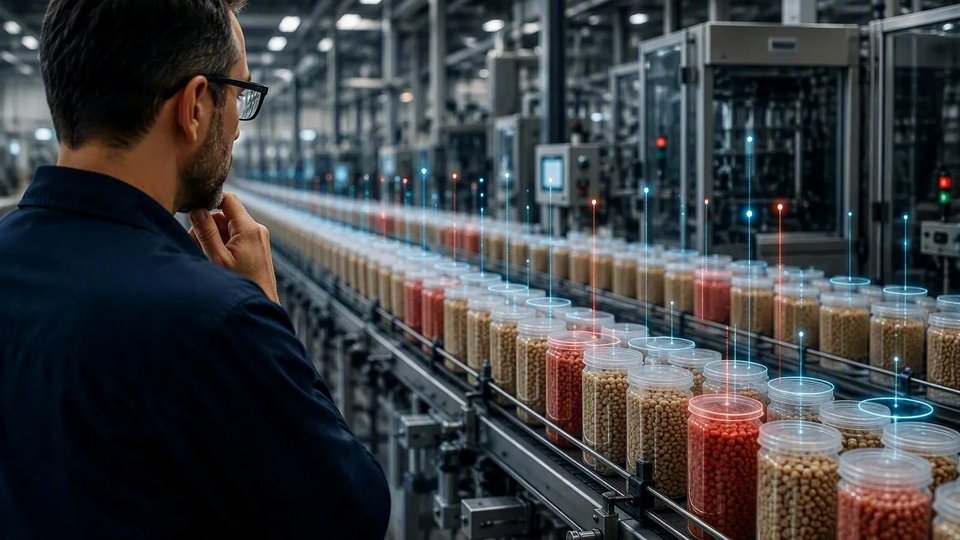
A line may run steadily, cycle rates may remain at the required level and production may proceed without disruption, yet the resulting margin may still fall short of expectations. Process data analysis can reveal the reasons, including small overfills in individual packs, unnecessary rejects and minor shortcomings that remain unnoticed for long periods during ongoing operation, although they directly affect profitability.
"Today, efficiency no longer results from the final stage of production, but from the process itself. Companies that do not consistently use their production data often lose potential that is not visible at first glance," explains Mengqi Liang, Product Manager at Minebea Intec, a manufacturer of weighing and inspection equipment. "For production managers, this means a shift in priorities. It is no longer only about reducing costs, but about systematically identifying and controlling the factors that cause losses on the production line."
Weighing and inspection technologies play a dual role in this process. They provide the data needed to assess production while also being able to influence the process directly.
Material efficiency at gram level
A frequently underestimated cost factor is systematic product overfilling, known as "give-away". To prevent underfilling effectively, filling processes are often set conservatively. As a result, more material is continuously consumed than necessary. In high-volume production, just a few grams of overfill per unit can amount to several tonnes of additional raw material consumption over a year.
Automatic checkweighers weigh products directly during the process and at high speed. Continuous feedback is more important than the weight measurement alone. Deviations detected in real time can be transmitted to dosing or filling systems. Weighing then ceases to serve only as an inspection function and becomes an active process control element. This enables more precise material use while maintaining process stability, which is particularly important when raw material prices are rising.
Process data as a basis for improving OEE
Alongside material efficiency, data-based production control is becoming increasingly important. Weighing and inspection systems are increasingly acting as sensors positioned along the production line, continuously supplying reliable process data. This information provides the basis for a sound analysis of Overall Equipment Effectiveness, OEE.
Industry experience indicates that efficiency gains in the double-digit percentage range are possible. Improvements of up to 15% have been recorded in individual cases, particularly when production data are used consistently and integrated into the process control system. Access to real-time information enables deviations to be detected early, their causes to be identified precisely and corrective measures to be implemented quickly.
Production can therefore move from reactive troubleshooting to proactive, data-based process management. "Real added value is created when weighing and inspection data are not considered separately but integrated into the process control system. Only then can the full efficiency potential be used systematically," Liang emphasises.
Integrated inspection and line throughput
In addition to material savings and data availability, the structure of the production line is important. Modern inspection solutions can combine several technologies in one system. One example is the Flexus Combi checkweigher with metal detector from Minebea Intec.
Integration eliminates the need for separate inspection stations, additional conveyor systems and interfaces. This simplifies the line layout and reduces the number of potential sources of disruption. An integrated solution also enables synchronised inspection of every product without additional work or loss of time. Product flow remains constant while weight inspection and foreign-body detection take place in parallel. In this case, efficiency does not result from accelerating individual inspections, but from a more stable and less complex line.
Inspection positioning and reject volumes
Efficiency is influenced not only by the choice of technology but also by its location within the process. Inspection does not necessarily have to take place as early or as late as possible. It should be located at the point where defect detection is economically justified.
If a defect is detected too late, the product will already have passed through several process stages requiring materials, energy and machine operating time. Poorly positioned inspection can also generate additional process costs and limit the benefits of defect detection. The economically optimal point is therefore where defects are reliably identified while expenditure on subsequent stages remains as low as possible. Actual costs consequently depend not only on the defect itself, but also on where and when it is detected.
An example is the Premier Foods production site in Knighton. Incoming inspection of bulk materials was replaced there by inspection of packaged finished products using the Dymond S X-ray inspection system from Minebea Intec. The benefit resulted not only from carrying out inspection at a later stage, but from moving it to a point where all relevant defects are reliably detected and rejection is limited to individual packs. Instead of large product volumes, only individual units are separated. According to the figures provided, this reduced waste and cleaning work and generated savings of approximately GBP 80,000 per year.
Reducing production risk
Production errors and contamination do not only generate waste. They can also lead to product recalls, production stoppages or regulatory consequences. "Inspection systems such as metal detectors and X-ray systems counter these risks by identifying deviations reliably and repeatably," says Liang. "The resulting process stability has a decisive impact on efficiency, not in terms of short-term savings, but as protection against potentially high consequential costs."
A systems approach instead of individual devices
The effects described are particularly evident when multiple devices operate as a single system. Load cells, industrial scales, inspection systems and software solutions are increasingly combined into integrated systems. The result is determined not only by an individual component, but also by how it is connected to the other elements.
Combining precise measurement technology, data processing and integration makes it possible to use available potential systematically during ongoing operation. In this context, suppliers such as Minebea Intec offer solutions covering weighing, inspection and process analysis.
Evaluating investments across the entire process
Market conditions are prompting companies to reassess efficiency. Analysing individual costs separately and implementing isolated improvements may not be sufficient. A comprehensive understanding of processes and their continuous optimisation are becoming increasingly important.
Weighing and inspection technologies can reduce material losses, increase production transparency, improve equipment availability and reduce risk. Their function therefore extends beyond quality assurance to include productivity, cost control and process stability.
For production managers, this means that investment in weighing and inspection systems is not solely a technical decision. Its assessment should take into account the impact on the efficiency of the entire production process.
Read more: