Biocomposites – Providing benefits to industry, consumers and environment
The “Biocomposites Conference Cologne (BCC)” will take place on 6 and 7 December 2017 in Cologne, Germany. This year’s conference and exhibition will be the largest industry meeting on biocomposites worldwide. More than 250 participants and 30 exhibitors are expected.
What are biocomposites?
Biocomposites is an umbrella term for composites made completely, or to a significant degree, from biomass: Natural and wood fibres are combined with petrochemical or bio-based polymers to achieve very good mechanical and often even light-weight properties. The most commonly used types of biocomposites are Wood-Plastic Composites (WPC) and Natural Fibre Composites (NFC).
Existing markets and new opportunities
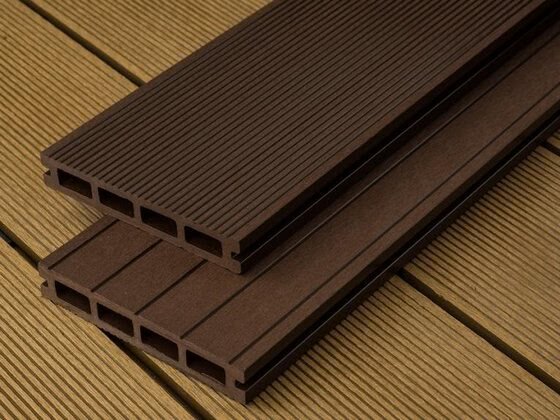
In the past, Wood-Plastic Composites (WPC) were mainly processed via extrusion technologies (decking) and Natural Fibre Composites (NFC) mainly in press moulding (automotive).
For many years, research institutes and industrial labs have continuously developed WPC and NFC applications, using the materials in small series of consumer goods. Relevant volumes were only deployed in the decking market, which is still the biggest sector in the biocomposites market.
However, quite recently biocomposites have started to enter several additional markets. With the latest advances in injection moulding and 3D printing, both WPC and NFC are of high interest for a multitude of applications and fruitful new synergies are being created for new products. More and more companies specifically use wood and natural fibre plastic granulates in consumer goods such as instruments, electronic casings, furniture, tables, toys, combs or trays as well as 3D printed goods – the unique look and haptics convey high quality and value and are well received by customers. There are many opportunities for these niche materials to achieve large-scale production soon.
Benefits of biocomposite materials
Consumer products made of WPC or NFC have a different look than pure plastic products; they become noticeable, have a nice touch and reduce the use of plastic due to the wood and natural fibres or are even available completely without any oil-based materials – which improves the environmental footprint. Many of the current materials offer also special properties producers are looking for, like acoustic performance, light-weight or antibacterial properties. But the most important part: the products appeal to consumers and gain public recognition.
Market growth
Signs for market growth can be found in various markets: In the furniture market, IKEA re-introduced the wood-plastic composites chair PS 2012 to its programme and offers additional new products with wood-plastic composites like picture frames. Consumer electronics offer good examples for useful products as well – a product group in which acoustic performance is an essential key to the success. In this area market leader LG has started to use the cellulose-based granulate Aqvacomp as a biocomposite material in manufacturing of loudspeakers.
The biocomposites industry meets in Cologne
The wide range of successful new technologies and applications of biocomposites in consumer goods, automotive industries and construction will be presented at the Biocomposites Conference Cologne, 6-7 December 2017 in Cologne, Germany. It represents the wide spectrum of innovative applications and material choices of WPC and NFC:
• Biocomposites in the automotive industry
• Injection moulding: granulates and applications
• Biocomposites in 3D printing
• Structural applications
• Wood and natural fibres and other raw materials for biocomposites
• Bio-based thermosets for biocomposites
Preliminary programme
Wood-Plastic Composites
Anemon Strohmeyer, German Wood-Based Panel Industry (VHI) (DE): Overview of the German Wood-Plastic Composite Industry
Biocomposites in Automotive
Sophie de Rijk, Bcomp Ltd (CH): powerRibs in Automotive, the Benefits of Using Flax Grid Reinforcements in Automotive Large Series Interiors and Race Car Body Parts
Gurminder Minhas, Performance BioFilaments Inc. (CA): Automotive Biocomposites Based on Nano-Fibrillated Cellulose Technology
Heidi Peltola, VTT Technical Research Centre of Finland Ltd (FI): Light-Weight Solutions with Wood Based Biocomposites
Injection Moulding: Granulates and Applications
Dr. Hans Korte, Dr. Hans Korte Innovationsberatung Holz & Fasern (DE): X-Plorator - High Throughput Technology for Rapid Compound Development
Dr. Asta Partanen, nova-Institut (DE): Successful Biocomposites in Toys and Consumer Goods
Dr. Claudia Pretschuh, Kompetenzzentrum Holz GmbH (AT): Regenerated Cellulose Fibres TENCEL® FCP as Filler in PP for Improved Foam Injection Moulding
Dr. Tanaka Tatsuya, Doshisha Unversity (JP): Study on Elucidation of Opening Fibre Bundle Mechanism in Manufacturing Process for LFT Granular
Biocomposites in 3D Printing
Nathalie Labonnote, SINTEF Building and Infrastructure (NO): Biocomposites for 3D Printing in ConstructionDr. Andreas Haider, Kompetenzzentrum Holz GmbH (AT): Use of Biocomposites in 3D-Fused Layer Modelling
Structural Applications
Patrick Teuffel, Eindhoven University of Technology (NL): Structural Use of Hemp and Flax Fibres with Bio-based Resins - Bio-based Bridge - Possibilities for Design and Structural Use
Raw materials for Biocomposites – Wood and Natural Fibres and Polymers
Anne Le Duc, Fibres Recherche Développement (FRD) (FR): From Plant to Agromaterial: Innovative Axes to a Better Design of Bio-based Fibres Used in Thermoplastic Composites
Kirsi Immonen, VTT Technical Research Centre of Finland Ltd (FI): Biocomposites from Side Streams of Paper and Board Industry – Fibre Clay Composites
Richard Meisenheimer, Covestro Deutschland AG (DE): New Bio-based Polyisocyanate – Opens the Way to New Green Lightweight Applications
Oliver Mertens, University Hamburg Center of Wood Science and Technology (DE): In-Situ Refiner Compounding Approach for TMP-fibre Thermoplastic Composites
Prof. Dr.-Ing. Jörg Müssig, The Biological Materials Group, BIOMIMETICS, City University of Applied Sciences (DE): New NFC Product Development Starts with the Selection of an Appropriate Fibre
Dr. Arne Schirp, Fraunhofer-Institute for Wood Research (DE): Improvement of the Fire Retardancy of Wood-plastic Composites (WPC) by Wood Pre-treatment
As in previous years, one session will be dedicated to the Innovation Award “Biocomposite of the Year 2017”. It will be granted at the Biocomposites Conference Cologne to the young, innovative bio-based materials industry for finding suitable applications and markets for biocomposite products. The focus of the award is on new developments within these areas, which have been launched in 2017 or will be launched in 2018. Producers and inventors of innovative, new applications for WPC and NFC are invited to hand in their applications until end of August.
Jacek Leszczyński
Source: Nova-Institute