Engel e-mac combi for cost-effective multi-component moulding
Engel has extended its all-electric e-mac series with the e-mac combi, a two-component injection moulding machine with a second injection unit as standard, a compact footprint and integrated functionality aimed at lowering unit costs.
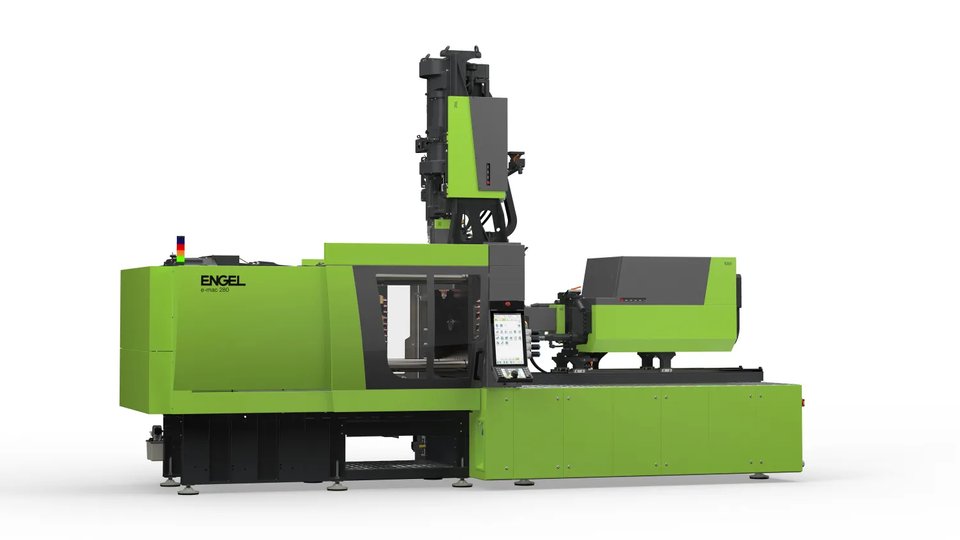
Compact on the outside, capable on the inside: Engel's all-electric e-mac combines a compact clamping unit with a generous tie-bar spacing for moulds and automation. The machine is now also available for multi-component injection moulding. The e-mac combi comes with a second injection unit as standard and is designed for cost-effective production. Integrating functions directly into the moulded part can reduce the number of individual components and the amount of assembly work, helping to lower complex unit costs.
The e-mac has proved its ability to handle complex applications efficiently in a compact machine with all-electric drive technology. This also makes it an attractive platform for multi-component moulding. With the e-mac combi, Engel offers a choice of different injection unit configurations to suit the application.
The first e-mac combi was delivered to a customer in April 2026. Numerous machines are already in production, including in the flip-top closure sector. The machine is also suitable for applications across a wide range of industries, from toothbrush handles for personal care and housings for medical injection pens to technical components for the automotive industry. It can process a wide range of thermoplastics, as well as hard-soft combinations.
The generous tie-bar spacing, integrated hydraulics and increased mould height, all included as standard, provide greater freedom in mould design and can often eliminate the need for costly optional extras. Servo-electric rotary tables with diameters of up to 1,100 mm enable short rotation times and precise positioning.
Compact design and positioning
Despite the additional control cabinet, the e-mac combi remains as compact as a conventional e-mac with just one injection unit. Compared with the e-motion combi, it requires around 15% less floor space and has around 35% lower investment costs, based on comparable equipment. For high-performance applications requiring particularly short cycle times, the e-motion combi remains the right solution.
