Failure diagnostics: why do plastic products crack?
Plastics are key engineering materials used in automotive, construction, medical and electronic applications, as well as everyday products. Despite their low weight, chemical resistance and ease of processing, plastic products can fail—often unexpectedly—through cracking caused by several interacting factors.
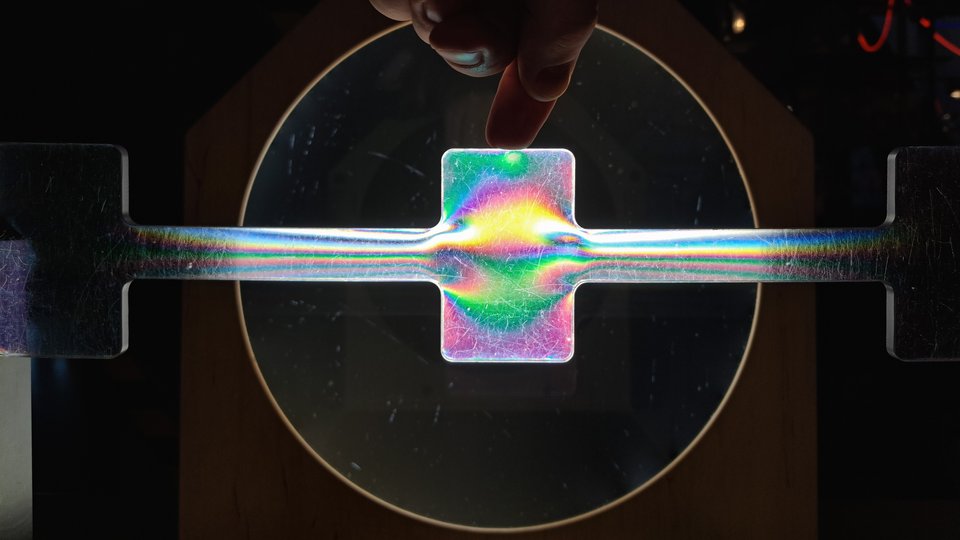
Most common causes of cracking in plastic products
Many failures originate at the design stage. Sharp corners, excessively thin walls, abrupt changes in cross-section and incorrectly positioned reinforcing ribs are particularly hazardous. Such features cause stress concentrations and become crack initiation sites. In practice, even a high-quality material can fail if the design does not take its mechanical properties into account.
Injection moulding, extrusion or forming processes can generate residual stresses in the material. These may result from excessively rapid cooling, unsuitable processing parameters, non-uniform shrinkage or inadequate mould venting. Other potential defects include bubbles, voids, weld lines and contamination, all of which reduce the strength of the finished product.
Plastics undergo degradation during service. The main ageing factors are UV radiation, elevated temperatures, atmospheric oxygen and moisture. Degradation alters the molecular structure of the polymer, resulting in loss of flexibility, reduced impact strength and increased material brittleness.
If a component is subjected to repeated loads, even well below its short-term strength, microcracks can develop and ultimately cause fatigue failure. This problem occurs, among other applications, in automotive components, hinges and machine parts.
One of the most common causes of plastic product failure is environmental stress cracking (ESC). This mechanism occurs when a material is simultaneously exposed to mechanical stresses—external or residual—and chemicals such as detergents, alcohols, lubricants, fuels or solvents. Under these conditions, cracks may form at loads far below the material's nominal strength. ESC is estimated to account for a significant proportion of polymer product failures in industrial service.
How are the causes of cracking diagnosed?
In many companies, the first response to a crack is to suspect a defective batch of material. However, experience from failure analysis laboratories shows that failures usually result from a combination of four factors: the material, product design, processing method and service conditions. Failure analysis should therefore proceed by systematically eliminating potential causes. A considerable amount of information can be obtained before expensive laboratory tests are conducted.
Effective failure analysis requires a combination of macroscopic observations, microscopic examinations and laboratory analyses. The first stage is a visual inspection of the failed component. The specialist assesses the crack initiation site, direction of crack propagation, presence of deformation and evidence of exposure to heat or chemicals. At this stage, it is often possible to determine whether the failure was caused by overloading, fatigue or environmental factors.
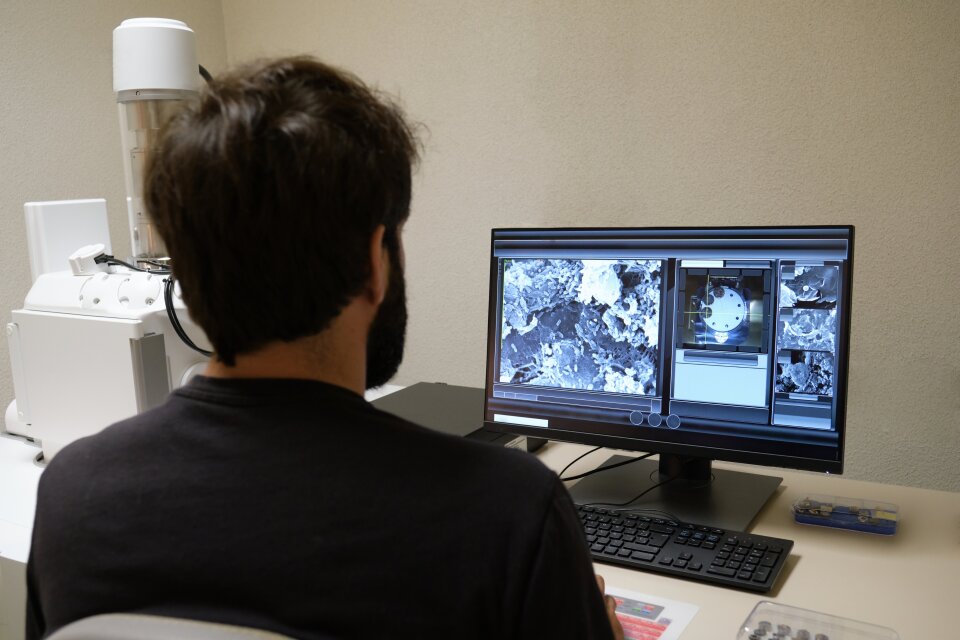
One of the most important methods is fractography, which examines fracture surfaces. Analysis using stereomicroscopes and scanning electron microscopes (SEM) makes it possible to identify the crack initiation site, the manner of crack propagation, evidence of fatigue, the presence of voids and inclusions, and the effects of the chemical environment. The fracture surface is often regarded as the “history of the failure recorded in the material”. A rough, fibrous surface generally indicates ductile fracture, whereas completely smooth and glossy fracture surfaces indicate rapid brittle failure. The presence of characteristic concentric zones around the defect initiation site provides clear evidence of material fatigue caused by cyclic loading. In stress-corrosion-related phenomena, numerous microcracks and densely branched cracks are visible on the surface.
Advanced optical and electron microscopy techniques (SEM/TEM) enable the identification and detailed characterisation of structural defects at the micro- and nanoscale. These methods can precisely detect internal discontinuities such as voids, gas pores and contaminants, which directly reduce the strength of the polymer matrix. Microscopic examinations are also essential for locating morphological non-uniformities and processing defects, including weld lines caused by incomplete joining of molten polymer flow fronts during injection moulding. In advanced composite materials, these techniques also allow interfacial adhesion quality to be assessed, revealing insufficient bonding between reinforcing fibres and the matrix—a critical factor in the initiation of delamination and composite failure.
Fourier-transform infrared spectroscopy (FTIR) provides a unique “chemical fingerprint” of the substance being tested, so its capabilities extend well beyond identifying the base polymer. The method can determine the types of plasticisers, mineral fillers, lubricants, and thermal and UV stabilisers incorporated into the plastic. In failure analysis, FTIR is indispensable for detecting trace amounts of foreign substances, processing oils or environmental deposits that may have initiated environmental stress cracking (ESC). Modern ATR accessories allow non-destructive testing directly on the surface of a finished component, on its fragments or on chemical residues extracted from the moulding.
In materials engineering and laboratory failure analysis, DSC and TGA are key tools for accurately locating hidden structural and processing defects. In differential scanning calorimetry (DSC), direct comparison of the thermal profile of a failed component with a reference sample can immediately reveal subtle differences in enthalpy and melting temperature. Lower values in the failed component clearly indicate thermomechanical degradation of the polymer—for example, due to overheating in the injection moulding machine barrel—which substantially reduces its molecular weight and crack resistance. DSC can also identify defects caused by contamination of the raw material with another polymer. An additional, extraneous melting peak—for example, trace amounts of polypropylene in polyethylene—reveals sorting or recycling errors that create internal structural notches. Thermogravimetric analysis (TGA), in turn, enables precise quantitative assessment of composite and compound composition, making it possible to detect defects resulting from incorrect dosing of mineral fillers or reinforcing fibres. Deviations from the intended dispersed-phase content, or the presence of volatile plasticisers and moisture indicated by mass loss at lower temperatures, directly explain reduced mechanical properties and premature crack initiation. Oxidation induction time (OIT) testing by DSC also makes it possible to assess depletion of thermo-oxidative stabilisers, revealing defects associated with accelerated material ageing under service conditions.
How can product cracking be prevented?
Preventing cracking in plastics, including hazardous environmental stress cracking (ESC), requires an integrated approach from the design and production stages onward. Optimising component geometry by eliminating sharp corners and abrupt changes in wall thickness is essential to substantially reduce local stress concentrations. Strict control of the injection moulding process is equally important, including avoiding excessively rapid cooling that could “freeze” hazardous stresses into the material structure. Other important measures include selecting high-molecular-weight plastics and precisely controlling tightening torque and assembly methods to prevent mechanical overloading of finished components. Computer simulations and durability tests conducted before a product enters series production are also becoming increasingly important.
Why do plastic caps crack?
Cracking of plastic caps used on household chemical, cosmetic or food packaging is a complex diagnostic problem because the damage rarely has a single cause and usually results from several interacting factors. The primary source of the problem is high circumferential stress, generated when the package is closed and concentrated particularly at the first thread turn, around the tamper-evident ring and at points where the wall thickness changes. Exceeding the recommended tightening torque on the production line substantially worsens the situation and results in sustained overloading of the plastic. Radial cracks extending from the thread often do not become apparent immediately, but only after several weeks.
Contact with the package contents—such as detergents, disinfectants, essential oils, solvents or chemical concentrates—plays a key role by initiating environmental stress cracking (ESC). Although a given plastic may demonstrate full chemical resistance in standard laboratory tests, the combination of an aggressive medium and mechanical stresses within the material can cause rapid structural failure. The entire process is delayed and occurs in several stages: after the cap is tightened and stresses are generated, the product migrates into the thread area, while elevated storage temperatures accelerate the development of microcracks that become visible as open cracks only after several months. Reliable failure analysis therefore cannot be limited to testing the plastic alone. It must comprehensively consider interactions between the material, thread geometry, injection moulding parameters, tightening force and the chemical effects of the packaged product.
Not every grade is suitable for caps
Specialised PP and HDPE grades are used to manufacture closures, selected on the basis of properties including stiffness, impact strength, flow characteristics and compatibility with the package contents. HDPE grades with enhanced environmental stress crack resistance (ESCR) are used in demanding applications. However, this does not eliminate risks arising from product geometry, residual stresses or excessive tightening torque.
Summary
Laboratory practice shows that the answer to the question “was the material or the process at fault?” is rarely straightforward. Cracking in plastic products is a complex phenomenon and seldom has a single cause. It is usually determined by a combination of material properties, product design, processing conditions and the service environment. Modern diagnostic methods such as fractography, electron microscopy, FTIR, and DSC and TGA thermal analyses can effectively identify failure mechanisms and minimise the risk of recurrence. Failure analysis therefore serves not only to explain the causes of damage, but also as an important element in designing reliable polymer products.