Film on a roll is not yet packaging
European Plastic Films says stretch film should not be treated as packaging while still on a roll. The group asks the European Commission to replace a PPWR FAQ example that assigns manufacturer responsibility to film producers.
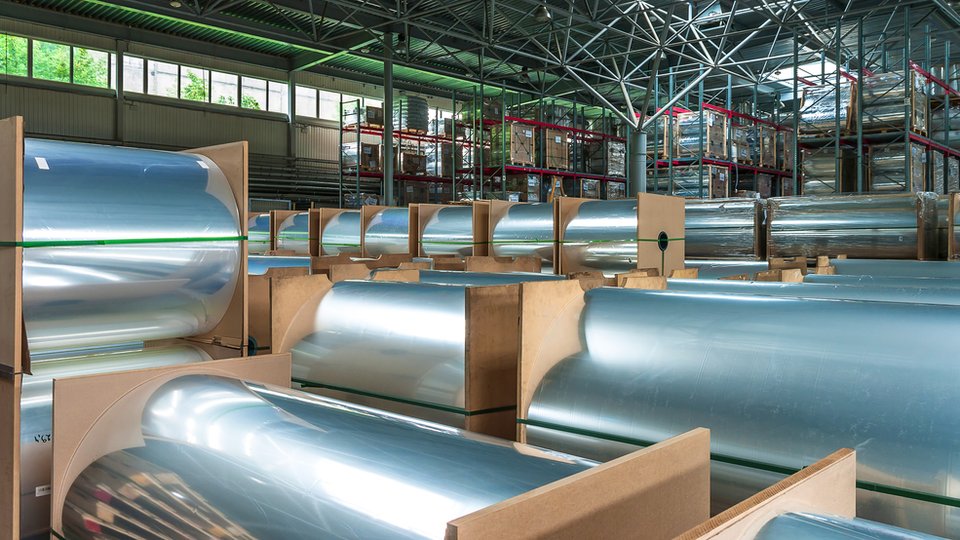
European Plastic Films (EuPF), the sector group of European Plastics Converters representing Europe’s film producers, has called on the European Commission to withdraw and replace an example in the second edition of its Frequently Asked Questions on the Packaging and Packaging Waste Regulation (PPWR), published on 1 August 2026. According to EuPF, the example treats stretch film as packaging already when it is sold on a roll and identifies the film producer, rather than the company that wraps the pallet, as the responsible manufacturer. The organisation argues that this interpretation does not align with the definitions and purpose of the PPWR, with the position of 16 national packaging registers, or with the way responsibility is organised in practice. It states that film delivered on a roll is a packaging material and becomes packaging only when it is applied to a load.
EuPF says the clarification is needed now that the Regulation has entered into application, on 12 August 2026. The organisation also considers that the reasoning extends beyond stretch film to other flexible transport packaging materials supplied on a roll or in strand form.
"A roll of film is raw material for a packaging operation, not a finished packaging. It has running metres, width and thickness, but its size and shape as packaging are set by the customer who orders and designs the load unit, not by the film producer. The company that decides how the load is secured is the company that creates the packaging. That is not a matter of opinion, it is what the PPWR says, and it is what the national registers have already published," said Thomas De Meester, Head of EuPF.
The wrapping operator decides the packaging format
The PPWR defines packaging by two conditions that must both be met: the item must serve a packaging function, and it must be possible to distinguish it by its packaging format, meaning the size and shape of a specific packaging unit. EuPF points out that size and shape, as well as technical characteristics such as resistance, elasticity and PCR content, are decided by the customer that orders the packaging. They are created at the wrapping station and determined by the dimensions of the load, the number of layers and the pre-stretch ratio.
EuPF refers to Annex I of the PPWR, which lists wrapping paper sold separately to business operators as an example of a non-packaging item. The organisation argues that film supplied on a roll to a business customer is the same situation, and that the definition of packaging is material-neutral, so paper and plastic should not be classified differently. It also notes that Annex I treats the roll core as the packaging and the wound film as the product inside it, which, in EuPF’s view, only makes sense if the film is not itself the finished packaging.
The group also refers to Article 16 of the PPWR, headed "Information obligations of suppliers of packaging or packaging materials". EuPF says this provision creates a distinct and lighter set of duties for those who supply packaging material rather than place finished packaging on the market, and that film on a roll is the clearest example of that category.
According to EuPF, the FAQ also appears inconsistent on this point. A few lines above the contested example, it states that packaging is in its final form only when it can be used as transport packaging without further components. Film on a roll cannot meet this condition because it is added to the loaded pallet. For unbranded packaging, the FAQ asks who decides the design specifications. EuPF notes that gauge, pre-stretch ratio, number of layers and wrapping pattern are all decided by the operator that wraps the load, not by the film producer.
Possible impact on PPWR objectives
EuPF argues that the Commission’s interpretation would make it difficult for film producers, if treated as manufacturers, to meet all obligations assigned to that role under the PPWR. This applies in particular to the detailed packaging minimisation requirements in Article 10. In EuPF’s view, an exemption would need to be introduced for film producers because they do not control the gauge, pre-stretch ratio or number of layers that determine minimisation, just as they do not control the size and shape of the packaging itself.
The organisation also states that shifting responsibility away from the operator that wraps the pallet would weaken the Regulation’s effect on minimisation, since the economic operator that decides how much film is used on each load would not be responsible for that choice. EuPF adds that Article 24 on excessive packaging would not compensate for this, because overuse of stretch film is not a question of empty space ratio. According to the group, these effects are difficult to reconcile with packaging waste prevention, one of the central objectives of the PPWR.
EuPF also points to recyclability. If the film producer is treated as manufacturer, it would be expected to meet recyclability design requirements attached to that role, although it has no control over the labels and labelling adhesives applied to the film once it is on the pallet. EuPF notes that both labels and adhesives materially affect recyclability, as recognised in the standards developed for PE and PP flexible packaging under standardisation request M/584 on plastics recycling and recycled plastics.
National registers take a different view
On 25 June 2026, registers and competent authorities of 16 Member States, organised in the European Network of Packaging Registers (EUNR), published a joint explanation of who the responsible producer is. According to EuPF, the document is unambiguous for films: where packaging takes its final form only at filling, the supply chain begins with the filling. The same paper expressly describes stretch, shrink and cling film as packaging materials.
EuPF says the Commission’s example therefore conflicts with the bodies that run registration, reporting and enforcement in the Member States. It also states that, in practice, the extended producer responsibility fee for pallet stretch film is invoiced today in nearly all Member States to the company that wraps the pallet, not to the film producer.
Risk of multiple producers for one transport packaging unit
EuPF notes that the FAQ is not legally binding. However, it argues that where responsibility is unclear, companies will protect themselves. If the FAQ is not corrected, film producers identified as manufacturers by the Commission may register and apply for authorisation in every Member State they supply.
The organisation states that the same issue applies to makers of other transport packaging materials supplied on a roll or in strand form, including shrink film and shrink hoods, adhesive and bundling tape, strapping, edge and corner protectors, interlayers and slip sheets, netting and void fill, and flat corrugated blanks. At the same time, wrapping operators informed by their national registers that they remain responsible would not be able to remove the individual packaging components from the declaration that already covers the entire loaded and secured pallet. EuPF says this would lead to multiple registrations, authorisation applications, tonnage reports and, in many cases, multiple fees for the same packaging component.
The group also raises enforcement concerns. Film on a wrapped pallet carries no marking, the producer cannot allocate its output by Member State, and declarations are measured on different bases and cannot be reconciled. EuPF says the measure is presented as simplification because there are fewer film producers than film users, but in practice it would add a registered producer to each supply chain for a material that is already declared once today.
EuPF recommendations
- The second example in Chapter II, question 5 of the PPWR FAQ, 2nd edition, should be withdrawn.
- It should be replaced with a clarification that film supplied on a roll is a packaging material within the meaning of Article 16, that the packaging comes into existence when the film is applied to the load unit, and that the manufacturer is the operator that secures the load.
- The same clarification should be extended to other transport packaging materials supplied on rolls or in strand form.
- The same wording should be used in the forthcoming Commission Notice, so that market surveillance authorities and national registers receive one consistent instruction.
EuPF states that it supports the objectives of the PPWR and is ready to work with the Commission on the technical side of pallet stabilisation, including application data on pre-stretch ratios, gauge reduction and layer optimisation.
No change for customers at present
EuPF says nothing changes in the cooperation between film producers and their customers. Film producers will continue to supply the information and documentation their customers need for their own compliance records, as Article 16 requires of suppliers of packaging materials. If the FAQ wording remains unchanged, EuPF says it will approach the value chain immediately to agree how the necessary evidence is shared along the supply chain.