FOREST validates lightweight biocomposites for transport
The EU-funded FOREST project has validated composite components for automotive, aerospace and bus applications. The demonstrators reduced weight by 30–35% and manufacturing energy consumption by 15–25% compared with conventional references.
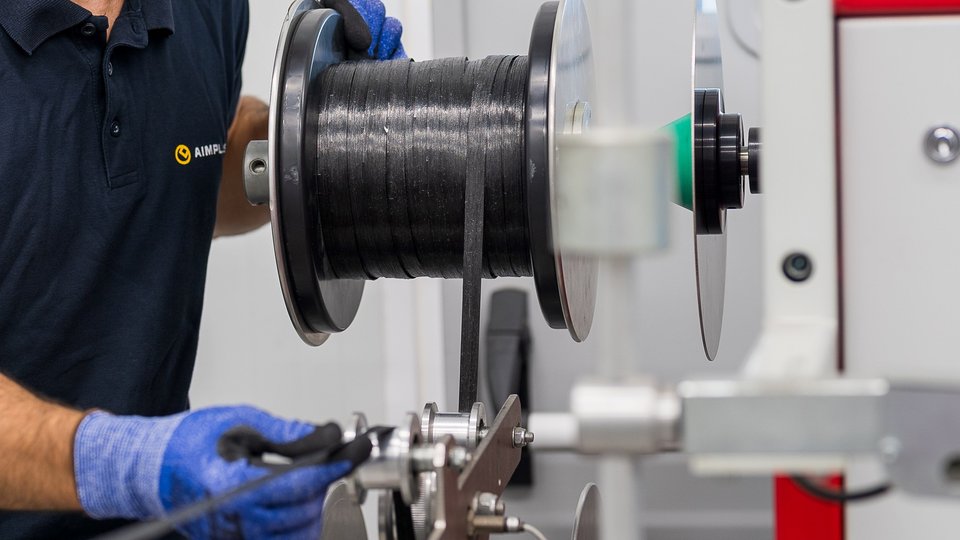
The EU-funded FOREST project, coordinated by Aimplas, the Plastics Technology Centre, has developed and validated lightweight biocomposites for automotive, aerospace and bus applications. The work addressed vehicle weight reduction as a means of improving transport efficiency and lowering emissions. According to the project results, the developed components achieved weight reductions of up to 35% compared with conventional parts while maintaining performance, safety and durability.
The project demonstrated transport components containing more than 50% sustainable materials. The formulations combined bio-based feedstocks, recycled carbon fibres and functional additives without compromising performance, safety or industrial feasibility. The final demonstrators reduced weight by 30–35% compared with conventional reference components and met mechanical and functional requirements, including fire performance and, where applicable, electromagnetic interference shielding.
Process optimisation also reduced manufacturing energy consumption by 15–25% compared with conventional methods. Accelerated curing chemistry shortened cycle times by 20–40%, while one-shot manufacturing concepts eliminated intermediate processing steps. The developed processes also removed freezer storage requirements. Engineering costs decreased by 15–20% due to simplified tooling, fewer mould iterations and greater process robustness.
"FOREST demonstrates that sustainability, lightweighting and safety are not competing objectives. By integrating bio-based chemistry, recycled carbon fibres and multifunctional performance, we are reshaping advanced composites for the future of mobility," said Fernando Ramos, FOREST Project Coordinator at Aimplas.
The project achievements, presented in connection with European Mobility Week, held from 16 to 22 September, indicate the potential of sustainable lightweight composites to reduce energy consumption and transport-related emissions.
Three demonstrators for transport applications
To assess the industrial feasibility of the materials and manufacturing processes, FOREST designed, manufactured and validated three demonstrators for the automotive, aerospace and public transport sectors.
- Electric vehicle battery cover: a thermoset compression-moulded enclosure based on a bio-benzoxazine matrix reinforced with recycled carbon fibre and containing bio-based flame-retardant and electromagnetic interference shielding additives. The component was validated for structural performance, fire resistance and electromagnetic shielding.
- Aircraft cockpit ceiling panel: a lightweight thermoplastic composite using recycled carbon fibre organosheet reinforcement and bio-based polyamide overmoulding. The solution replaces conventional phenolic-resin panels while providing equivalent aerospace performance.
- Bus roof pultrusion profile: continuous structural profiles combining recycled carbon fibre yarn with bio-based polyamide through thermoplastic pultrusion. The process provides a scalable and automated route for manufacturing bus roof components.
Bio-based resin systems validated at pilot scale
The project also developed, optimised and validated three bio-based resin systems at pilot scale. A bioacrylic resin, a bio-benzoxazine resin and a bio-based polyamide 6 were tailored to the requirements of the respective transport applications. All three met the requirements for integration into the final demonstrators, including bio-based content, processability and multifunctional performance.
The bioacrylic system based on Elium provided stable formulations containing approximately 25% bio-based material while retaining recyclability, processability and thermomechanical properties. Its integration with recycled carbon fibre was demonstrated through compression resin transfer moulding, C-RTM, and organosheet processing.
The bio-benzoxazine system reached approximately 85–87% renewable carbon. Catalyst selection and post-curing improved curing behaviour, thermal stability and mechanical properties, enabling the material to be used in sheet moulding compound, SMC, compression moulding for automotive applications.
The polyamide 6 system was developed in partially and fully bio-based versions. The project demonstrated the feasibility and scale-up of polymerisation and optimised the formulations for viscosity, fibre impregnation and compatibility with pultrusion and overmoulding.
Recovery and reuse of carbon fibre waste
In parallel with increasing bio-based material content, FOREST investigated the valorisation of carbon fibre waste. The project targeted the recovery of up to 100% of this waste and its conversion into high-quality semi-finished products for new applications. The results confirmed that correctly recovered fibres retain a high proportion of their original mechanical performance, supporting their use in circular composite value chains.
The materials and components underwent staged characterisation covering resin rheology, curing behaviour and thermal analysis, as well as tensile, flexural and impact tests. The programme also included fire behaviour, microscopy and electromagnetic interference shielding assessments. This testing approach was intended to verify that improvements in material sustainability did not result in weaknesses in structural integrity, fire performance or manufacturing robustness.
At the conclusion of FOREST, the demonstrators provide validated prototypes of circular and lightweight composite solutions. The project results show the potential to reduce component weight and process energy demand, increase sustainable material content and recover carbon fibre waste, while retaining a pathway towards industrial implementation.