From mozzarella to grated cheese: tailored packaging concepts
Cheese packaging development is focusing on thinner structures, recyclable mono-materials and product-specific barriers. Südpack is applying PE and PP concepts to formats including flow packs, pouches and thermoformed packs.
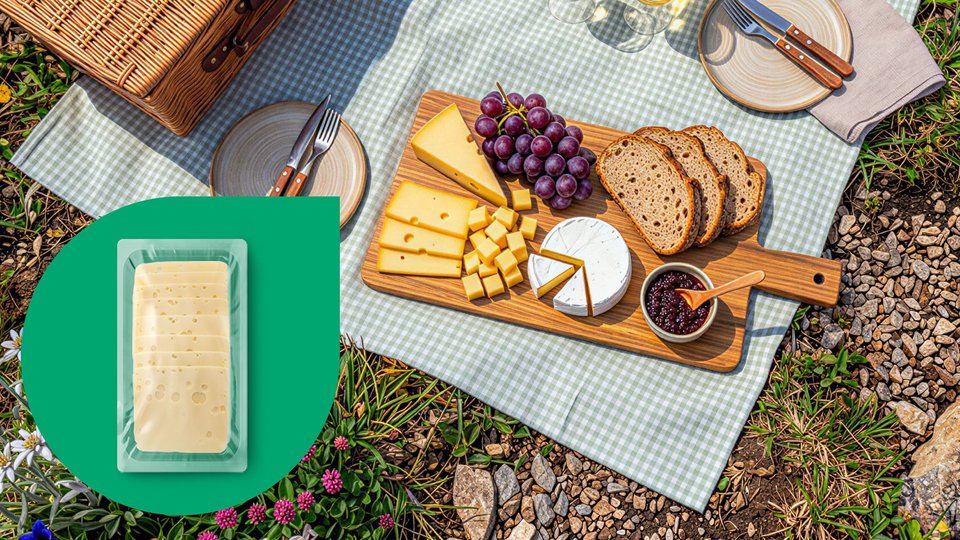
Europe accounts for nearly 50% of the global cheese market. Rising consumption, a growing variety of product formats and new regulatory requirements are increasing demand for packaging that protects cheese as a natural product while combining material efficiency, processability and recyclability. Manufacturers and packers therefore need to consider the entire system, including the product, packaging, machinery, logistics, retail and consumer use.
The EU Packaging and Packaging Waste Regulation, PPWR, places greater emphasis on design for recycling, reduced material use and assessment against binding criteria. However, packaging optimization cannot compromise shelf life, food safety or process stability. Südpack has been active in cheese packaging for more than 60 years. Company founder and master dairyman Alfred Remmele laid the foundation for the family business by developing an early cheese-maturing pouch. The company's current dairy portfolio includes ripening bags and packaging solutions for cheese cuts, sliced and grated cheese, mozzarella and other specialty cheeses.
Three priorities in packaging development
Packaging development is expected to focus on three main areas in the coming years: thinner, higher-performance material structures; recyclable mono-material concepts; and barrier properties tailored more precisely to specific cheese products. Further improvements are also anticipated in sealing materials, packaging formats and energy-efficient processing.
Requirements differ according to cheese type and packaging format. Packaging must control the ingress of oxygen and moisture, preserve flavor and freshness, support ripening where necessary and run reliably on existing packaging machinery. Maximum barrier performance is not always appropriate, as products that release gases may require a defined level of gas exchange.
PE and PP mono-material concepts
Südpack considers PE- and PP-based mono-materials an important route towards a circular economy, as established material loops for both polymers already exist in many EU countries. These materials can be used in a range of cheese applications, from pouches and flow packs to thermoformed packaging for sliced cheese.
Optimization of existing packaging systems remains relevant. Depending on the application, reducing film thickness, adapting pack formats or adding a reclose system can provide sustainability benefits compared with laminate structures or packaging without a reclose function. Material and film structure must be selected together with sealing performance, mechanical strength and machinability.
The PP- and PE-based flow packs in the CarbonLite product family are intended for cheese snacks, mozzarella, grated cheese and cheese cuts. The lightweight structures can be equipped with appropriate gas and water vapor barriers. Cheese cuts require controlled gas exchange, whereas mozzarella imposes specific requirements on sealability in the presence of brine, puncture resistance and leak tightness.
For zipper pouches used for grated cheese, sealing the zipper at high cycle rates can be challenging. Südpack addresses this requirement with PE structures, which can often be processed more consistently and reliably on existing machinery than PP materials.
Coextrusion enables functional film structures
Through coextrusion, different functional layers can be combined to adjust barrier performance, mechanical stability, sealability and machinability. This allows film structures to be developed for the product, process and installed packaging machine.
New developments can be tested at industrial scale on Südpack's multiXtrusion pilot line. Following successful testing, they can be transferred directly to in-house production. According to the company, this approach reduces development risk and provides greater planning certainty when customers transition to mono-material solutions.
Reclose systems for thermoformed packs
Thermoformed packaging is the predominant format for sliced cheese because it displays the product in refrigerated cabinets and allows individual slices to be removed. A reclose system helps limit drying after the first opening and can reduce the risk of premature spoilage and food waste.
The Multipeel Pure PP top web can be combined with a mono-PP rigid film to form an all-PP packaging concept that can be assigned to existing recycling streams. Alternatively, Multipeel can be sealed to mono-APET trays. Its material composition allows the top web to be cleanly separated from the APET bottom web during recycling, so that the trays can enter the appropriate recycling stream as a pure-grade material.
Testing and implementation support
Switching to packaging designed for recycling raises practical and economic questions concerning product protection, modifications to installed packaging machines and the behavior of new materials during processing. Südpack supports development and transition projects through materials and application consulting, sample runs and testing, as well as assessments of carbon dioxide impact and recyclability.
The objective is to reduce transition risks and integrate new packaging concepts reliably into existing production processes, from initial development through industrial implementation.