Hybrid packaging outside the deposit system
Beverage packaging with a plastic body and an aluminium lid is appearing on the Polish market, but it does not fit the current definitions of the deposit system. The Polish Recycling Association also points to the lack of a domestic recycling route for such packaging.
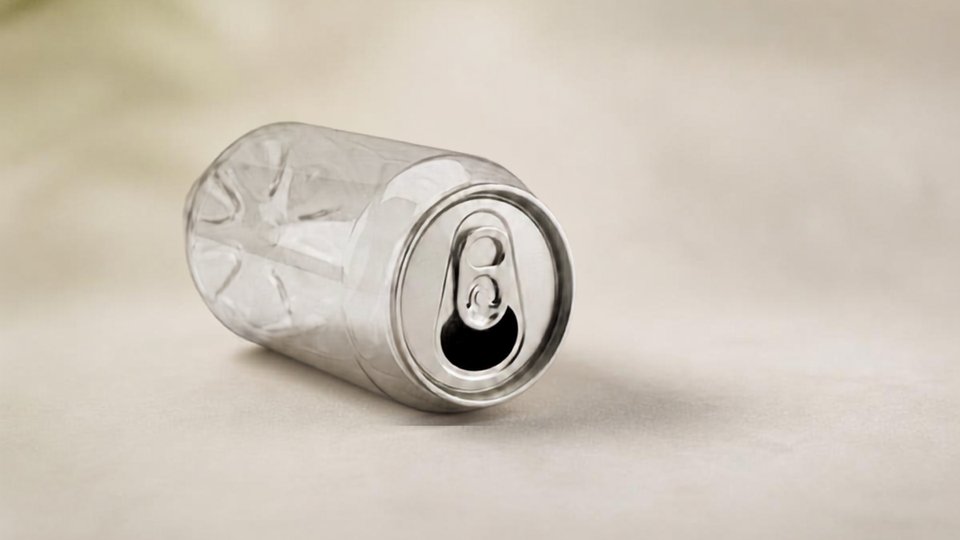
Beverages in hybrid packaging, combining a plastic body with an aluminium lid, are appearing on the Polish market and are not covered by the deposit system. However, the deposit is only part of the problem. Even if such packaging were included in the system, Poland currently has no installation capable of separating it into raw materials and returning them to circulation. The law applies the deposit to beverage packaging made of plastic or metal, while the new structure is neither a metal can nor a PET bottle, which leaves it outside the system. The Polish Recycling Association points out that the problem is not a single package, but a precedent. Packaging made of plastics with capacities exceeding the thresholds covered by the deposit is being created according to the same logic.
Beverage packaging is appearing on the Polish market that formally is not covered by the deposit system, although to consumers it looks like an ordinary can. Its body is made of plastic, while only the lid is made of aluminium. The Polish Recycling Association warns that this is not a technological curiosity, but a precedent that undermines the purpose of the entire system, not only the deposit system.
A design that escapes definition
Hybrid packaging, sometimes referred to as a "PET can", has a body made of polyethylene terephthalate (PET) or polypropylene (PP) and an aluminium lid with the same opening system as a conventional can. A connection between the body and the lid ensures tightness.
The problem begins at the level of regulations. The law applies the deposit to beverage packaging made of plastic or metal. Packaging with a plastic body and an aluminium lid is not a metal can within the meaning of the regulations, but it is also not a single-use plastic bottle. This creates a grey area in design terms, packaging that does not fit into any of the categories covered by the deposit.
"We are dealing with packaging designed to fall outside the catalogue covered by the deposit. The consumer picks up something that looks and opens like a can, but there is no way to return it and recover the deposit. This is not packaging innovation, it is circumvention of the regulations disguised as innovation," says Sławomir Pacek, president of the Polish Recycling Association.
The deposit is only half of the problem
If the whole issue were limited to regulations, it would be enough to expand the catalogue of packaging covered by the deposit. The problem is that even a hybrid package covered by the deposit would currently have nowhere to go.
There is no installation in Poland carrying out dedicated industrial recycling of such packaging with simultaneous recovery of the plastic body and the aluminium lid. This does not mean that separating the materials is technically impossible, because domestic sorting plants have technology for separating plastics from aluminium. However, the Polish sorting and recycling system is organised around material streams, not around packaging that combines several materials in one structure. Packaging that combines two materials with completely different processing routes in a single structure does not fit into either of them.
In practice, hybrid packaging goes into the yellow bin and is classified according to the dominant material, which is plastic. The aluminium lid, the highest-value raw material in the entire packaging waste stream, ceases to be recovered effectively. The plastic is also not recovered, because material contaminated with metal is difficult to manage as a full-value secondary raw material. As a result, packaging that contained two valuable materials leaves neither of them available. Instead of returning to circulation, it falls out of the recycling stream and goes to waste management other than recycling.
"Even if we included this packaging in the deposit system tomorrow, we would have nothing to do with it. We would accept it from the consumer, count it, and then set it aside, because in Poland there is currently no route to break it down into raw materials. The deposit is not an end in itself, it is a tool for collecting materials that can be processed. Packaging that cannot be processed is a problem regardless of whether it carries a deposit mark," adds Sławomir Pacek.
A precedent, not an exception
According to the Association, the most serious problem is not the packaging itself, but the mechanism it sets in motion. Further designs are already present on the market, developed with regulations in mind rather than functionality or the environment, such as plastic packaging with capacities exceeding the thresholds covered by the deposit. Each of them is created according to the same logic, find a parameter not covered by the law and move a millimetre beyond its scope. And every subsequent package of this kind is material that irreversibly falls out of circulation.
"If it turns out that changing the lid material or the capacity is enough to exit the system, we will soon have an entire family of packaging created solely for this purpose. Honest producers that use mono-material packaging and bear the full costs of participating in the system will be in a worse position than those that have invested in circumventing the regulations. Extended Producer Responsibility must also cover such structures, otherwise the system will chase new ideas instead of preventing them," warns Sławomir Pacek.
Recommendations of the Polish Recycling Association
In the Association's view, all beverage packaging should be covered by the deposit system regardless of its construction. The determining criterion should be the intended use of the packaging, not the dominant material in its structure. At the same time, multi-material packaging must be included in the planned EPR system, together with fee modulation that rewards mono-material solutions and packaging that is easy to recycle.
It is also crucial that packaging design takes existing processing capacities into account from the outset. Packaging for which no recycling route exists should not be placed on the market at all. Finally, the statutory definitions themselves must be closed so that subsequent structures cannot fall out of the system by changing the material of one element or the capacity. Without this, the regulator will endlessly chase market ideas instead of preventing them.