Interview with Friedbert Klefenz, President of Bosch Packaging Technology
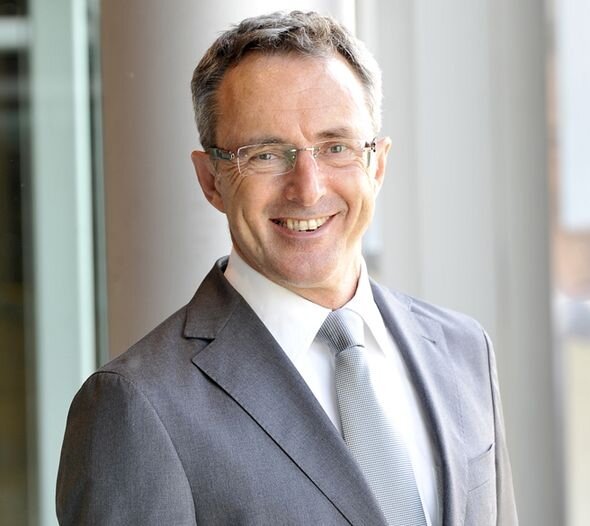
Friedbert Klefenz, President of Bosch Packaging Technology, highlights the company’s 150 years of packaging experience, current and future challenges, and why he supports the FAO’s Save Food initiative.
Mr. Klefenz, you are celebrating 150 years of packaging experience. In your opinion, what is the key to the long-lasting business success?
Friedbert Klefenz: - Most pivotal to our success has been the long-term partnerships with our customers, based on our capacity for innovation, technical competence and reliability. For decades, we simply try to keep promises, as we also express with our motto “Packaged as Promised.” For decades we have literally been by our customers’ side due to our strong worldwide presence, not just with sales and services but with 31 production sites in 17 countries worldwide.
And the number of your production sites is steadily increasing. You recently acquired Hüttlin and Manesty. What are your strategies behind those acquisitions?
Acquisitions are part of our strategic path of diversification and internationalization. Even in the early stages, we completed our portfolio with acquisitions. For example, Hesser came to the Bosch family in the 1970s.
Known as the ‘mother’ of all packaging machines in Germany,
Hesser started as a producer of envelope-folding machines and quickly became a global leading packaging machinery specialist. Looking back, I suppose we had the right touch in acquiring industry-leading companies.
Are there any further acquisitions planned, including in the Emerging Markets?
Bosch is always looking for good opportunities that fit with our company and this most definitely includes the emerging markets. We want to further diversify both in terms of market and geographic coverage as well as fill technology gaps so we can offer total solutions and end-to-end support.
You say diversification is a crucial strategic focus. Other companies focus on core competences and therefore rather consolidate their portfolio.
Don’t get me wrong - we also focus on what we do best and yes, we decided a long time ago to focus on providing solutions for two industries. Right from the beginning we went into the Food and Confectionery business and into the Pharmaceutical business. And we stayed. Both industries have enormous potential. In a few decades, the world's population will reach nine billion people. Our company will be geared at supporting this development. And you will see, we will translate this market potential into concrete projects.
So your main challenge today is all about growth?
Let me say it this way - for us growth is a result of taking chances and successfully exploiting market potential. Size alone has no value without synergies. Growth brings huge opportunities but also challenges. An example: I am sure that we will cooperate even more closely throughout our global sites – also in the fields of R&D, sales and manufacturing – than it was probably necessary in the past.
You recently took a step in this direction in the food and confectionery field by putting three of your business units together into one organization.
Yes, this step is a logical consequence among others of our mission to serve our customers globally as a one-stop provider. Both the food and confectionery industries offer synergies in R&D as well as in sales. However, we won’t reorganize those business units overnight but instead we will take one step at a time.
Diversification, globalization, growth: How do you manage your R&D under these conditions?
The spirit of invention has always been a driving force at Bosch. Our “Invented for Life” philosophy belies the heart of our innovation strategy - we develop products and solutions that provide increased quality and safety as well as improved sustainability at all of our production sites. And yes of course, we mutually share R&D efforts both within the company and within the Bosch Group to achieve synergies. Cross-fertilization of ideas and technology transfer are key to our success. I am pretty sure that you will not find this huge pool of R&D power anywhere else within the packaging machinery industry.
As tough as it probably is to summarize 150 years of product development, could you try to provide us with an overview of the most important milestones from Bosch through the years?
It was for example the year 1911 when our history of food packaging innovation started. Back then, Hesser built the first fully automated packaging machine for coffee. Years later followed Bosch’s launch of the first ever vacuum package, which already then increased the shelf life of oxygen-sensitive products to one and a half years.
Today we are still leading in this field. More recent milestones from the 1980s include a first-of-its-kind continuous cooking system for hard candy and the Hypa-S technology that allowed fruit juice and baby formula to be aseptically sealed in carton packs with aluminum bases and lids. At this year’s Interpack we revealed a streamlined system for the packaging of bar products, technology to produce two new chocolate pack styles for convenience and quality benefits, and Delta Robots with speeds reaching new levels. In fact, Demaurex developed the first Delta Robot before joining Bosch Packaging Technology.
And in pharmaceuticals?
In the pharmaceutical area, key breakthroughs were the launch of continuous dry heat sterilization and the HQL sterilizing tunnel, helping customers boost efficiency. The development of isolation technology for ampoule filling and sealing machines in 1991 is another example, and this laid the cornerstone in the area of containment where Bosch has been successful ever since. One of our most recent developments is the PreVas disposable filling system. PreVas means pre validated and assembled sterilized. The ready-to-install, fully qualified and validated solution reduces cleaning and maintenance costs and is ideal for handling highly potent substances.
What would be your advice to new businesses in the packaging industry?
I would say focus on the customer, the technology, and the people who are responsible for it – the employees. Other words to live by are I would rather lose money than trust. The trust of customers and employees is vital for us. The quality of products and keeping promises must take precedence over short-term gain and profit. A more obvious point is that new businesses must anticipate future trends.
During the last couple of years, which development was promising?
In addition to product innovations, we entered the Asian market at an early stage. This year we celebrate our 10-year anniversary in China. Today we are the largest packaging machinery company located in China in terms of turnover and we will further expand. Looking at our 2010 sales figures, 20% of our sales were generated in Asia.
We are expecting an increase in buying power in these markets in the next years and decades. Our strategy of developing products for local markets has paid off and will continue to do so in the future. We intend to pursue this strategy in other regions as well, for example in Latin America where we expand our sales and service units.
How about Bosch Packaging Technology in Europe and North America?
Although both markets are saturated, I am satisfied with the development of our business there. Europe and North America are key markets for us, comprising 70% of our sales. In Europe we also have important technical R&D centers. For example, our new ITS, an Intelligent Transport System, was developed at our central R&D facility in Waiblingen, Germany. In Europe as well as in North America, our main focus is to help customers meet changing market demands, gain the competitive edge, and bring down production costs. In both regions, complex and fully automated packaging systems continue to be in high demand.
Is Africa a new focus for Bosch?
Not quite new. Our African engagements started years ago. The reason is: In Africa, the agricultural sector develops rapidly in some regions thanks to foreign investments. Also, the individual buying power is steadily increasing, albeit on a smaller scale compared to Asia. Today, the population of the African continent brings total buying volume in the range of Europe. I believe that in fewer than 20 years our business in Africa will be as large as our current business in Asia.
Bosch Packaging Technology supports the Save Food initiative of the FAO – the Food and Agriculture Organization of the United Nations.
What is your motivation to do so?
The initiative brings home the fact that hunger is still one of the most pressing issues in the world. It also reminds us that waste of food and resources needs to be reduced drastically. Packaging is key when it comes to avoiding food loss and waste. Using packaging machines can help to reduce the loss ratio and avoid the waste of valuable resources.
What will be the major challenges for the packaging industry in the next 10 years?
Around the globe, sustainability is a lasting issue. Sustainability means using less energy, avoiding losses and using easily recyclable packaging materials. In developing countries, reducing food waste will be a major issue. If we want to bring about a sustainable improvement, we all have to act together – from UN organizations to regional governments, the agricultural, packaging and food industries as well as local traders, to overcome this challenge in the future.
I believe food safety regulations will also continue to evolve globally to the stringent level of pharmaceutical standards. Producers need to prepare for increased regulations in order to be competitive. Concerning our industry I am convinced that the consolidation phase is not over but will continue.