Kistler at Fakuma 2023
Digital meets circular economy. Smart, sustainable solutions for process reliability and quality in injection molding
The plastics industry is facing radical changes: new regulations require a new approach to resources. At the same time, the advance of digitalization (and even the use of artificial intelligence) are developments that harbor enormous potential. At Fakuma 2023 in Friedrichshafen (Germany), the Kistler Group will show what smart process monitoring can already achieve today, and which trends are set to shape the industry's evolution in the coming years. Highlights at Kistler's booth A2-2302 in hall A2 include non-contact measuring sensors for the medtech sector, sensors for 3D printing, and also the AkvisIO production data solution - now expanded to offer far-reaching options for data analysis. Optical testing systems complete Kistler's portfolio for the plastics processing sector.
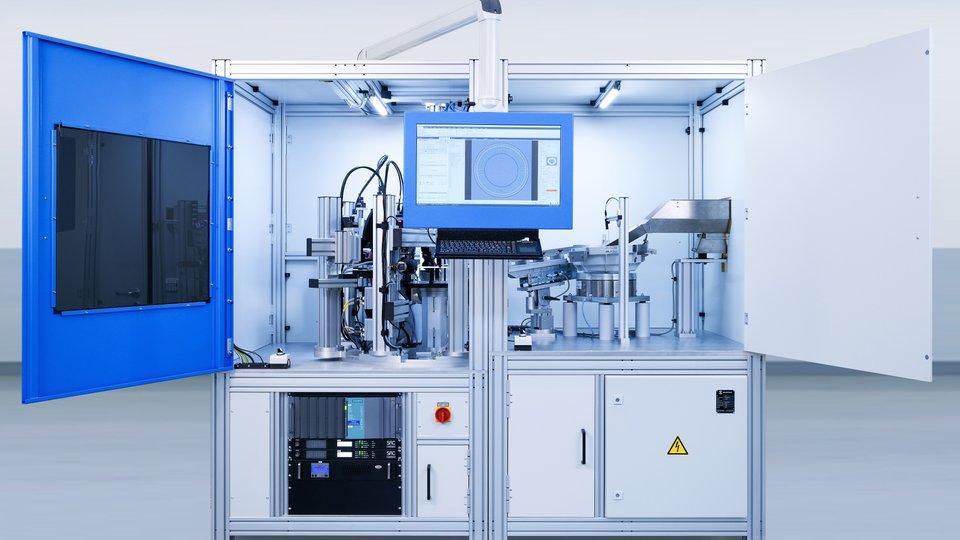
Intelligent process monitoring and optimization that can automatically detect deviations from the standard during the injection molding process, adjust parameters, and separate bad parts by itself: This scenario is already possible today if the right sensor technology is combined with appropriate hardware and software. At this year's Fakuma, Kistler will demonstrate what a complete solution of this sort can look like in action: two of the latest sensors for injection molding and 3D printing (Types 4004 and 9239B) will be featured. The KVC 821 automatic sorting and testing system on display at Kistler's booth represents the latest generation of optical inspection systems, while new versions of the firmware for ComoNeo and ComoScout illustrate the extended functionalities of these process monitoring systems. Kistler's Stasa QC Optimizer - with new features – is another highlight at Fakuma. This software optimizes the settings on the injection molding machine to ensure that products of the best possible quality are manufactured. Improvements to the Stasa QC Optimizer include a new user interface, extended functionalities, and intuitive handling.
100-percent process control – even when using recycled materials
Complete process monitoring systems play a key part in achieving product quality and process efficiency. This is particularly true when companies make more use of recycled materials for their processes, and in higher proportions. "It's clear that the use of recycled materials in plastics manufacturing and processing will continue to increase," according to Felix Früh, Head of BU Plastics at Kistler. "But higher proportions of recycled material also have a negative impact on the stability of injection molding processes. The viscosity of the melt changes, for example. Process monitoring systems based on cavity pressure detect these fluctuations immediately and compensate for them continuously during the process. This allows users to guarantee homogeneous part quality even if the material characteristics vary."
Miniature sensors for medtech applications, hot runners and 3D printing
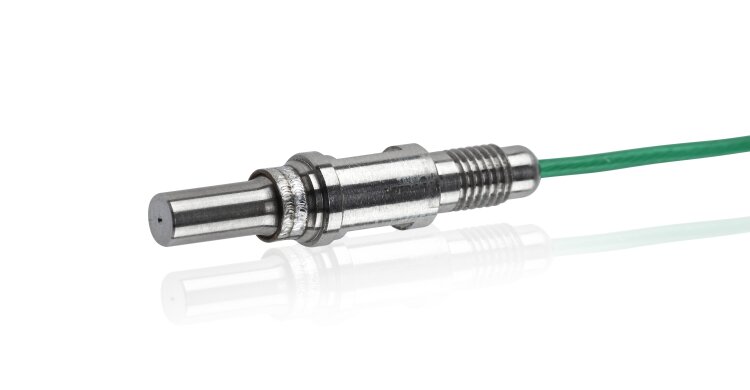
The piezoelectric 9239B miniature longitudinal measuring pin – a sensor for no-contact cavity pressure measurement – will be center-stage at Fakuma. Available on the market since last year, this model takes up virtually no space when installed in the injection mold thanks to its diameter of only 2.5 mm. The 9239B uses a PiezoStar crystal grown specially by Kistler to measure the pressure-induced compression of the mold during the injection molding process – so it measures the cavity pressure indirectly. Unlike sensors that measure directly, the 9239B can be mounted between two and four millimeters behind the cavity wall, so it is protected from direct contact with the melt and its influences. The sensor offers another key benefit that is especially relevant for the medical sector: because of its position, it leaves no marks whatsoever on the manufactured plastic part. This means the longitudinal measuring pin is the solution of choice whenever flawless surfaces are required – on medical lenses, for example, or for automobile interiors. Another advantage: the pin's positioning means that it cannot become soiled or contaminated, so it is virtually maintenance-free.
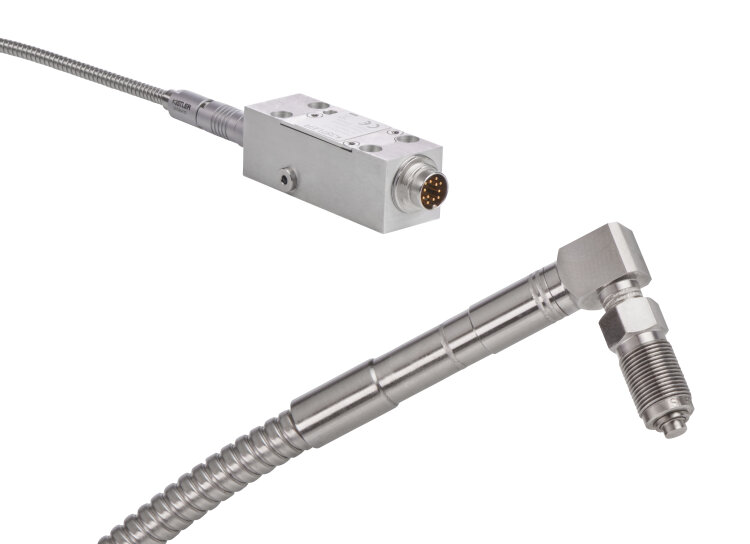
Kistler is also turning the spotlight on another miniature sensor: the 4004A melt pressure sensor. With a diameter of only 3 mm, it can be used directly in injection nozzles and small extruders. The 4004A withstands the extreme temperatures that prevail in these environments thanks to its wide operating and measuring range, which extends up to +350°C. The sensor is calibrated for two pressure ranges, so it can be used for injection molding applications (measuring range up to 2,500 bar) as well as additive manufacturing (measuring range up to 1,000 bar). This is a truly groundbreaking innovation for 3D printing applications: until now, the high temperatures involved have made it impossible for manufacturers to measure the melt pressure, so they have been unable to implement quality control while the process is actually running.
Software updates to simplify process monitoring
Kistler's Como systems for process monitoring complement the Group’s range of application-specific sensors. Kistler is unveiling the latest versions of two systems at this year's Fakuma: ComoNeo and ComoScout 6.0. Both ComoNeo and ComoScout now feature an expanded OPC UA interface so they can make additional data available. Users can now update devices via the network, eliminating the need to do so in situ on the device itself. As an added benefit, the cycle ID can be transferred from the injection molding machine to complete the dataset. The ComoNeoSWITCH feature and the envelope curve functionality offer additional setting options. All these innovations result in better and more efficient process monitoring and optimization. These updates are fully compatible with Kistler's new AkvisIO data analysis software.
In-depth analyses: the basis for optimization and decision-making
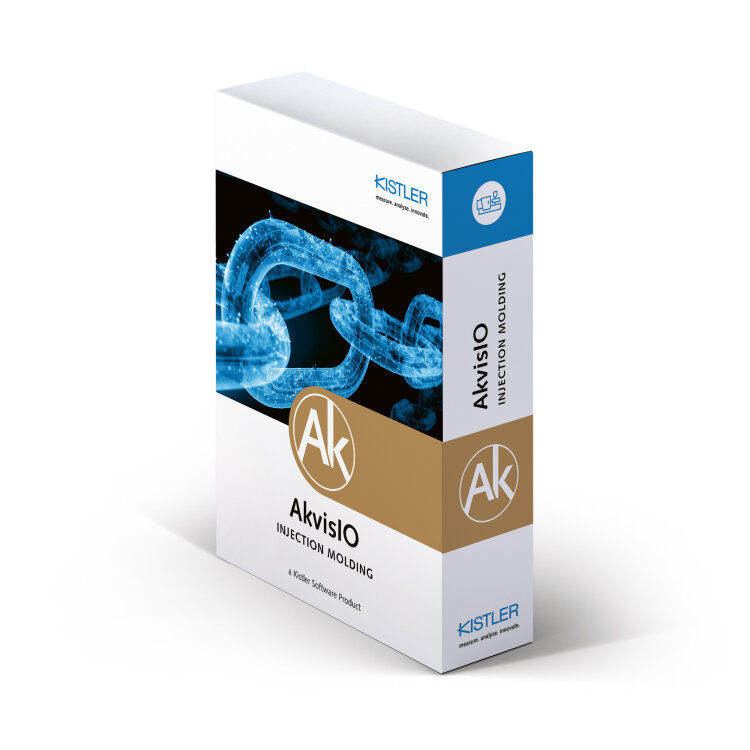
With AkvisIO IME (Injection Molding Edition), Kistler shows what complete solutions for process monitoring will be able to achieve in the future. This modular data analysis software, including a graphic user interface, offers a host of new options for analysis. Going forward, classical methods of statistical analysis – and also data-based artificial intelligence methods – will enable users to perform quality-oriented evaluations of process and machine data directly in the software. This will also make it easier to integrate Kistler devices such as ComoNeo and ComoScout (as well as machines) into the data acquisition. The software supports communication standards such as the Ethernet-based Euromap 77, so the machine itself becomes the data source and AkvisIO is the Single-Source-of-Truth (SSOT) for reliable production data. This allows users to identify weak points rapidly and leverage potential for optimization. Kistler is also working on the integration of AI solutions for automated data analysis that will make process optimization based on cavity pressure considerably easier for users.
Optical quality testing for injection-molded products
Alongside process monitoring, optical inspection at the end of the injection molding process is a major step in achieving complete quality assurance. With its variable camera systems, test modules, and complete solutions that include sorting and batching, Kistler offers diverse options for comprehensive end-to-end inspection and sorting of injection-molded parts. The main inspection criteria for this 100-percent testing are dimensions and surface defects. Alongside classical image processing, the methods used include AI-based techniques such as anomaly detection. KiVision, the software developed by Kistler, guarantees a reliable inspection process for as many as 4,000 parts per minute: it is the core element of Kistler's optical testing systems. The interactive combination of cavity pressure monitoring and optical inspection solutions thus provides the basis for a complete portfolio of process and quality assurance solutions for the production of complex injection-molded parts.
Training courses on injection molding at the new Kistler Plastics Academy
Digitalization opens up many possibilities for injection molders to optimize their production. The newly established Kistler Plastics Academy invites companies to have their staff trained at three levels: Basic Level offers product-specific training; Advanced Level shows participants how to make comprehensive use of Kistler technology; and Expert Level focuses on data-assisted process optimization
Read more: