Matiq and Tomra bring full transparency to Sheffield MRF
UK recycler Matiq has equipped its Garter Street materials recovery facility in Sheffield with 14 Tomra Autosort units, 14 PolyPerception waste analysers and Tomra digital solutions to monitor material composition, verify output quality and control the sorting process in real time.
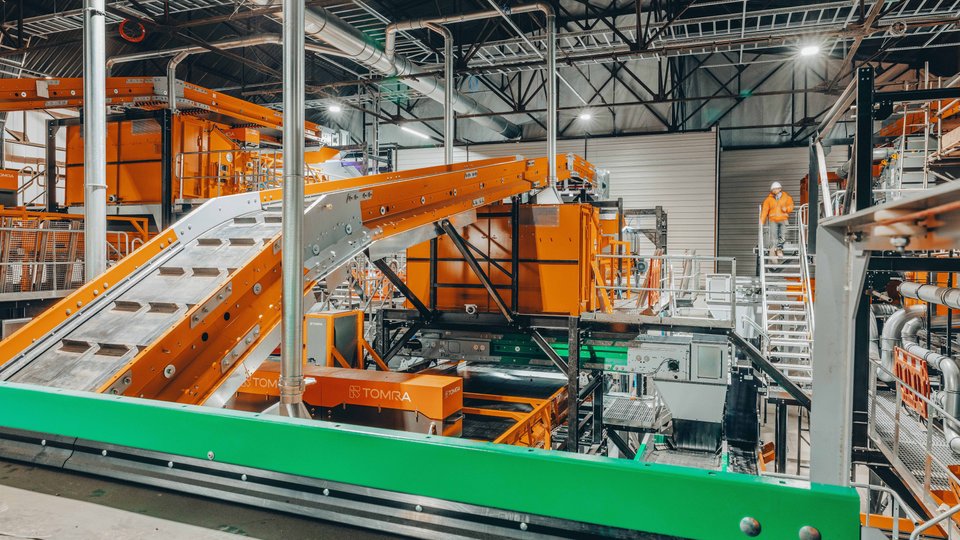
Matiq Group Ltd. (Matiq), an independent recycler in Sheffield, UK, has set its sights on running one of the world's most advanced sorting operations. Driven by a vision of complete visibility across the sorting process, Matiq has equipped its Garter Street materials recovery facility (MRF), which can process up to 250,000 metric tons a year, with 14 Tomra Autosort units, 14 PolyPerception-powered waste analysers and Tomra digital solutions. Together, these technologies provide real-time insights to optimise performance, verify quality and improve operational control.
Formerly known as Direct Special Metals, the fast-growing business rebranded as Matiq in June 2026. It operates sites in Sheffield, Gateshead and Grimsby, processing municipal as well as commercial and industrial (C&I) material for public and private sector customers. By 2029, Matiq aims to reach one million tons per year of UK processing capacity.
Garter Street, Matiq's headquarters, sorts mixed dry recyclables from kerbside collections and C&I customers in the North of England and the Midlands into ten target fractions, including fibres, plastics and metals, which are sold to reprocessors in the UK and abroad. Material that cannot be recycled is processed into refuse-derived fuel (RDF) and solid recovered fuel (SRF), diverting it from landfill.
Higher quality requirements and new regulations
UK MRF operators are facing stricter quality requirements from customers and regulators. Reprocessors and municipal authorities expect consistency, and contamination thresholds have tightened across every fraction Matiq produces. The UK's packaging Extended Producer Responsibility (EPR) scheme and England's Simpler Recycling reforms, which standardise household and business collections, are also changing the composition of the material arriving at MRFs. As a result, customers increasingly expect detailed data on what that material contains and how it is processed.
Anthony Holley, Chief Executive Officer at Matiq, comments: "Customers need compositional evidence rather than assurances. We are now able to show each customer what was in their material, fraction by fraction, including the level of contamination. Then we show what happened to it: what we recovered, at what quality, and what went to RDF or SRF. As an independent SME competing against much larger integrated groups, we can't win on tonnage alone. Accuracy, yield and data are where we differentiate, so we needed to invest both in the sorting technology itself and in the ability to measure precisely what it is doing."
Sorting and material analysis in one process
Since the plant was commissioned in early 2025, Garter Street has run on Tomra's Autosort technology. Until recently, however, quality was checked through periodic manual sampling, so the detailed composition of the material between samples was largely unknown, and problems with incoming loads were often only identified once the material had already been processed.
In September 2026, Matiq completed an augmentation of the plant, adding three Autosort units to bring the total to 14 and installing 14 PolyPerception waste analysers across the line. Autosort, Tomra's multifunctional sorting unit, is designed to handle complex, mixed material streams at high throughput.
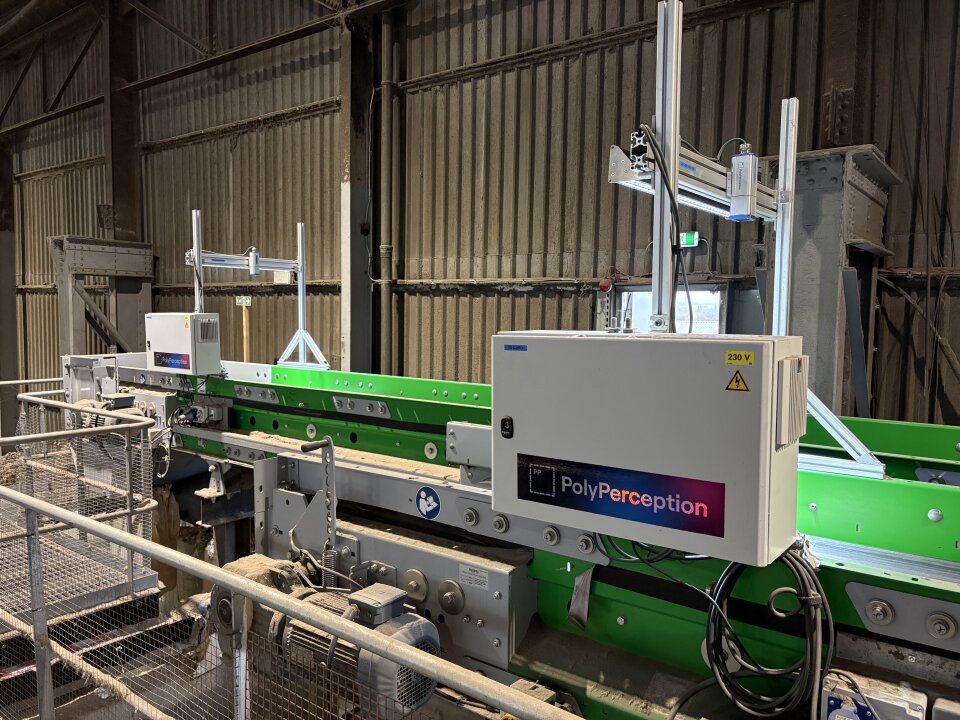
The 14 PolyPerception waste analysers are installed at key points throughout the plant, covering both the incoming material and the sorted output. They use cameras to analyse and classify the material on the conveyor belts in real time, giving Matiq continuous visibility of material composition, recovery rates and losses. PolyPerception, in which Tomra holds a 51% stake, recently launched a new AI platform that turns this data into operational intelligence. Operators can ask questions about their plant data in conversational language, such as how a change to line settings has affected purity. They can also search the material stream for problem items such as batteries and vapes.
14 PolyPerception waste analysers are installed at key points throughout the plant
"TOMRA's technology and level of support have a proven record in UK MRFs of our scale," says Holley. "We needed equipment that would run reliably at 4,000 tons a week, day in, day out. With PolyPerception, we wanted continuous, objective analysis of the material on the belt instead of periodic manual sampling. If you are going to evidence quality to a client or to the regulator, you have to be able to measure it."
Real-time monitoring and control across the line
Alongside the waste analysers, Matiq uses Tomra's digital solutions. Tomra Local Control provides control of all the plant's Autosort units from the control room. Operators can see the status, alarms and performance trends of every machine, updated every second, and can change settings or switch sorting programmes across the line without having to go to each unit. Tomra Insight, Tomra's cloud-based data platform, supports data-driven optimisation and performance tracking. Matiq's team can access Insight's dashboards and customisable reports from any location. The platform also gives Tomra's service engineers remote access to machine data, enabling them to spot potential issues and plan maintenance before a fault leads to downtime. Matiq also has a Tomra service package in place.
"Our operators can see every sorter on one screen and adjust the whole line without leaving the control room," says Holley. "We can react faster, and the team spends less time walking around the plant. TOMRA Insight gives us and TOMRA's engineers the same view of how each unit is performing, so we can spot problems early and plan maintenance before a machine goes down."
Waste intelligence for full traceability
Real-time data from the PolyPerception waste analysers allows Matiq's operators to respond to changes in material composition during the shift. If a poor load enters the plant, it can be identified while it is still on the belt. The team can then use Tomra Local Control to adjust the sorters immediately based on measured figures.
The same analyser data forms the basis of PolyPerception's waste intelligence reports. The platform automates the sampling process and produces audit-ready evidence of output quality, supporting the updated 2024 UK government guidance on sampling at materials facilities in England, which is enforced by the Environment Agency, England's environmental regulator. The guidance permits AI-based visual detection for sampling, provided operators can show that their methodology produces representative results. For municipal customers, the reports provide a detailed breakdown of their material and its recovery, which can also be used to verify the targets set out in contracts.
Raising standards for independent MRFs
The project also supports Matiq's long-term strategy of delivering transparent, accountable recovery services with measurable outcomes. Continuous, accurate measurement of the material is the foundation for this, and Matiq sees Garter Street as proof that an independent operator can set a higher standard of evidence for the industry.
Gavin Russell, Area Sales Manager UK, Tomra Recycling, adds: "MATIQ understands that today's sorting is no longer about material identification alone, but about gaining complete transparency and control across the entire process. That is also what we believe in at TOMRA, and we are delighted to be partnering with MATIQ on these ambitious plans. By combining TOMRA's sorting and digital solutions with continuous measurement from PolyPerception, MATIQ now has the data it needs to make its operation more efficient, reduce processing costs and prove the quality of its output. As customers and regulators ask for more evidence, this approach will become increasingly important for MRF operators."
Holley concludes: "From the outset of this project, TOMRA understood what we were trying to achieve. They weren't just supplying machines. They helped us bring sorting, analyzing and digital control together, and they have stayed involved since the installation, with service and with help using our data to achieve maximum long-term performance. That ongoing support is what gives us confidence in the plant day to day."